
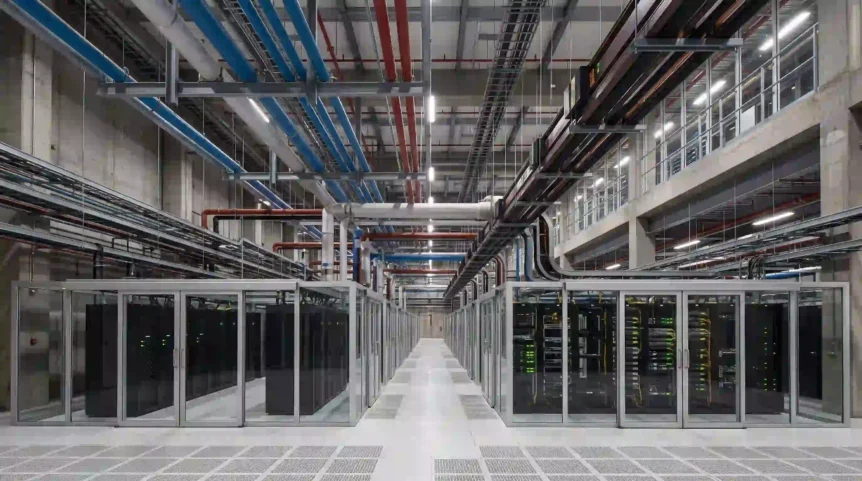
Modern digital enterprises rely heavily on robust computation pipelines to handle massive workloads every single second. At the heart of this global ecosystem lies modern data center infrastructure, powering seamless cloud connectivity and high-speed information processing.
Building a resilient digital foundation requires a deep understanding of interconnected hardware and facility management. From high-density computing servers to complex environmental controls, every component plays a critical role in sustaining total uptime.
What is Data Center Infrastructure?
Understanding data center infrastructure begins with identifying the entire ecosystem of physical, virtual, and operational resources supporting critical workloads. This foundation houses advanced server racks, enterprise storage arrays, continuous power architectures, and precision climate control systems.
Without this dedicated physical backbone, modern cloud computing, global telecommunications, and artificial intelligence models could not function efficiently. It ensures continuous data availability, secure network routing, and massive scalability for global digital enterprises.
Core IT Hardware Components
The primary computing layer of any facility consists of enterprise-grade hardware designed for continuous operations. These physical devices process incoming transactions, manage database queries, and route internal network packets across complex topologies.
1. High-Performance Servers
Modern computer facilities deploy rack-mounted servers equipped with multi-core enterprise CPUs and high-density memory modules. These high-performance machines execute complex software applications and process millions of concurrent user requests effortlessly.
Optimized compute nodes deliver maximum processing density while reducing overall energy footprint within server cabinets. Their modular architecture allows IT administrators to scale processing power instantly as digital demands expand.
Read Also: Backup UPS Systems: Ultimate Protection for Electronics
2. Enterprise Data Storage Systems
Critical business applications demand reliable data retention provided by flash storage arrays and redundant storage area networks. These high-capacity systems protect digital assets through advanced encryption and enterprise-grade RAID configurations.
By utilizing high-speed solid-state drives alongside traditional hard drives, organizations balance raw performance with cost-effective storage capacity. This layered architecture guarantees rapid data access while maintaining strict data compliance standards.
3. High-Speed Networking Equipment
Seamless communication between enterprise servers depends on high-throughput network switches, edge routers, and organized optical cabling. This equipment directs internal server traffic and manages external internet connectivity without creating processing bottlenecks.
By utilizing redundant fiber-optic lines, data facilities maintain ultra-low latency connections required for real-time transactions. Advanced network topology designs prevent packet loss and protect data transmission across global routes.
Support and Facility Utilities
Maintaining total system availability requires specialized physical facility utilities operating behind the scenes. These non-IT support frameworks protect sensitive computing hardware from thermal hazards, power disruptions, and unauthorized physical intrusion.
1. Reliable Power Supply & Backup Systems
Uninterrupted operations rely on dual-feed utility connections backed by enterprise uninterruptible power supply units. These battery systems instantly bridge electrical gaps during sudden utility grid failures to prevent server reboot cycles.
For prolonged utility outages, industrial diesel generators kick in automatically to provide long-term continuous electrical supply. This multi-tiered power strategy eliminates system downtime and safeguards sensitive computing equipment against voltage spikes.
2. Advanced Data Center Cooling Systems
Continuous compute operations generate extreme heat density that demands specialized precision air conditioning and liquid cooling setups. Raised flooring architectures direct chilled air through server racks to maintain optimal operational temperatures.
Next-generation facilities also utilize direct-to-chip liquid cooling solutions to dissipate thermal loads from high-density AI servers. Effective climate control prevents thermal throttling, extends hardware lifespan, and optimizes energy usage.
3. Multi-Layered Physical Security
Protecting valuable corporate data requires strict physical access controls, including biometric security scanners and mantrap entrances. Surveillance cameras and 24/7 security personnel continuously monitor critical facility zones to prevent unauthorized access.
Additionally, automated clean agent fire suppression systems instantly detect smoke and extinguish electrical fires without damaging hardware. These combined security layers ensure comprehensive asset protection against physical threats and environmental hazards.
Infrastructure Management and Redundancy
Sustaining continuous uptime requires real-time monitoring software alongside fault-tolerant system architecture. Operators utilize specialized management platforms to monitor equipment health and design redundant pathways that prevent unexpected service interruptions.
1. Data Center Infrastructure Management (DCIM)
Facility administrators rely on modern DCIM software to monitor real-time temperature levels, power consumption, and rack space availability. This centralized software provides comprehensive visibility into entire facility operations through intuitive dashboard metrics.
By analyzing historical performance data, operations teams can optimize cooling distribution and predict hardware failures before downtime occurs. Intelligent monitoring improves resource allocation and lowers overall operational expenditures significantly.
2. Infrastructure Redundancy & High Availability
Eliminating single points of failure requires robust architectural design incorporating dual power paths and independent network providers. This approach, known as carrier redundancy, ensures seamless network switching during unexpected line failures.
System architects design redundant power circuits and hardware failover clusters to keep critical workloads active during maintenance. Achieving high availability guarantees uninterrupted user experiences across mission-critical digital enterprise platforms.