
Modern digital infrastructure relies heavily on continuous electrical energy to prevent operational disruption and catastrophic hardware damages. Understanding every uninterruptible power supply application helps organizations implement optimal backup power systems to safeguard critical assets.
Deploying specialized power conditioning units ensures seamless transition during grid outages while stabilizing sudden voltage fluctuations. Businesses across diverse sectors invest in robust surge protection devices to maintain seamless operational continuity.
Key Takeaways:
- UPS systems deliver instant backup electricity and voltage regulation to protect sensitive electronics during outages and power surges.
- Critical industries like healthcare and data centers rely on tailored UPS applications to prevent data loss and hardware damage.
- Online double-conversion UPS provides zero transfer time and total grid isolation for mission-critical operations needing maximum protection.
- Offline and line-interactive topologies offer cost-effective power conditioning for lower-sensitivity equipment like PCs and small office servers.
- Proper implementation requires accurate load calculation, future expansion planning, and routine battery maintenance to guarantee operational continuity.
What is an Uninterruptible Power Supply (UPS)?
An uninterruptible power supply delivers immediate backup electricity when the primary grid experiences total failure or voltage drops. It functions as an electrical filter to supply clean, continuous battery backup power directly to sensitive electronics.
These essential systems combine internal rechargeable energy storage, automated switching mechanisms, and internal voltage regulation components into one unit. They protect connected loads from severe damaging events like power sags, electrical spikes, and harmonic distortion.
Read Also: Surge Protective Devices: Prevent Electrical Fires Now
Major Uninterruptible Power Supply Applications Across Industries
Every industry requires targeted power quality solutions designed to mitigate operational risks and eliminate costly downtime hazards. Deploying a tailored uninterruptible power supply application ensures hardware stability across distinct commercial and industrial environments.
1. Data Centers & IT Infrastructure
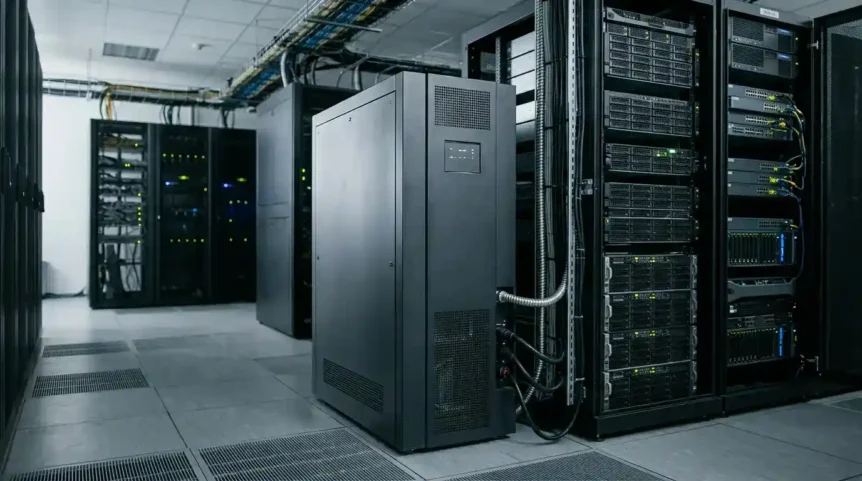
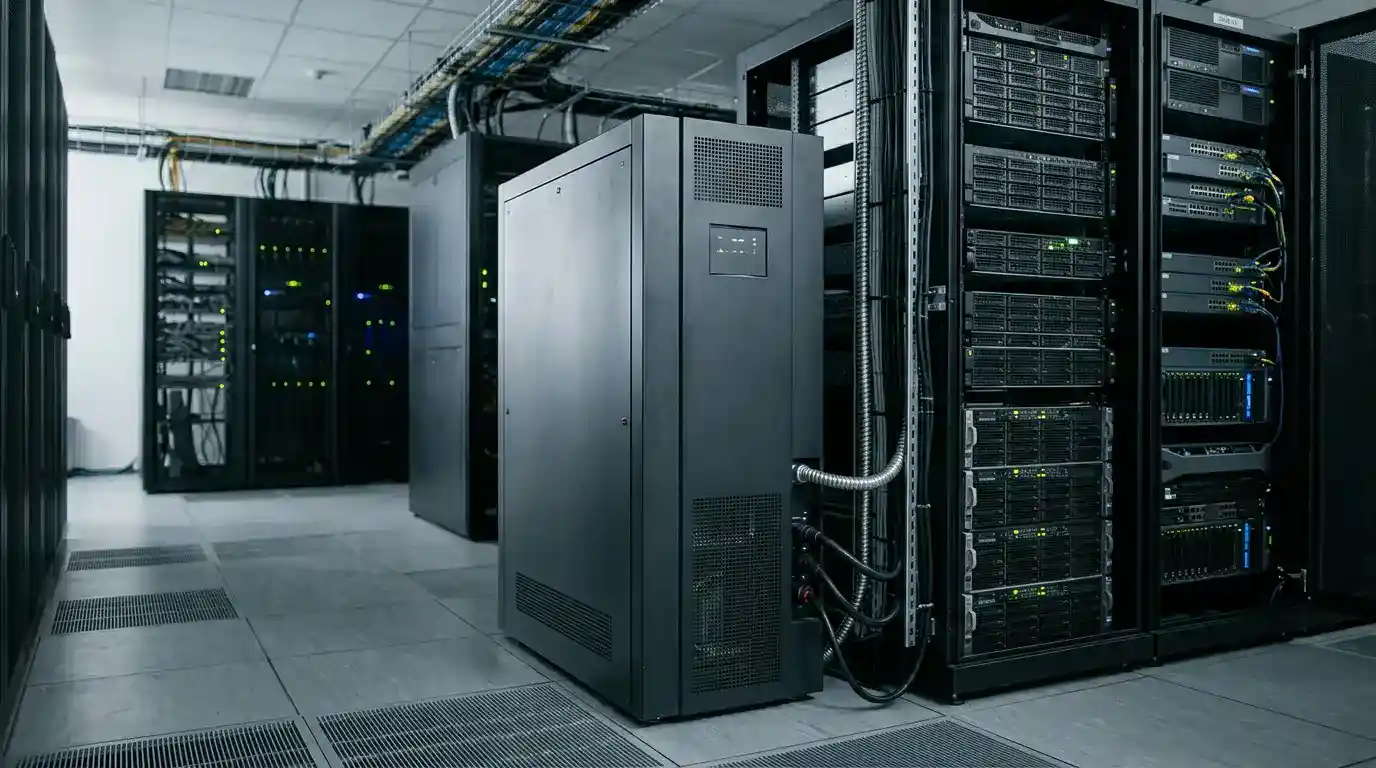
Enterprise data center infrastructure relies on high-capacity double-conversion UPS units to protect enterprise server racks and storage networks. A unexpected power interruption can freeze active cloud processing and cause irreversible database corruption across connected systems.
Integrating scalable modular UPS systems guarantees zero downtime and provides vital runtime until emergency generators activate. These configurations preserve critical digital assets while keeping global web services operational around the clock.
2. Healthcare Facilities & Hospitals
Modern medical equipment protection demands uncompromising power stability to keep intensive care units and operating rooms safe. A momentary electrical power blackout can disable vital life-support systems, ventilators, and sensitive diagnostic imaging devices.
Deploying specialized hospital-grade UPS systems provides continuous power filter capabilities to delicate patient monitoring networks. This critical energy supply protects human life while maintaining total regulatory compliance across healthcare facilities.
3. Telecommunications Networks
Modern telecom infrastructure protection relies on robust backup systems to power cellular towers and remote switching centers. Maintaining uninterrupted signals prevents dangerous emergency network blackouts and secures daily voice or data communications.
Deploying dependable dc power supplies alongside localized battery arrays shields transmission nodes from unpredictable grid fluctuations. This setup preserves global digital connectivity during severe weather events or widespread electrical disturbances.
4. Industrial Automation & Manufacturing
Heavy industrial plants use dedicated industrial UPS systems to protect automated assembly lines and programmable logic controllers. Unplanned outages disrupt delicate manufacturing timing, cause severe material waste, and damage expensive robotics.
Providing reliable emergency power systems allows control panels to execute controlled sequence shutdowns without hardware stress. This operational buffer saves thousands of dollars by preventing physical machinery damage during power anomalies.
5. Financial Institutions & Banking
Global financial sector continuity depends heavily on instantaneous power backup to safeguard core banking servers and ATMs. A quick voltage sag can disrupt active electronic trades, corrupt transaction ledgers, and trigger massive financial losses.
Installing redundant enterprise power backup ensures online banking platforms and payment gateways remain completely stable. Continuous operational uptime protects customer trust and preserves the integrity of high-frequency trading networks.
6. Home & Small Office (SOHO) Use
Compact residential UPS units provide essential surge suppression for desktop computers, gaming gear, and network routers. They grant remote workers crucial extra minutes to save important documents and shut down devices safely.
Using a desktop standby power supply prevents sudden hardware failures caused by unexpected neighborhood power glitches. It keeps basic home office equipment active and protects sensitive electronics against dangerous voltage spikes.
Choosing the Right UPS Topology for Your Application
Selecting an appropriate ups system topology depends directly on load sensitivity, operational environment, and available capital budget. Different electrical architectures offer varying degrees of power isolation, transfer speed, and output wave purity.
1. Offline / Standby UPS
A basic offline ups topology remains idling during normal utility operations while directly feeding raw AC power. When power drops, an internal switch quickly transfers the connected load over to internal battery power.
Featuring a typical transfer time of 4 to 8 milliseconds, this low-cost solution protects basic personal computers. It offers affordable entry-level safety for non-critical equipment that tolerates brief millisecond power switches.
2. Line-Interactive UPS
An upgraded line-interactive topology includes an automatic voltage regulator (AVR) to correct minor brownouts and overvoltages. It adjusts high or low voltages without constantly draining the main internal battery array.
With a fast switchover time of 2 to 4 milliseconds, it provides ideal protection for small business servers. This versatile balance between cost and performance satisfies most telecom closet requirements efficiently.
3. Online Double-Conversion UPS
An advanced online double-conversion topology continuously converts incoming AC power into DC, then back into pure AC. This process completely isolates connected mission-critical hardware from raw utility grid disturbances and line noise.
Offering absolute zero transfer time, it delivers continuous pure sine wave power to critical healthcare gear. Enterprise data centers rely on this robust design for total operational immunity against electrical outages.
Summary & Best Practices for UPS Implementation
Successfully matching an uninterruptible power supply application to organizational requirements demands precise load calculation and topology selection. Always factor in total wattage, required runtime, and future equipment expansion before installing critical backup infrastructure.
Conducting routine ups battery maintenance and regular load testing ensures long-term system reliability during real emergencies. Investing in superior power protection safeguards core operations, prevents costly hardware damage, and maintains continuous productivity.
References
- Anand, A., & IEEE Power & Energy Society. (2020). Analysis of internal switching transients and surge protection performance in automated industrial power networks. IEEE Transactions on Industry Applications, 56(4), 3412–3420. https://doi.org/10.1109/TIA.2020.2985412
- Guo, Y., Zhang, X., & Liu, Z. (2022). Insulation degradation mechanisms of microcontrollers under repeated fast transient voltage surges. IEEE Transactions on Dielectrics and Electrical Insulation, 29(2), 589–597. https://doi.org/10.1109/TDEI.2022.3151211
- Hasse, P. (2018). Overvoltage protection of low-voltage systems (3rd ed.). Institution of Engineering and Technology (IET). https://doi.org/10.1049/PBPO033E
- Ramesh, L., Chowdhury, S. P., & Chowdhury, S. (2021). Energy management and power conditioning in mission-critical data center infrastructures using UPS topologies. IEEE Transactions on Power Delivery, 36(3), 1782–1791. https://doi.org/10.1109/TPWRD.2020.3012945