
Data Center Energy Consumption How Much Energy Do Data Centers Use
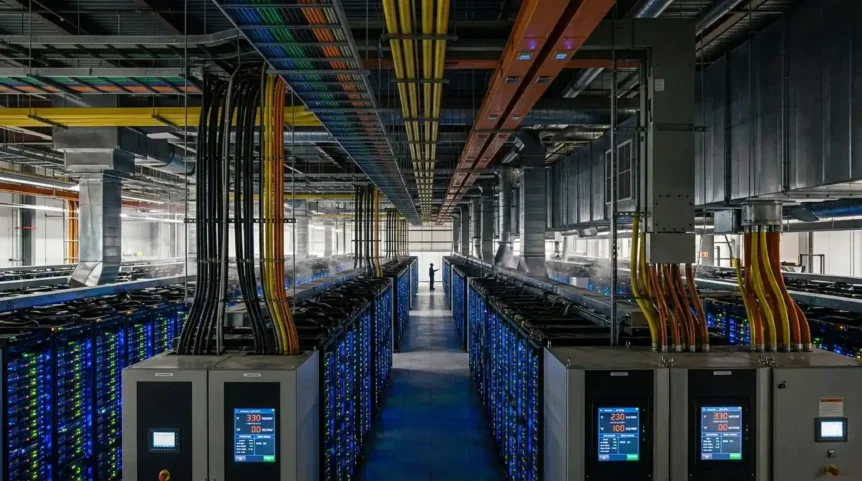
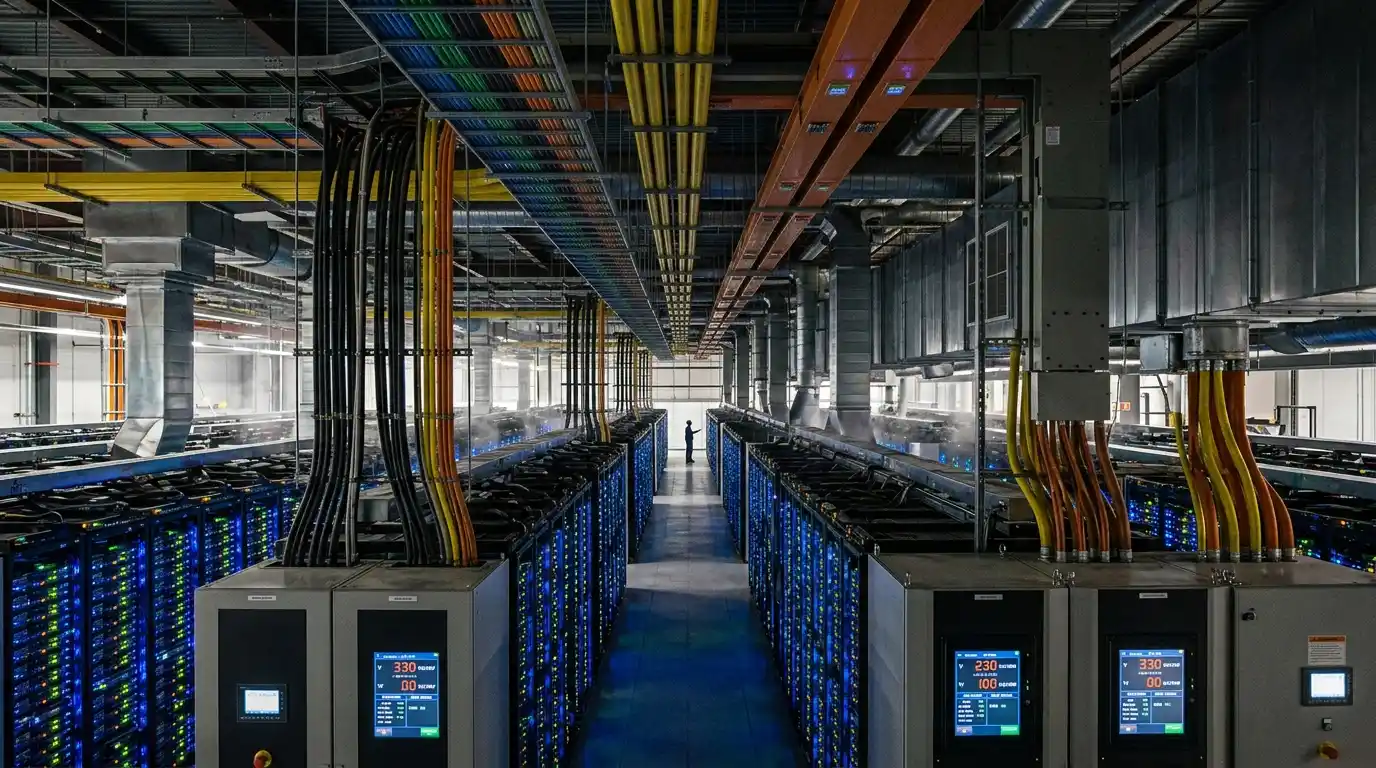
Data centers power cloud computing, artificial intelligence (AI), and digital services. However, these operations require significant electricity, making data center energy consumption a growing concern for businesses and operators.
Energy usage depends on factors such as server workloads, cooling systems, and hardware efficiency. Understanding these factors helps businesses reduce electricity costs and improve sustainability. This guide explores how much energy data centers consume, what drives power usage, and how to improve energy efficiency.
How Much Energy Do Data Centers Consume?
Data center energy consumption varies by facility size, computing workloads, and infrastructure efficiency. Global electricity demand is also rising as businesses expand cloud services and adopt artificial intelligence.
Understanding these differences helps explain how much energy data centers require and why consumption continues to grow.
1. Global Data Center Electricity Consumption
According to the International Energy Agency (IEA), global data center electricity consumption reached approximately 485 terawatt-hours (TWh) in 2025. The IEA projects demand could reach 950 TWh by 2030.
This growth reflects expanding cloud services, digital infrastructure, and AI adoption. However, projections remain uncertain because future demand depends on technology efficiency, AI deployment, and electricity supply constraints.
Read Also: UPS for Healthcare: Prevent Costly Power Failures
2. How Much Electricity Does a Typical Data Center Use?
There is no single figure for a typical data center’s electricity consumption. Actual usage depends on its average electrical load, operating hours, server utilization, and supporting infrastructure, including cooling and power distribution systems.
For example, a facility drawing an average load of 1 megawatt (MW) continuously consumes 24 megawatt-hours (MWh) per day, or 8,760 MWh annually. This example assumes a constant load throughout the year.
It is important to distinguish power capacity from energy consumption. Capacity describes the rate at which a facility can draw or deliver power, measured in kilowatts (kW) or megawatts (MW). Consumption measures energy used over time, typically expressed in kilowatt-hours (kWh) or megawatt-hours (MWh).
3. Energy Consumption by Data Center Size
Data center energy requirements vary by facility type, computing demand, and operating model. Enterprise, colocation, hyperscale, and AI-focused facilities serve different needs, so their electricity consumption should be compared using consistent measurements and operating assumptions.
| Data center type | Typical characteristics | Energy consumption considerations |
| Enterprise | Supports an individual organization’s IT operations | Depends on internal workloads, facility size, and cooling efficiency |
| Colocation | Hosts IT equipment for multiple customers | Varies with customer demand, occupied capacity, and shared infrastructure |
| Hyperscale | Supports large-scale cloud platforms and digital services | Can require substantial power for extensive computing and storage workloads |
| AI-focused | Supports AI training, inference, and accelerated computing | High-density GPU servers can increase power and cooling requirements |
These categories can overlap. Hyperscale facilities may also run AI workloads, while colocation facilities may host high-density GPU infrastructure. Therefore, facility type alone does not establish actual electricity consumption.
For a reliable comparison, use reported annual energy consumption where available. When only power capacity is published, treat it as a capacity figure rather than evidence of how much electricity the facility actually uses.
4. How AI and High-Density Computing Affect Energy Demand
AI workloads are changing data center power requirements. Training and running AI models often rely on GPU-accelerated servers, which can draw substantial power and create concentrated heat within server racks.
The IEA identifies accelerated servers as a major driver of projected electricity demand growth. Its analysis indicates that electricity consumption from these servers could grow much faster than consumption from conventional servers through 2030.
Higher rack power density can also increase cooling demands. Operators may need to improve airflow management, optimize cooling systems, or deploy liquid cooling to remove heat efficiently and maintain reliable operations.
AI does not affect every data center equally. The impact depends on workload intensity, hardware utilization, model size, cooling design, and the efficiency of the wider facility.
How to Reduce Data Center Energy Consumption
Reducing data center energy consumption requires improvements across IT equipment, cooling systems, and electrical infrastructure. The right strategies can lower electricity costs, improve operational efficiency, and support sustainability goals without compromising performance or reliability.
1. Optimize Data Center Cooling and Airflow
Cooling systems remove heat generated by servers and networking equipment. Better airflow management prevents hot and cold air from mixing, helping cooling systems operate more efficiently.
Key strategies include:
- Implement hot aisle and cold aisle containment: Separate hot exhaust air from cold supply air to improve cooling efficiency.
- Install blanking panels: Block unused rack spaces to prevent unwanted airflow and improve temperature control.
- Optimize cooling setpoints: Adjust temperature settings within equipment guidelines to reduce unnecessary cooling demand.
- Consider liquid cooling: Use direct-to-chip or other suitable liquid cooling systems for high-density workloads that require advanced heat removal.
The potential energy savings depend on facility design, climate, equipment configuration, and operating conditions.
2. Consolidate Servers and Improve Utilization
Underused servers can consume electricity while delivering limited computing value. Improving server utilization allows organizations to run workloads on fewer machines, reduce idle power consumption, and lower associated cooling demand.
Practical measures include:
- Virtualize workloads: Run multiple virtual machines on shared physical servers where appropriate.
- Identify underutilized equipment: Review server inventories and performance data to find systems suitable for consolidation.
- Decommission unused servers: Shut down or remove equipment that no longer supports active workloads.
- Optimize workload placement: Distribute computing tasks efficiently while maintaining availability and performance requirements.
Before retiring equipment, evaluate application dependencies, redundancy requirements, and capacity needs to avoid disrupting business operations.
3. Deploy Energy-Efficient IT Hardware
IT equipment accounts for a significant portion of data center computing demand. Choosing efficient servers, processors, storage devices, and networking equipment can reduce electricity consumption while maintaining the performance required by business applications.
When evaluating new hardware, consider:
- Performance per watt: Compare computing output against the electricity required to deliver it.
- Energy-efficient servers: Select equipment with strong efficiency ratings and suitable performance capabilities.
- Power management features: Use supported power-saving modes and dynamic power controls where workloads permit.
- Hardware lifecycle planning: Replace inefficient equipment when expected energy savings justify the investment.
Hardware selection should reflect actual workload requirements rather than peak specifications alone. Organizations should evaluate both energy consumption and computing performance before making purchasing decisions.
4. Use AI-Powered Energy Management
AI-powered energy management uses operational data to identify inefficiencies and improve decisions about cooling, power distribution, and workload scheduling. These systems help operators respond to changing demand instead of relying entirely on fixed settings.
Potential applications include:
- Predict cooling demand: Analyze temperature, humidity, and workload data to adjust cooling operations.
- Detecting energy anomalies: Identify unusual consumption patterns that may indicate inefficient equipment or operational problems.
- Optimize workload scheduling: Shift flexible computing tasks to periods when electricity is cheaper or cleaner, where practical.
- Support predictive maintenance: Analyze equipment performance data to identify potential issues before they cause major disruptions.
AI is not automatically energy-efficient. Its benefits depend on data quality, implementation costs, control accuracy, and the electricity required to run the optimization systems themselves.
5. Improve Power Distribution Efficiency
Electrical infrastructure supplies power to servers, cooling equipment, and other facility systems. Improving power distribution efficiency reduces losses between the incoming electricity supply and the equipment that uses it.
Operators can improve efficiency by:
- Evaluate UPS efficiency: Assess uninterruptible power supply (UPS) systems under actual operating loads.
- Reduce electrical losses: Review transformers, power distribution units, and other components for unnecessary losses.
- Monitor power usage: Use meters and monitoring systems to identify inefficiencies across electrical circuits.
- Right-size infrastructure: Match electrical equipment capacity to current and projected demand while preserving required redundancy.
Efficiency improvements should not compromise power protection, redundancy, or uptime. Regular monitoring helps operators identify opportunities to reduce energy losses while maintaining reliable operations.
6. Integrate Renewable Energy Sources
Integrating renewable energy can reduce the carbon emissions associated with data center electricity consumption. Solar, wind, and hydropower can support sustainability targets, depending on location, grid conditions, and electricity procurement arrangements.
Common approaches include:
- Install on-site solar power: Generate electricity directly at the facility where suitable space and conditions are available.
- Purchase renewable electricity: Use green electricity tariffs or power purchase agreements (PPAs) to support renewable generation.
- Combine renewables with energy storage: Use batteries to help manage differences between renewable generation and facility demand.
- Track carbon emissions: Measure electricity consumption and apply appropriate emissions factors to assess environmental performance.
Energy efficiency and renewable energy address different challenges. Efficiency reduces the amount of electricity required, while renewable sourcing can lower associated emissions. Combining both approaches helps data center operators manage energy demand and advance sustainability goals.