
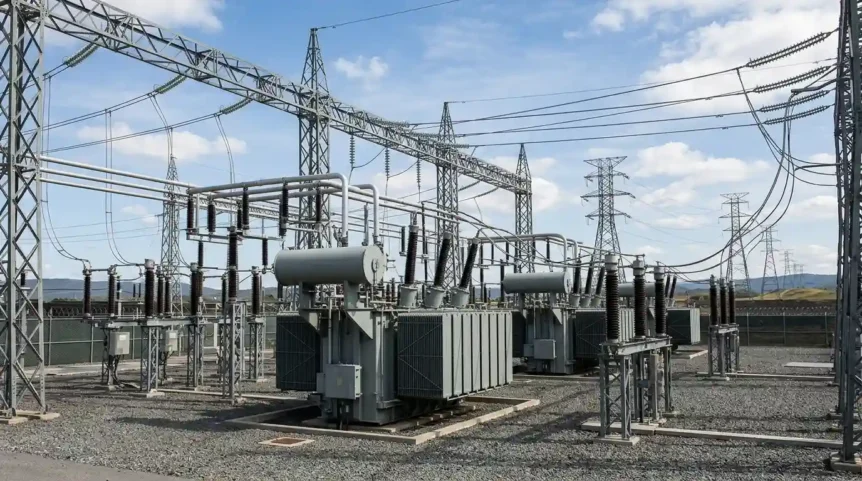
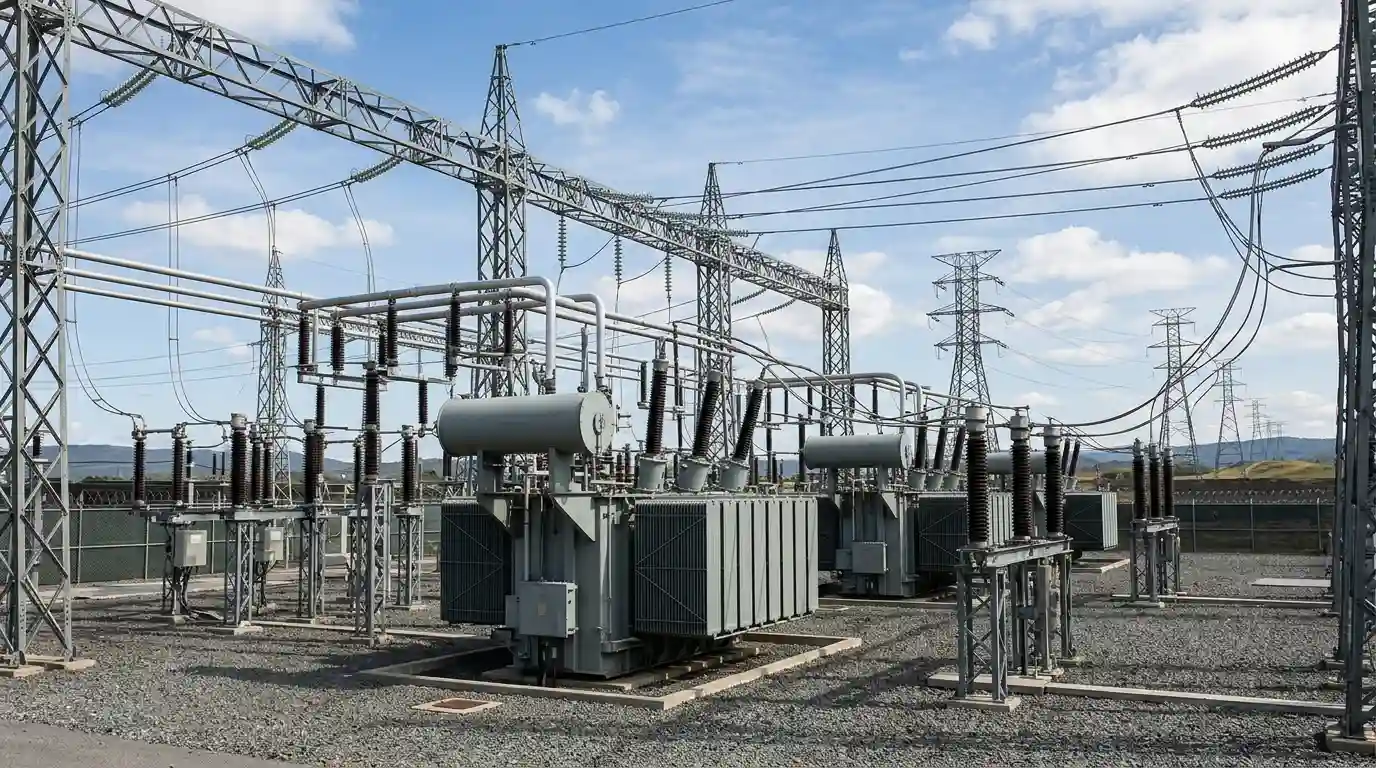
Modern enterprise operations require continuous electrical energy to sustain digital networks, medical environments, and automated industrial plants. Unexpected utility grid disruptions cost commercial facilities millions of dollars annually through operational downtime, hardware damage, and data loss.
Implementing a robust critical power infrastructure provides absolute defense against utility anomalies, maintaining seamless business continuity. This guide explores the architecture, core hardware components, design strategies, and industry applications necessary to safeguard enterprise operations.
Key Takeaways:
- Critical power infrastructure combines specialized backup hardware and controls to guarantee continuous, high-quality power delivery.
- Unscheduled outages cause severe revenue loss, workforce downtime, hardware damage, data corruption, and regulatory fines.
- Robust power systems must address power availability and power quality simultaneously to protect sensitive hardware.
- Essential hardware layers include UPS systems, backup generators, automatic transfer switches, and downstream distribution units.
- Selecting the proper redundancy architecture (N, N+1, or 2N) depends on your facility’s operational risk tolerance.
What is Critical Power Infrastructure?
Critical power infrastructure represents an integrated network of specialized backup hardware, intelligent controls, and power conditioning systems designed to guarantee zero electrical downtime. Unlike basic utility feeds, this dedicated architecture protects mission-critical systems against sudden grid disruptions.
Relying solely on the public electrical grid exposes facility infrastructure to severe vulnerabilities like voltage sags, brownouts, frequency variations, and weather-induced blackouts. A tailored critical power deployment acts as operational insurance, preserving data integrity, enterprise uptime, and asset safety.
Read Also: Flywheel Energy Storage: Zero Downtime Solution
The Cost of Electrical Downtime in Mission-Critical Operations
Unscheduled power outages trigger severe financial and operational damage across enterprise environments. Direct revenue loss accumulates within seconds, alongside indirect costs such as idle workforce hours, material waste, and supply chain delays.
Furthermore, electrical surges frequently cause hardware degradation, burnt circuit boards, and permanent data corruption. Sensitive facilities also face steep regulatory non-compliance penalties when primary safety systems fail during utility grid drops.
Power Quality vs. Power Availability: Understanding the Dual Challenge
Power availability focuses on maintaining maximum operational uptime percentages, such as the coveted five nines reliability (99.999%). However, continuous power delivery alone is insufficient if the incoming current contains harmful electrical distortions.
Power quality ensures clean energy delivery by mitigating total harmonic distortion, transient voltage spikes, and noise. High-performance critical power architecture resolves both metrics simultaneously to prevent equipment failure and extend machinery lifespan.
The Core Components of a Resilient Critical Power Architecture
Building a resilient power defense requires a multi-layered engineering approach using interconnected commercial hardware. Each component serves a distinct purpose, moving seamlessly from instant utility bridge protection to long-term power generation.
1. Uninterruptible Power Supply (UPS) Systems: Instantaneous Protection
UPS systems serve as the immediate frontline defense during unexpected utility disruptions. They bridge the critical millisecond gap before secondary engines activate, eliminating system reboots and data corruption.
These systems continuously filter incoming electricity, delivering stable voltage straight to connected IT hardware. Their instant response protects sensitive circuitry from severe transient surges and utility drops.
2. Industrial Backup Generators: Long-Term Power Generation
Industrial backup generators take over facility loads during extended utility outages lasting hours or weeks. Once started, they deliver continuous high-capacity electricity until the primary grid restores normal operations.
These heavy-duty engines integrate with automated transfer systems to ensure seamless duty cycles. Their rugged design withstands demanding environmental conditions across industrial sites.
3. Switchgear & Automatic Transfer Switches (ATS): Intelligent Load Routing
The automatic transfer switch (ATS) acts as the intelligent controller of power distribution pathways. It constantly monitors utility health, initiates generator starting sequences, and reroutes electrical sources safely.
Advanced industrial switchgear manages high-voltage connections without dangerous backfeeding into the main grid. This automated load management protects maintenance personnel and prevents catastrophic gear damage.
4. Power Distribution Units (PDUs) and Conditioners: Clean End-Point Delivery
Downstream power distribution hardware conditions and directs electricity to individual equipment racks or machines. Isolation transformers eliminate ground loops and damp common-mode electrical noise across sensitive circuits.
Remote power panels (RPPs) and intelligent rack PDUs provide localized circuit protection and real-time current metering. Facility managers leverage these devices to prevent circuit overloads at the rack level.
System Architecture & Redundancy Frameworks (N, N+1, 2N, 2N+1)
Engineering a resilient system requires selecting the correct redundancy topology for operational risk profiles. The following sub-sections outline standard industry engineering designs used in modern facilities.
1. N Capacity Topology: Base Baseline Architecture
An N capacity design meets baseline facility power demands without additional backup component headroom. While offering lower upfront capital expenditures, any hardware breakdown causes immediate system failure.
Routine servicing requires transferring connected loads to unfiltered utility power, exposing hardware to grid anomalies. Consequently, N architectures suit only non-critical commercial applications.
2. N+1 Parallel Redundancy: Single Component Failure Protection
The N+1 redundancy topology adds one auxiliary backup unit to the primary capacity architecture. If any single UPS module or generator fails, the auxiliary unit assumes the load seamlessly.
This architecture enables routine component maintenance without exposing connected systems to raw grid power. It provides practical single-point failure protection for growing commercial setups.
3. 2N and 2N+1 Concurrent Maintainability Architecture
A 2N redundancy topology features two completely independent, mirrored distribution paths from source to end-user equipment. This dual-bus design allows total system maintenance without exposing critical operations to utility risks.
The ultra-resilient 2N+1 framework adds redundant modules along both independent electrical paths. It delivers maximum fault tolerance, making it ideal for tier-four data centers and critical medical facilities.
Industry-Specific Applications of Critical Power Infrastructure
Different enterprise sectors maintain unique operational requirements, regulatory standards, and power quality sensitivities. Below are the primary vertical markets reliant on dedicated power infrastructure.
1. Data Centers, Hyperscale & AI Infrastructure
Modern hyperscale data centers process dense computing loads that generate severe power demand spikes. Unplanned power drops risk massive data corruption, severe server damage, and cloud service disruptions.
Adhering to strict Uptime Institute Tier standards requires robust UPS backup systems and reliable generator setups. Continuous power flow maintains critical server cooling systems, preventing thermal shutdowns.
2. Healthcare Facilities & Hospital Systems
Hospitals require absolute electrical resilience to safeguard patient life-support equipment, surgical lighting, and ICU monitors. Regulatory standards like NFPA 110 dictate emergency power pickup within 10 seconds of utility loss.
Dedicated backup systems also preserve temperature-sensitive pharmaceuticals, blood banks, and critical diagnostic systems. Reliable power delivery directly affects patient outcomes and healthcare compliance.
3. Industrial Manufacturing & Process Automation
Automated manufacturing plants rely heavily on sensitive programmable logic controllers (PLCs), robotics, and conveyor systems. Even sub-second voltage sags cause full assembly line halts and process errors.
Unscheduled shutdowns cause severe material scrap in chemical, food processing, and semiconductor operations. Implementing clean power protection prevents expensive recalibration routines and tool damage.
4. Telecommunications, Edge Computing & Public Utilities
Modern communication networks depend on uninterrupted power to run 5G cell towers and central switching hubs. Power failures isolate communities, disabling critical communication channels during emergency situations.
Similarly, municipal water treatment facilities and emergency 911 dispatch networks demand uninterrupted power. Critical infrastructure safeguards these public utilities against unexpected environmental blackouts.
How to Design & Right-Size Your Critical Power Infrastructure
Designing a reliable critical power architecture requires methodical planning, precise electrical engineering, and future growth forecasting. Here is a step-by-step framework for enterprise power design.
Step 1: Performing a Comprehensive Load Audit and Growth Projection
Accurate design begins with auditing total active electrical loads, including peak kW, kVA, and power factor metrics. Engineers must account for initial equipment motor inrush currents during system startup.
Factoring in a 5-to-10-year business growth projection prevents premature system obsolescence. Right-sizing ensures hardware operates within its optimal efficiency window without overload risks.
Step 2: Evaluating Environmental, Spatial, and Acoustic Constraints
Physical installation requires evaluating floor load capacity to support heavy transformer units and generator sets. Facility managers must also verify adequate airflow ventilation and cooling capacity for indoor hardware.
Outdoor generator placement demands weather-proof enclosures that comply with local municipal noise ordinances. Site assessments help identify spatial constraints early in the planning process.
Step 3: Selecting Equipment Brands, Service Level Agreements (SLAs), and Preventive Maintenance
Selecting commercial-grade hardware from proven manufacturers ensures long-term system reliability and spare parts availability. However, high-quality hardware still requires routine maintenance to guarantee emergency activation.
Pairing equipment with 24/7 service level agreements (SLAs) guarantees rapid emergency dispatch during unexpected failures. Regular load bank testing verifies system readiness under simulated full-capacity conditions.
References:
- Institute of Electrical and Electronics Engineers. (2017). IEEE Std 3006.7-2017: IEEE recommended practice for determining the reliability of 3000 series power systems in industrial and commercial facilities. IEEE Xplore. https://doi.org/10.1109/IEEESTD.2017.7945722.
- National Fire Protection Association. (2022). NFPA 110: Standard for emergency and standby power systems (2022 ed.). National Fire Protection Association. https://www.nfpa.org/codes-and-standards/all-codes-and-standards/list-of-codes-and-standards/detail?code=110.
- International Electrotechnical Commission. (2021). IEC 62040-3:2021: Uninterruptible power systems (UPS) – Part 3: Method of specifying the performance and test requirements. International Electrotechnical Commission. https://webstore.iec.ch/publication/60829.
- Zhang, Y., & Liu, X. (2020). Reliability analysis and redundancy optimization of micro-grid power distribution systems in critical data centers. IEEE Transactions on Industry Applications, 56(4), 3412-3421. https://doi.org/10.1109/TIA.2020.2988123.