
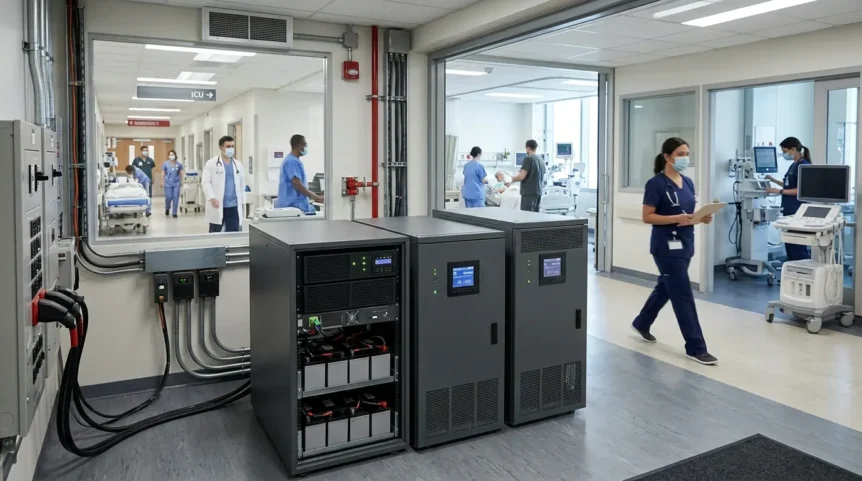
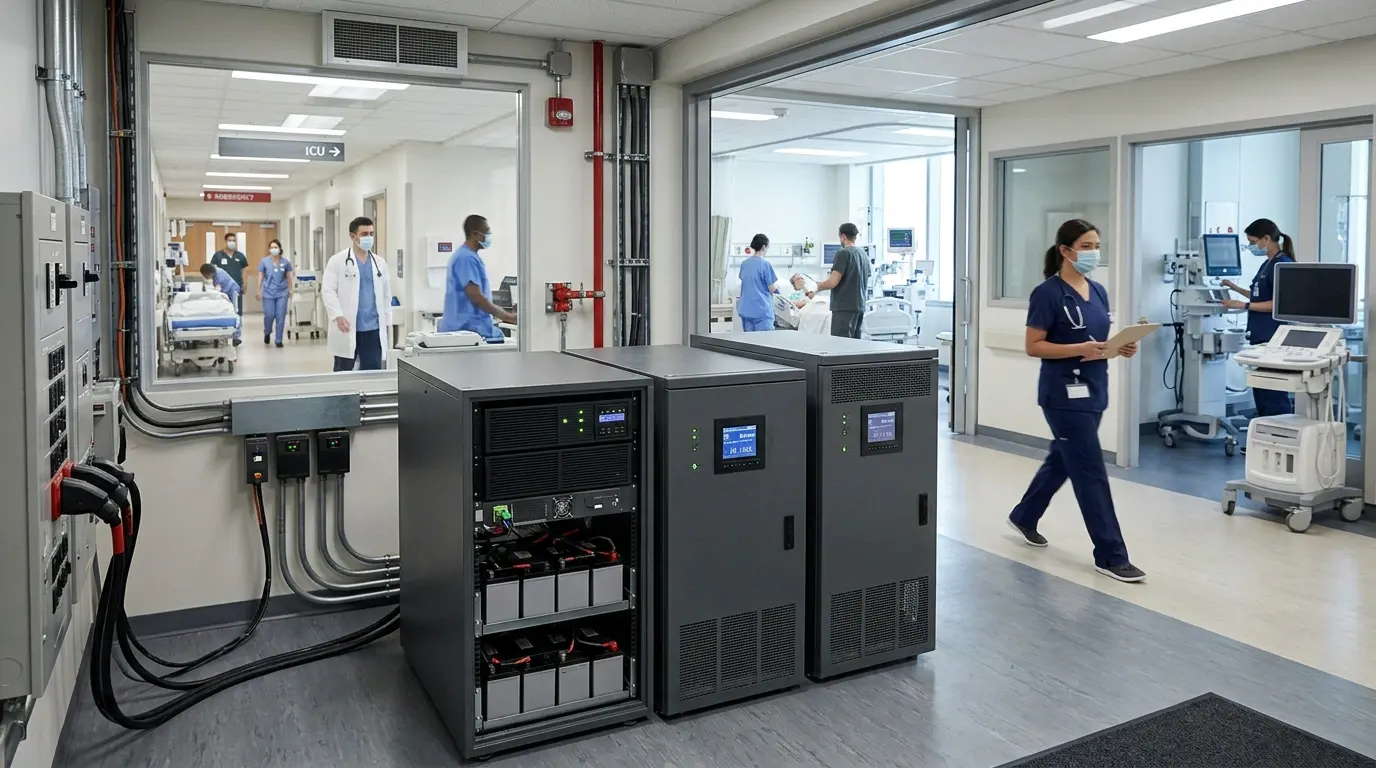
Healthcare facilities rely on continuous electricity to operate critical medical equipment, support patient care, and maintain essential services. Any power interruption can create serious risks, making reliable power protection systems a fundamental requirement.
A UPS for healthcare provides immediate backup power and voltage regulation to protect sensitive medical devices from outages, surges, and electrical disturbances. This solution helps hospitals maintain operational stability during unexpected power failures.
From operating rooms and intensive care units to diagnostic imaging systems and emergency departments, uninterrupted power supply ensures medical professionals can deliver safe and effective treatment. Understanding the role of UPS technology is essential for modern healthcare infrastructure.
Key Takeaways:
- UPS for healthcare provides continuous power protection for critical medical equipment and healthcare infrastructure.
- Healthcare UPS systems prevent disruptions by regulating voltage and supplying immediate backup power during outages.
- Choosing the right UPS type helps hospitals maintain reliability, scalability, and operational efficiency.
- UPS protection supports critical areas including ICUs, operating rooms, imaging systems, and healthcare data centers.
- Advanced UPS monitoring enables proactive maintenance and improves long-term power system reliability.
What Is a UPS for Healthcare?
A UPS (Uninterruptible Power Supply) for healthcare is a specialized power protection system designed to provide continuous electricity for medical facilities, critical equipment, and healthcare infrastructure requiring hig\h reliability and uninterrupted operational performance.
Unlike conventional UPS systems, healthcare UPS solutions are engineered specifically for hospitals, clinics, laboratories, and medical environments where power interruptions can affect patient care, equipment functionality, operational efficiency, and overall healthcare service continuity.
Healthcare facilities depend on various electrical systems, including life-support equipment, diagnostic devices, monitoring systems, and digital healthcare platforms. A UPS provides immediate backup power while protecting connected devices from voltage fluctuations, surges, and electrical disturbances.
Read Also: Data Center Connectivity Solutions: The Ultimate Guide!
Why Healthcare Facilities Need UPS Systems
Healthcare facilities require stable electricity because medical procedures, patient monitoring, and operational activities depend heavily on reliable power infrastructure. Even brief power interruptions may disrupt workflows, and create potential safety concerns.
1. Protecting Critical Medical Equipment
Medical equipment requires consistent and uninterrupted electricity to operate accurately and safely. Devices including ventilators, infusion pumps, monitoring systems, imaging equipment, and laboratory instruments depend on stable power conditions for optimal performance.
Power interruptions or electrical instability can cause equipment failures, inaccurate results, operational delays, and expensive repairs. Diagnostic systems such as MRI and CT scanners especially require reliable power to maintain accurate imaging processes.
2. Preventing Patient Safety Risks
Power reliability plays a crucial role in maintaining patient safety across healthcare environments. Critical areas including intensive care units, emergency rooms, and operating theatres require uninterrupted electricity for essential medical equipment and procedures.
Unexpected power failures affecting ventilators, monitoring devices, or surgical systems may interrupt treatment processes and create operational risks. UPS provides instant backup power to prevent disruptions during critical healthcare activities and patient care procedures.
3. Maintaining Healthcare Data Availability
Unexpected power disruptions can cause server downtime, data corruption, and interrupted access to critical healthcare information. UPS systems provide temporary backup power, allowing IT infrastructure to continue operating or safely shut down when necessary.
By protecting healthcare data infrastructure from electrical disruptions, UPS systems support business continuity, improve system reliability, and ensure healthcare professionals can access essential information whenever required during daily operations.
How UPS Systems Work in Healthcare Applications
A UPS system works by continuously monitoring incoming electrical power and providing clean, stable electricity to connected healthcare equipment. When disturbances occur, the UPS automatically delivers backup power to maintain uninterrupted operations.
1. Power Conditioning and Voltage Regulation
Power conditioning is an essential function of healthcare UPS systems because medical equipment requires stable electricity. UPS solutions filter electrical noise, remove disturbances, and regulate voltage fluctuations that may affect equipment performance.
Voltage regulation helps maintain consistent power output despite variations from the utility supply. This protection reduces the risk of equipment malfunction, extends device lifespan, and supports accurate operation of sensitive healthcare technologies.
2. Battery Backup During Power Failure
During a power outage, UPS systems immediately switch to battery power to maintain electricity supply for connected healthcare equipment. This transition happens within milliseconds, preventing interruptions during critical medical operations and procedures.
The battery system stores electrical energy and provides temporary backup power until the main supply returns or generators become operational. Backup duration depends on battery capacity, connected load, and facility requirements.
3. Automatic Transfer and Power Continuity
Automatic transfer capability allows UPS systems to detect power failures and instantly switch from utility power to battery backup. This seamless transition ensures healthcare equipment continues operating without noticeable interruptions.
UPS systems often operate alongside emergency generators to create a comprehensive power protection strategy. The UPS provides immediate backup power, while generators supply long-term electricity during extended outages.
Key Features of Healthcare UPS Systems
Healthcare UPS systems include specialized features designed to support critical environments requiring maximum reliability, and continuous power protection.
1. High Reliability and Availability
Reliability is one of the most important requirements for healthcare UPS systems because power interruptions can affect critical operations. High-availability designs ensure essential equipment receives continuous protection during electrical disturbances.
Healthcare UPS solutions often include redundant configurations, fault-tolerant components, and advanced power management technologies. These features reduce downtime risks and improve system performance in demanding medical environments.
2. Scalability for Growing Healthcare Infrastructure
Healthcare facilities continue expanding their digital systems, medical equipment, and operational requirements. Scalable UPS solutions allow organizations to increase power capacity without replacing the entire electrical infrastructure.
Modular UPS designs provide flexibility by enabling additional power modules or battery units to be added when demand increases. This approach supports future growth while optimizing investment and operational efficiency.
3. Advanced Monitoring and Management
Advanced monitoring features allow healthcare facilities to track UPS performance, battery health, energy usage, and potential issues in real time. These capabilities support proactive maintenance and reduce unexpected failures.
Modern UPS systems integrate remote monitoring platforms, network management tools, and intelligent alerts. Facility teams can receive notifications about abnormal conditions and respond quickly before problems affect critical operations.
Types of UPS Systems for Healthcare Facilities
Healthcare facilities require different UPS configurations depending on their operational requirements, equipment sensitivity, and power protection needs. Selecting the right UPS type helps hospitals maintain reliable electricity for critical medical applications.
1. Online Double Conversion UPS
Online double conversion UPS systems provide the highest level of power protection by continuously converting incoming AC power into DC and then back into clean AC output.
This technology eliminates electrical disturbances by isolating connected equipment from voltage fluctuations, frequency variations, and power quality issues. It provides zero transfer time during power failures, ensuring uninterrupted operation.
Due to their high reliability, online double conversion UPS systems are commonly used for critical healthcare applications. They protect life-support equipment, advanced medical devices, and healthcare IT infrastructure requiring maximum power availability.
2. Line Interactive UPS
Line interactive UPS systems provide reliable power protection by regulating voltage fluctuations while maintaining a balance between performance and cost efficiency. They are suitable for less critical healthcare equipment.
These systems use automatic voltage regulation technology to correct minor power disturbances without switching to battery mode. This capability helps protect connected devices from unstable electricity and extends equipment operational reliability.
Line interactive UPS solutions are often applied to healthcare environments where continuous power is important but ultra-high availability is not required. They can support office systems, monitoring devices, and non-critical medical applications.
3. Modular UPS Systems
Modular UPS systems are designed with flexible architecture that allows healthcare facilities to expand power capacity based on future requirements. This approach provides scalability without replacing existing infrastructure.
These systems use independent power modules that can be added or removed according to operational demands. Modular designs simplify maintenance processes because individual components can be serviced without shutting down the entire system.
Healthcare organizations benefit from modular UPS solutions because they support infrastructure growth, improve energy efficiency, and reduce long-term operational costs. They are ideal for modern hospitals with evolving technology requirements.
Healthcare Applications That Require UPS Protection
Healthcare facilities depend on numerous electrical systems that require continuous power availability. UPS protection ensures critical equipment remains operational during outages, electrical disturbances, and unexpected power failures.
1. Emergency Rooms and Intensive Care Units (ICU)
Emergency rooms and intensive care units require uninterrupted electricity because they support patients with critical medical conditions. Equipment such as ventilators, monitors, and infusion pumps depends on continuous power.
A power interruption in these departments may affect treatment procedures and patient monitoring capabilities. UPS systems provide immediate backup power, allowing healthcare professionals to continue delivering essential care without operational delays.
By maintaining stable electricity in emergency and ICU environments, UPS solutions improve healthcare resilience. Medical teams can rely on protected power infrastructure during emergencies, unexpected outages, and challenging operational conditions.
2. Operating Rooms
Operating rooms require highly reliable power systems to support surgical equipment, medical lighting, anesthesia machines, and monitoring technologies. Any interruption could affect surgical procedures and healthcare workflows.
UPS systems protect operating rooms by providing continuous power during electrical failures and maintaining stable voltage for sensitive surgical equipment. This ensures medical teams can perform procedures with fewer operational interruptions.
Reliable UPS protection also supports hospital safety standards by reducing electrical risks in surgical environments. Hospitals can maintain better control over critical procedures through dependable power infrastructure and advanced backup solutions.
3. Medical Imaging Systems
Medical imaging systems such as MRI scanners, CT scanners, and X-ray machines require stable electricity to operate accurately. Power fluctuations can interrupt imaging processes and potentially affect diagnostic results.
UPS systems provide clean and regulated power to imaging equipment, preventing unexpected shutdowns and protecting sensitive electronic components. This helps healthcare facilities maintain efficient diagnostic workflows and reduce equipment downtime.
By supporting consistent power quality, UPS solutions improve the reliability of medical imaging operations. Healthcare providers can deliver accurate diagnostic services while minimizing disruptions caused by electrical instability.
4. Healthcare Data Centers
Healthcare data centers support essential digital services, including electronic medical records, hospital applications, and patient information systems. These environments require continuous power to maintain data availability and operational performance.
UPS systems protect healthcare servers, networking equipment, and storage infrastructure from outages and electrical disturbances. They provide backup power that allows systems to continue operating or shut down safely.
5. Laboratories and Research Facilities
Laboratories and research facilities depend on precision equipment that requires stable electricity for accurate testing and analysis. Power interruptions may disrupt experiments, damage samples, or affect research outcomes.
UPS systems provide reliable backup power for laboratory instruments, monitoring systems, and specialized research equipment. They help maintain controlled environments and prevent operational interruptions during electrical failures.
References:
- Eaton. (n.d.). Healthcare power solutions: Reliable power protection for critical healthcare applications. Eaton. https://www.eaton.com/.
- International Electrotechnical Commission. (2018). IEC 62040-1:2017 Uninterruptible power systems (UPS) – Part 1: Safety requirements. IEC. https://www.iec.ch/.
- International Electrotechnical Commission. (2021). IEC 62040-3:2021 Uninterruptible power systems (UPS) – Part 3: Method of specifying the performance and test requirements. IEC. https://www.iec.ch/.
- International Electrotechnical Commission. (2020). IEC 60601-1: Medical electrical equipment – Part 1: General requirements for basic safety and essential performance. IEC. https://www.iec.ch/.