
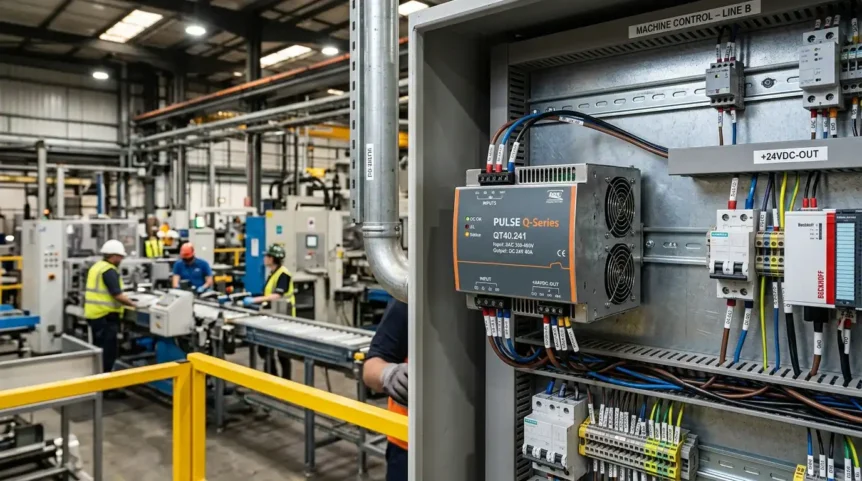
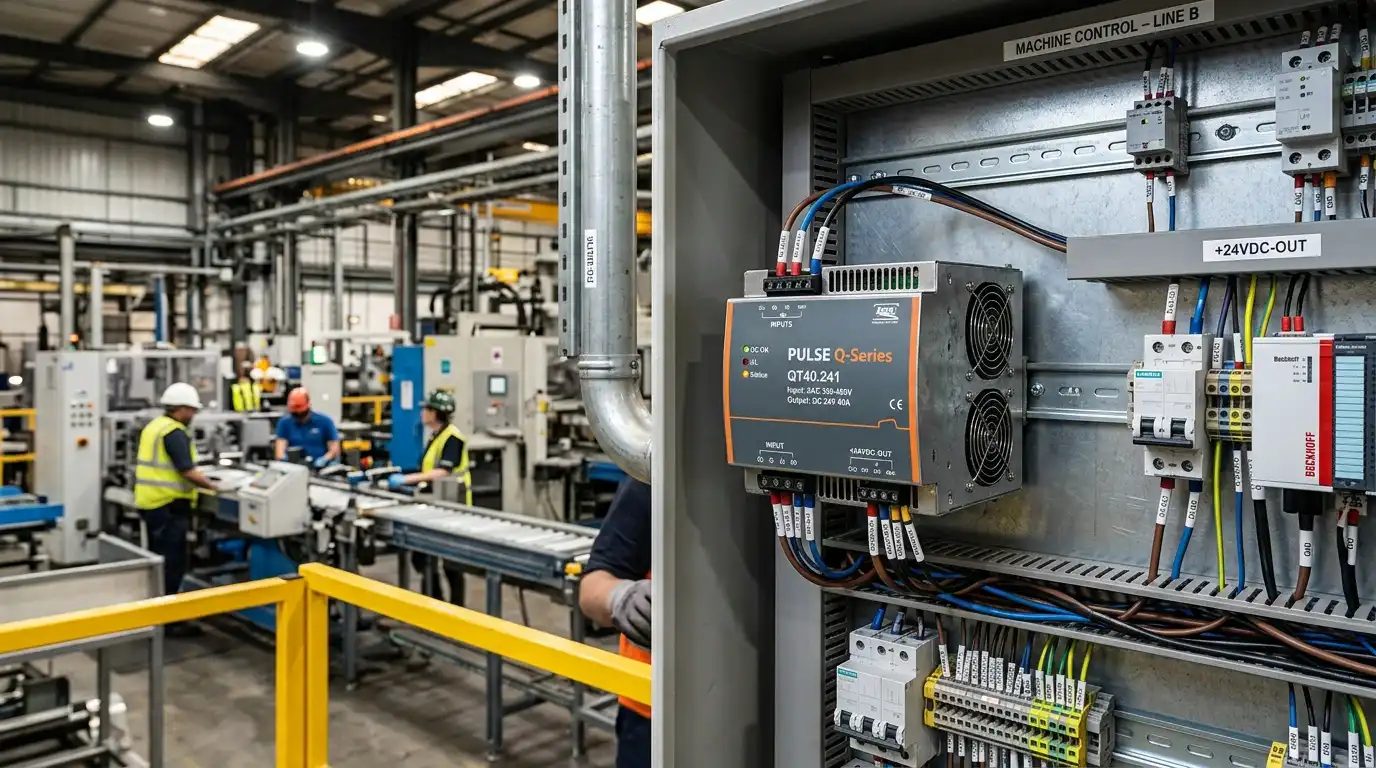
Industrial power supplies act as the silent backbone of modern manufacturing facilities. They ensure that electricity flows reliably to critical machinery, maintaining seamless production cycles.
These power units convert raw grid energy into the precise, stable current required for sensitive control systems. Without these specialized components, industrial equipment would be vulnerable to frequent failures and costly downtime.
The Core Functions of Industrial Power Supplies
These devices perform essential tasks that bridge the gap between high-voltage grid inputs and delicate machine requirements. By regulating power flow, they protect the entire production line.
1. Power Conversion
Industrial power supplies transform high-voltage AC input (such as 220V or 380V) into controlled DC power. This conversion is vital for energizing PLC systems and microcontrollers that operate factory machinery.
Precision in voltage conversion ensures that connected hardware receives the exact energy levels required for optimal operation. This step prevents power mismatches that could otherwise lead to system malfunctions or total component failure.
Read Also: Industrial Power Solutions: Powering Your Business Future
2. Voltage Stabilization
A reliable PSU actively mitigates ripple and electrical noise to keep output steady. This stabilization is crucial for protecting sensitive electronic equipment from erratic voltage swings.
By smoothing the current, these units prevent data errors in control sensors and prevent hardware degradation. Consistent power quality effectively extends the lifespan of expensive industrial assets in demanding environments.
3. Advanced Safety Protection
Modern power supplies feature integrated safety mechanisms like overload protection, overvoltage protection, and short-circuit protection. These safeguards immediately deactivate the unit when electrical anomalies are detected.
This rapid response prevents catastrophic fires or permanent damage to machinery during power surges. Advanced safety layers ensure that a single component failure does not cascade through the entire electrical network.
Types of Industrial Power Supplies
Different manufacturing environments require specific power delivery methods to match unique operational needs. Choosing the right architecture ensures efficiency, durability, and space optimization across the facility floor.
1. Switched-Mode Power Supply (SMPS)
The SMPS has become the industry standard due to its impressive high efficiency and compact size. Its lightweight construction allows for seamless integration into crowded control cabinets.
These units use high-frequency switching to minimize energy waste during power conversion processes. Their ability to handle wide voltage ranges makes them versatile choices for modern automated production systems.
2. Linear Power Supply
A linear power supply utilizes large transformers to step down voltage with minimal ripple noise. This design is ideal for audio systems and highly sensitive measuring instruments requiring clean signals.
However, these units are physically heavy and generate significant heat compared to modern alternatives. They consume more energy, making them less suitable for large-scale operations focused on electrical efficiency.
3. DIN Rail Power Supply
DIN rail power supplies are engineered for quick mounting onto metal rails within electrical panels. They offer a standardized, organized approach to power distribution in factory automation projects.
This design simplifies maintenance tasks, allowing technicians to replace or upgrade power units with minimal effort. Their slim profiles maximize cabinet space, which is critical for complex, dense control systems.
4. Uninterruptible Power Supply (UPS)
A UPS acts as a vital backup layer, providing immediate energy when the main power fails. This transition prevents sudden downtime, keeping critical data and hardware alive during emergencies.
By maintaining power continuity, these systems protect against data loss in industrial controllers during outages. They serve as a final defense against the unpredictable nature of external grid stability.
Essential Components of a PSU System
An industrial PSU relies on a specific internal architecture to safely convert and refine incoming electricity. Each stage contributes to the final delivery of smooth, reliable, and clean power.
1. Transformer
This component scales the input voltage to lower, manageable levels for the secondary circuit. It serves as the primary stage in energy management.
2. Rectifier
A diode circuit performs the heavy lifting by converting fluctuating AC into direct current. This transformation is necessary for most modern electronic components.
3. Filter
Internal capacitors and inductors smooth out the remaining pulses in the DC output. This process results in a clean, consistent flow of electricity.
4. Regulator
The regulator maintains a constant voltage level even if the load or input fluctuates. It provides the final assurance of stable machine operation.
Overcoming Industrial Environmental Challenges
Industrial power supplies must be built with rugged materials to withstand harsh, non-residential conditions. Unlike consumer hardware, these units are specifically designed for continuous performance in severe, high-stress settings.
1. Operating in Extreme Temperatures
These units are built to function reliably in harsh ranges, typically from -25°C to +70°C. High-grade internal components ensure that thermal fatigue does not compromise long-term performance.
Engineers rely on this wide tolerance to place power units in unconditioned environments like factory floors. Consistent output is maintained even when ambient heat levels would cause standard electronics to fail.
2. Resistance to Vibration and Dust
Industrial PSUs feature robust casings and IP ratings that prevent physical damage from dust ingress. They are also vibration-resistant to withstand constant mechanical tremors from nearby industrial machinery.
This durability ensures that sensitive circuitry remains protected from contaminants found in typical production plants. A sturdy build translates directly into reduced maintenance requirements and fewer equipment replacements over time.
3. Understanding Power Derating
Power derating is a critical safety practice where a unit’s maximum capacity is reduced in hot conditions. Operating at 80% capacity prevents overheating and protects the internal circuitry.
Engineers must account for this reduction during the initial design and installation phases. Properly sizing the power supply based on derating curves ensures safety and hardware longevity in high-temperature zones.
How to Choose the Right Industrial Power Supply
Selecting the optimal power supply requires a balance between technical specifications and operational environment requirements. Following a structured procurement guide ensures that every machine receives exactly what it needs.
1. Matching Output Voltage
Engineers must verify that the PSU output matches the specific requirements of their devices, such as 12V, 24V, or 48V. Using mismatched voltage levels can lead to immediate equipment damage.
Standardizing on a single voltage across a production line simplifies the inventory of spare parts. Always check the machine’s technical manual to confirm compatibility before finalizing your hardware purchase.
2. Calculating Current Capacity
Always calculate the total load requirements and add a 20% to 30% safety margin for your PSU. This overhead prevents the unit from running at its limit, which significantly improves reliability.
Under-specifying current capacity is a common cause of premature power supply failure. Providing a buffer ensures that the system handles peak startup loads without dropping voltage or shutting down.
3. Importance of Safety Certifications
Prioritizing hardware with CE, UL, or IEC certifications is essential for verifying quality and regulatory compliance. These industry stamps confirm that the product has undergone rigorous safety testing.
Utilizing certified equipment reduces liability risks and ensures compatibility with international electrical standards. Always check for valid documentation to guarantee that your facility meets safety codes and operational best practices.