
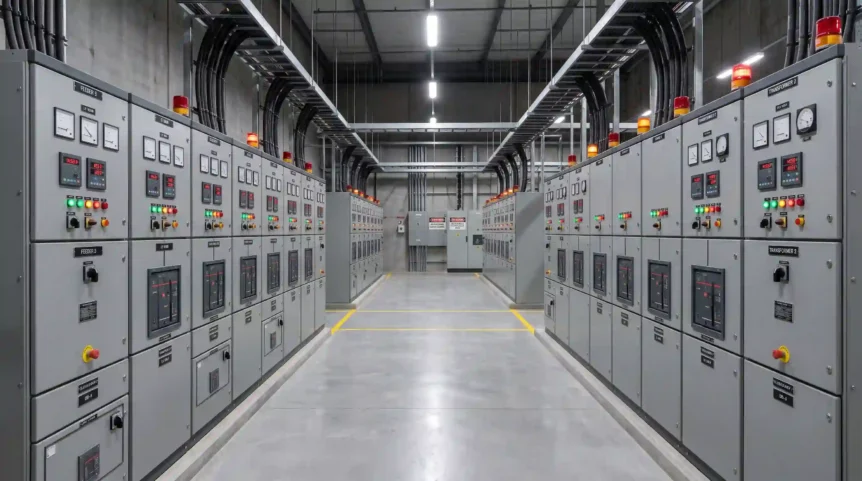
Modern society relies entirely on continuous access to electrical energy for daily operations. Behind every illuminated bulb and running appliance lies an intricate delivery web known as power distribution.
This final leg of the electrical grid bridges the gap between high-voltage generation plants and end-use consumers. Understanding how this system works reveals the engineering precision required to power modern civilization safely.
What is Electric Power Distribution?
Electric power distribution represents the final stage in delivering electricity from distant generation sources directly to end consumers. It serves as the vital intermediary network that converts raw, dangerous bulk power into usable household and commercial electricity.
Utility operators manage this transition by stepping down high transmission voltages to significantly safer levels. This complex network utilizes a combination of overhead power lines and underground cables to safely reach residential neighborhoods, commercial hubs, and industrial facilities.
Key Components of a Power Distribution Network
A robust power network depends on several critical pieces of electrical hardware working in unison. Each component performs a unique role in reducing voltage, routing currents, and managing customer loads.
1. Distribution Substations
Distribution substations serve as the crucial primary gateways within local power delivery infrastructure. They receive bulk electricity directly from high-voltage transmission lines operating at extreme voltage thresholds.
Inside these facilities, specialized equipment steps down the electricity to medium-voltage levels, typically ranging from 2 kV to 33 kV. This operational reduction makes the power suitable for safe routing throughout municipal and suburban regions.
Read Also: Line-Interactive UPS Guide: Complete Power Protection
2. Primary Distribution Feeders
Primary distribution feeders are medium-voltage lines tasked with transporting power across long local distances. These circuits run along utility poles or within subterranean conduits to connect substations directly with neighborhood zones.
Because these lines operate without intermediate customer connections, they maintain consistent voltage levels over extended distances. Their strategic layout ensures efficient delivery before the final transformation stage occurs near the consumer site.
3. Distribution Transformers
Distribution transformers perform the final, essential step in the voltage reduction process for consumers. Mounted on concrete pads or elevated utility poles, these units drop medium voltages down to safe operational levels.
Residential buildings typically receive standard 230V single-phase power, whereas industrial sites receive heavy-duty 440V three-phase power. This vital conversion protects sensitive electronics and industrial machinery from catastrophic voltage spikes.
4. Distribution Boards and Smart Meters
Distribution boards, commonly called breaker panels, divide incoming electrical currents into isolated branch circuits inside buildings. They house internal circuit breakers that trip during overloads to prevent structural electrical fires.
Working alongside these panels, modern smart meters continuously record overall household and commercial energy consumption. These digital devices wirelessly transmit accurate usage data directly to utility providers for precise billing and load monitoring.
Power Distribution System Types and Architecture Designs
Utility engineers design power grid layouts based on geographic density, cost constraints, and required reliability levels. Selecting the right architectural design ensures long-term operational efficiency and grid resilience.
1. Alternating Current (AC) vs. Direct Current (DC) in Power Distribution
Alternating current (AC) remains the universal industry standard for local electricity distribution systems globally. Its primary advantage stems from how easily electromagnetic transformers can step voltage levels up or down with minimal energy loss.
While high-voltage direct current (HVDC) excels at long-distance transmission, AC systems offer vastly superior flexibility for local neighborhood distribution networks. AC infrastructure allows utilities to serve diverse customer voltage requirements efficiently through simple transformer stepping.
2. Network Topologies and Layouts
Grid topology dictates how electrical currents flow from supply points to individual customer premises. Engineers select specific configurations by balancing structural installation costs against necessary power reliability standards.
a. Radial Distribution Systems
Radial distribution systems feature a simple tree-like design where a single feeder extends outward from the substation. This configuration represents the most economical layout to construct and maintain in low-density rural regions.
However, its single-path structure makes connected customers highly vulnerable to widespread utility power outages. A single line break anywhere along the radial branch disrupts service to every downstream consumer automatically.
b. Ring (Loop) Main Systems
Ring main systems arrange distribution feeders in closed loops that start and return to the same substation point. This redundant structural layout provides dual supply pathways for every connected distribution transformer along the loop.
If a fault occurs, technicians can easily isolate the damaged segment while power continues flowing from the opposite direction. Consequently, loop configurations dramatically enhance overall service reliability for critical commercial districts.
c. Interconnected Grid Systems
Interconnected grid systems tie multiple substations together into a complex, highly redundant electrical mesh network. This advanced architecture commonly powers dense urban centers where continuous electrical service is absolutely critical.
If one feeder or substation fails, surrounding interconnected lines instantly absorb and reroute the electrical load without interruption. This redundant design delivers maximum fault tolerance, virtually eliminating unplanned power outages for high-density metropolitan areas.
3. Construction Methods: Overhead Wires vs. Underground Conduits
Utilities deploy overhead power lines using wooden or steel poles due to lower upfront installation costs and easier maintenance access. However, these exposed aerial wires remain highly susceptible to severe weather damage, fallen tree branches, and vehicular collisions.
Conversely, underground conduits place high-voltage insulated cables beneath streets, offering superior physical protection and clean visual aesthetics. Although underground installations require significantly higher capital investment, they deliver far greater long-term weather resilience and public safety benefits.
The Challenges Facing Modern Power Distribution Systems
Modern distribution grids face severe strain from aging infrastructure built decades ago. Legacy equipment frequently struggles to handle the rapidly increasing power demands of digitized cities and electrifying industries.
Additionally, severe weather events triggered by global climate shifts repeatedly disrupt physical distribution lines. Managing sudden peak load demands requires significant grid modernization to prevent catastrophic rolling blackouts.
Future Trends and Innovations in Power Distribution
The power sector is undergoing a rapid digital transformation to meet ambitious global decarbonization targets. Innovative technologies are revolutionizing how utilities monitor, manage, and distribute electrical energy across local communities.
1. Smart Grids and Automated Feeder Systems
Smart grids integrate modern IoT sensors and digital communications directly into traditional distribution infrastructure. These connected devices constantly monitor real-time electrical metrics across feeders, transformers, and residential meter points.
When line faults occur, automated feeder systems instantly isolate broken segments and automatically re-route electricity through functional pathways. This intelligent self-healing capability drastically minimizes outage duration and reduces the need for manual field crew interventions.
2. Integrating Renewable Energy and Microgrids
The rapid growth of rooftop solar panels introduces complex bi-directional power flow into traditional distribution networks. Grids originally engineered for one-way power flow must now manage power feeding back from residential producers.
Localized microgrids equipped with advanced battery storage help stabilize these fluctuating renewable energy inputs effectively. They allow community networks to operate independently during main grid failures, boosting local energy resilience significantly.
3. The Impact of Electric Vehicles (EVs) on Distribution Demand
The global shift toward electric vehicles (EVs) imposes unprecedented localized loads on neighborhood distribution transformers. Uncontrolled evening charging spikes risk overheating older electrical hardware and causing localized voltage drops.
To mitigate grid stress, utilities are deploying intelligent smart charging management systems across communities. These software platforms dynamically schedule vehicle charging during off-peak hours, preserving hardware longevity and preventing grid overloads.