
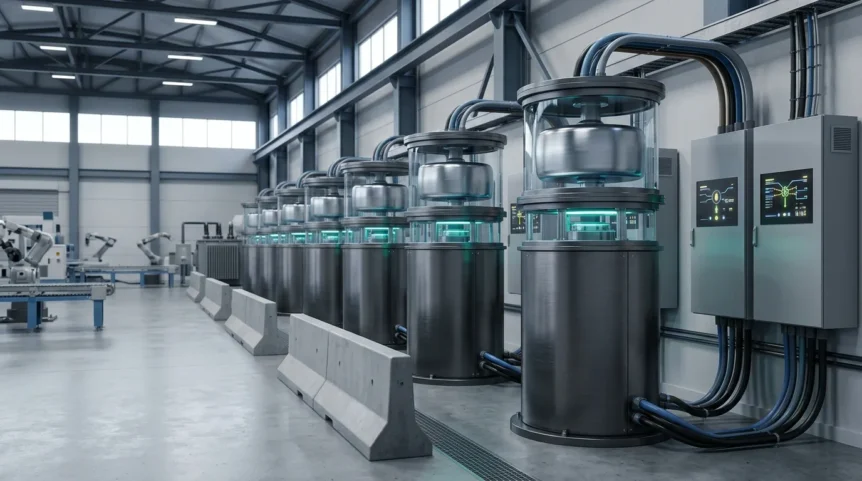
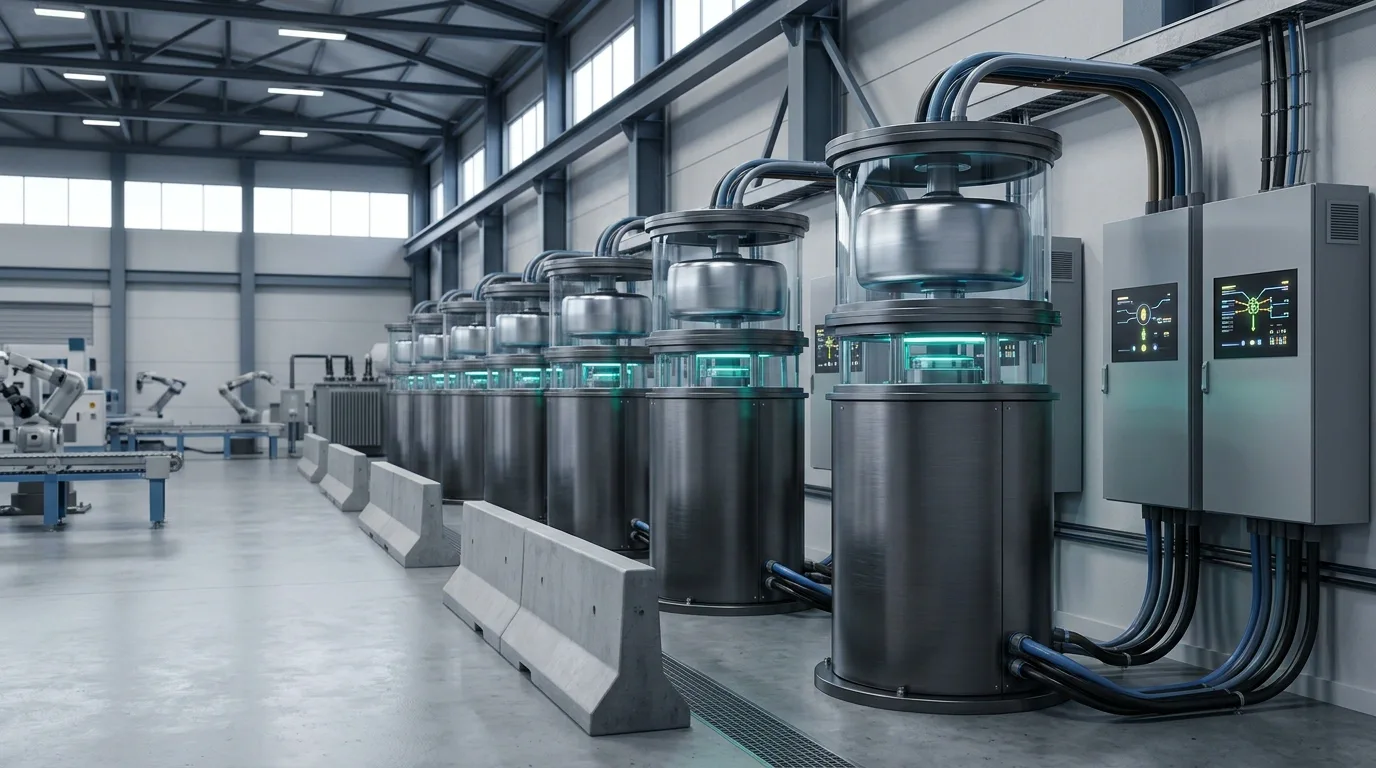
For industrial and commercial operators, energy storage is no longer simply about capacity. Businesses increasingly need faster response, higher reliability, lower maintenance, and long-term performance beyond conventional lithium-ion systems.
A flywheel energy storage system (FESS) acts as a mechanical battery, storing energy as kinetic energy in a rapidly spinning rotor. Its near-instant response and virtually unlimited charge cycles make it valuable for critical industrial applications.
Key Takeaways:
- Flywheel energy storage systems (FESS) store electricity as rotational kinetic energy for rapid, high-power applications.
- FESS uses a high-speed rotor, motor-generator, vacuum enclosure, and magnetic bearings to minimize energy losses and mechanical wear.
- Flywheels provide exceptional cycle life, millisecond response, low maintenance, and reduced chemical-related safety concerns.
- Their strongest applications include frequency regulation, critical-facility UPS systems, renewable integration, and regenerative braking.
- Flywheels are best suited for frequent, short-duration power demands rather than long-duration energy storage.
How Does Flywheel Energy Storage Work? (The Mechanics)
How Does Flywheel Energy Storage Work (The Mechanics)
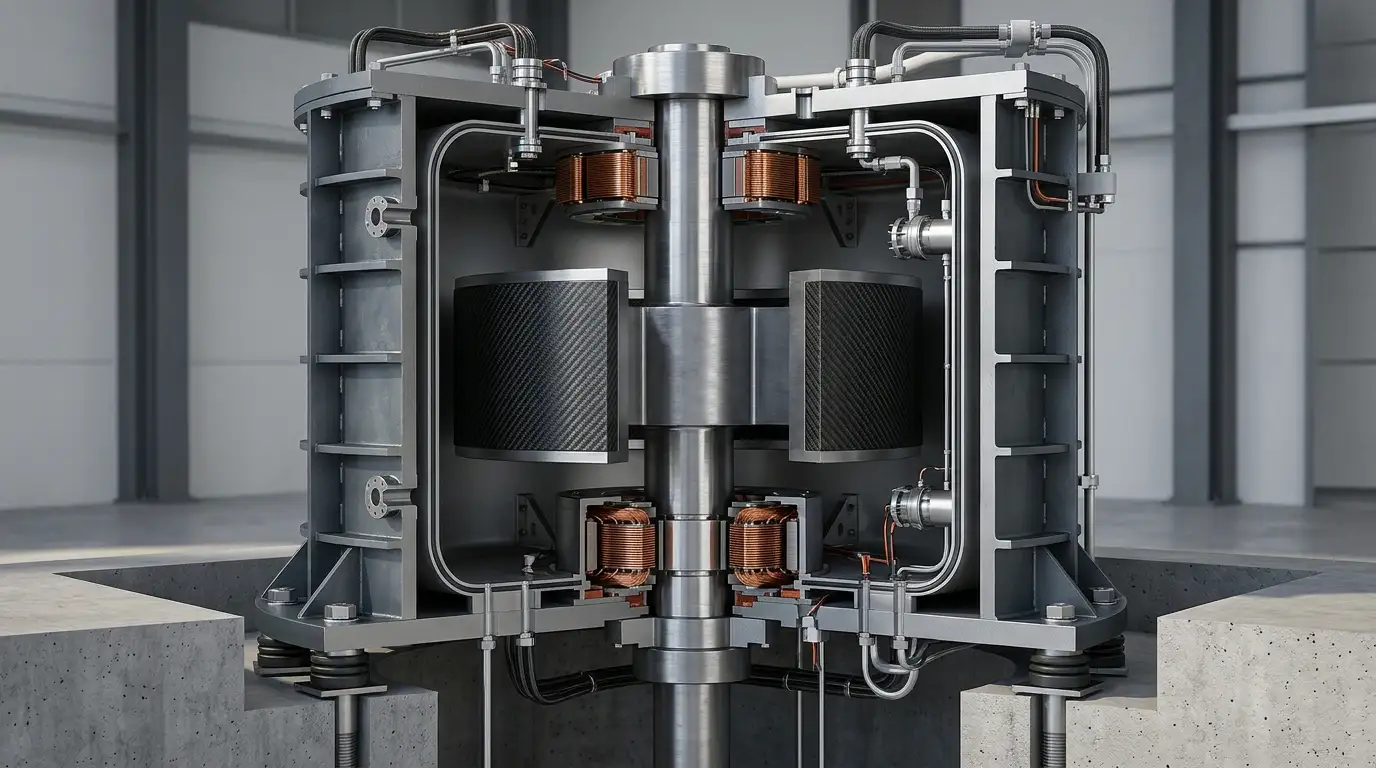
A flywheel energy storage system (FESS) converts electrical energy into rotational kinetic energy and reverses that process during discharge. Its core architecture combines a rotor, motor-generator, bearings, vacuum enclosure, and power electronics.
1. The Rotor
The flywheel rotor is the primary mechanical storage element, accumulating energy as rotational kinetic energy. Designs may use high-strength steel or carbon-fiber composites, with material selection influencing speed, strength, energy density, and cost.
During operation, the rotor spins at high speed inside a controlled enclosure. Its stored energy depends strongly on rotational speed and rotor characteristics, making mechanical integrity and containment critical considerations for industrial deployments.
Read Also: Industrial Power Distribution Solutions for Reliability
2. The Motor/Generator
The motor-generator performs both charging and discharging functions within the FESS. During charging, electrical energy drives the motor, accelerating the rotor and converting electricity into stored rotational energy.
During discharge, the electrical machine operates as a generator, extracting rotational energy while slowing the rotor. This bidirectional conversion enables rapid power delivery for industrial power quality, backup, and grid-support applications.
3. Vacuum & Magnetic Bearings
Vacuum enclosures reduce aerodynamic drag, or windage losses, around high-speed rotors. Lower air resistance allows the flywheel to maintain rotational energy more efficiently, while supporting consistent operation at elevated rotational speeds.
Magnetic bearings support and stabilize the rotating assembly while minimizing mechanical contact and friction. Combined with vacuum operation, they reduce parasitic losses and mechanical wear, supporting high efficiency, rapid cycling, and long service life.
Read Also: Uninterruptible Power Supply Application: Ultimate Guide
Key Benefits of Flywheel Technology
Key Benefits of Flywheel Technology
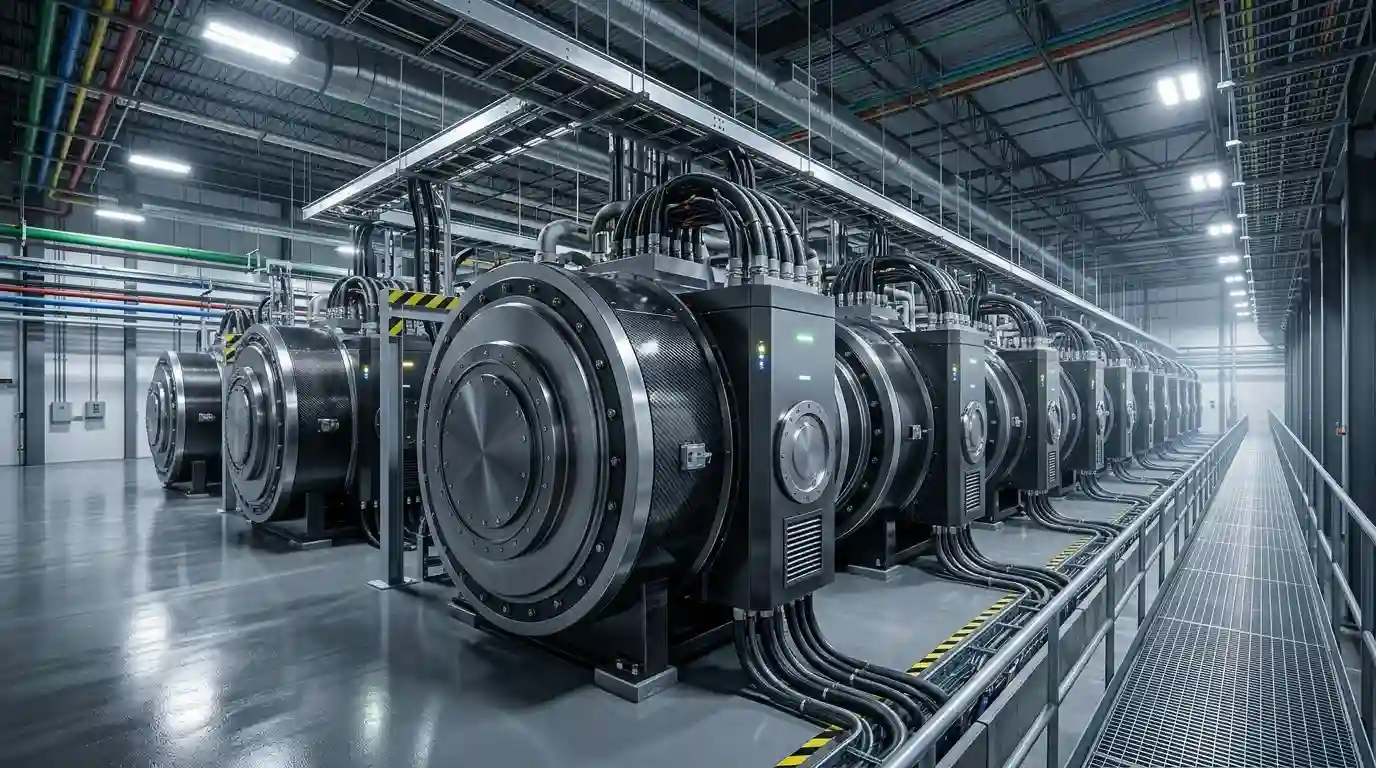
For B2B operators, flywheel energy storage systems (FESS) offer a compelling combination of rapid response, long service life, high cycling capability, and reduced environmental impact for demanding applications.
1. Exceptional Longevity
Unlike electrochemical batteries, flywheel energy storage does not rely on chemical reactions that progressively degrade electrodes. Properly engineered systems can achieve very high cycle counts, with developers reporting lifetimes extending beyond 20 years.
Because cycle life is largely independent of depth of discharge, flywheels can repeatedly charge and discharge without the same degradation mechanisms associated with conventional batteries. This characteristic can support predictable long-term performance in industrial applications.
Read Also: Industrial Surge Protection: Stop Transient Voltage Spikes
2. Instantaneous Power Delivery
Flywheel energy storage systems can respond within milliseconds, making them well suited to applications requiring rapid changes in power output. This responsiveness is particularly valuable for frequency regulation, voltage support, and power-quality management.
For industrial facilities, rapid power response can help bridge short disturbances and stabilize electrical systems before longer-duration backup sources become available. This makes flywheels particularly effective where power quality matters more than extended energy duration.
3. Eco-Friendly & Safe
Flywheel systems generally avoid the hazardous chemical materials associated with many electrochemical storage technologies and produce no direct emissions during normal operation. Their mechanical architecture also eliminates battery-specific thermal runaway mechanisms.
However, flywheel safety still requires engineered containment, rotor integrity, bearing protection, and appropriate system design because high-speed mechanical failure can release substantial stored energy. Therefore, “safe” should not mean risk-free.
Read Also: Data Center Connectivity Solutions: The Ultimate Guide!
4. Low Maintenance
The mechanical architecture of flywheel energy storage can reduce maintenance associated with chemical battery degradation and periodic battery replacement. Flywheels are designed for frequent cycling without significant capacity degradation from repeated charge-discharge operation.
For B2B facilities, this can simplify energy storage maintenance and improve lifecycle predictability. Nevertheless, rotating components, bearings, vacuum systems, power electronics, and safety systems still require appropriate inspection and preventive maintenance.
Major Applications: Where Flywheels Shine
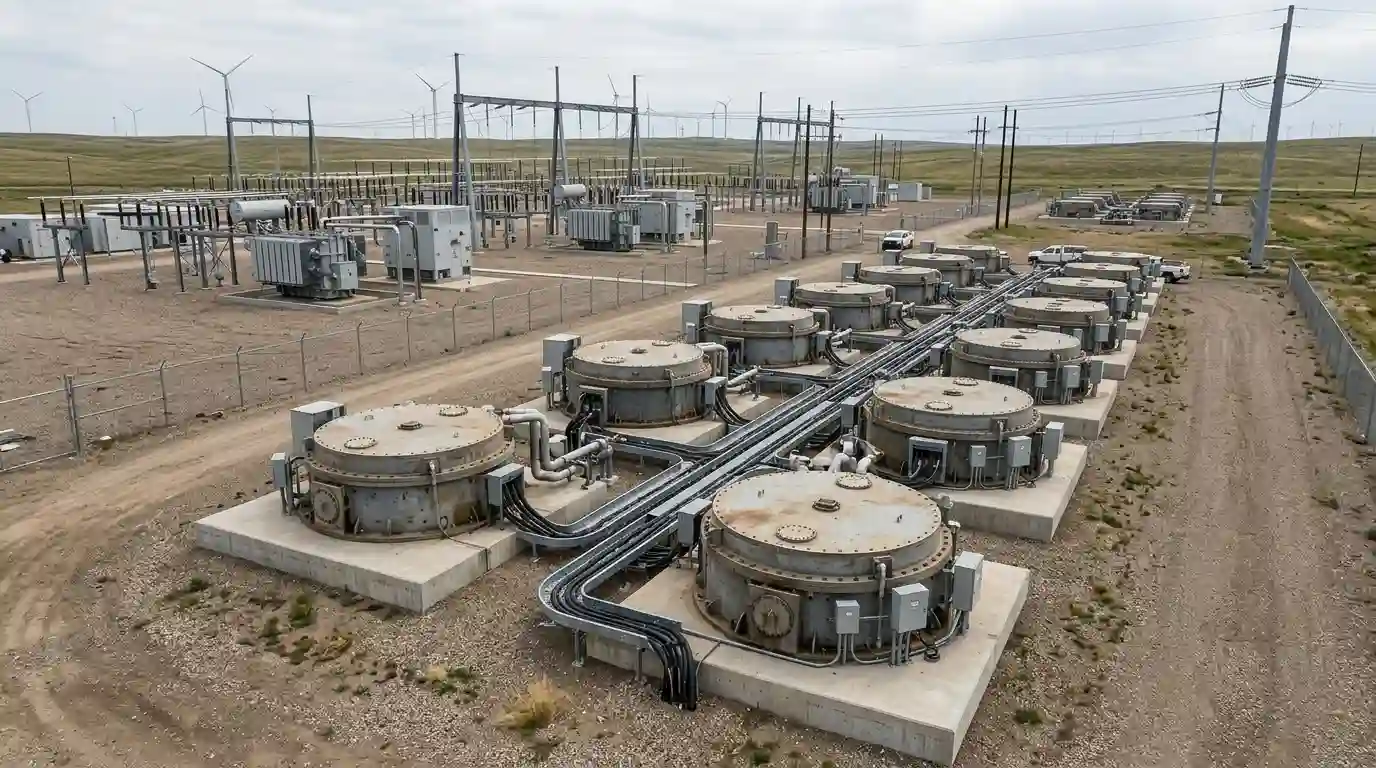
Major Applications Where Flywheels Shine
For commercial and industrial operators, flywheel energy storage systems (FESS) are particularly valuable where rapid power response, frequent cycling, and high reliability matter more than long-duration energy storage.
1. Grid Stabilization & Frequency Regulation
Electric grids must continuously balance power generation and consumption to maintain stable frequency. Flywheel systems can respond to rapidly changing control signals, making them well suited for frequency regulation and other ancillary grid services.
For utilities and grid operators, rapid-response energy storage can absorb excess electricity when supply temporarily exceeds demand and discharge when demand rises. This flexibility supports grid stability without relying exclusively on conventional generation resources.
Read Also: Cloud Managed Data Center Services: Maximize IT Uptime
2. Data Centers & Critical Facilities
Data centers, hospitals, telecommunications facilities, and other critical sites require uninterrupted electricity during disturbances. Flywheel-based UPS systems can provide immediate ride-through power while longer-duration backup generation is started or stabilized.
Rather than treating flywheels as replacements for generators, operators can use them as a high-power bridge between utility failure and standby generation. This architecture improves resilience during short-duration interruptions and transfer events.
3. Renewable Energy Integration
Variable renewable resources such as wind power and solar generation can produce rapid changes in electrical output. Flywheels can absorb or release power quickly, helping mitigate short-term fluctuations and renewable ramping events.
For commercial and utility-scale projects, flywheel energy storage can complement renewable generation by providing fast balancing services without depending on long-duration storage. Its high cycling capability makes it particularly suitable for frequent short-term fluctuations.
Read Also: UPS for Healthcare: Prevent Costly Power Failures
4. Transportation & Heavy Machinery
Electric rail systems can recover kinetic energy during braking and store it using flywheel energy storage, allowing recovered energy to support subsequent acceleration or reduce electrical demand from the traction network.
This approach is relevant to trains, subways, industrial vehicles, and other high-power applications requiring repeated acceleration and braking. Flywheels can handle frequent energy cycling while supporting improved traction-system efficiency and power quality.
References:
- Amber Kinetics, Inc. (2016). Final technical report: Flywheel energy storage demonstration. U.S. Department of Energy.
- Boyes, J. D. (2000). Technologies for energy storage: Flywheels and superconducting magnetic energy storage. Sandia National Laboratories.
- U.S. Department of Energy. (2017). Flywheel energy storage demonstration. Office of Electricity.