
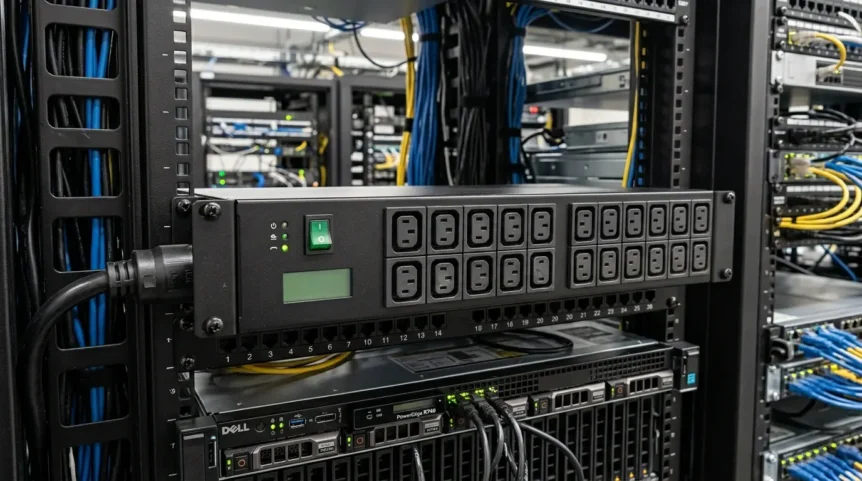
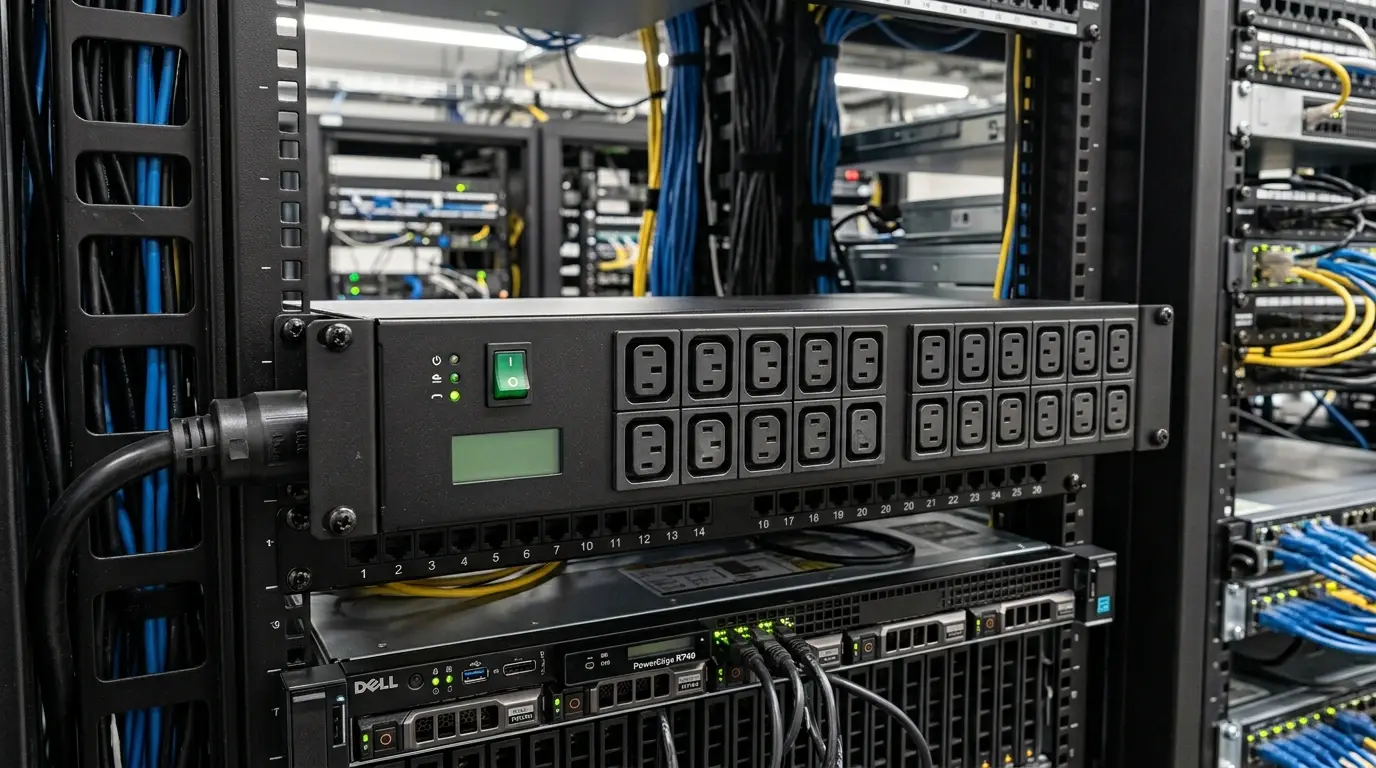
A data center can have reliable utility power and backup systems, yet poor power distribution can still create operational risks. Power Distribution Units (PDUs) ensure electricity reaches servers and networking equipment safely, efficiently, and consistently.
But not every PDU serves the same purpose. Basic models distribute power, while intelligent PDUs provide real-time monitoring, remote control, and greater visibility across rack-level infrastructure. Understanding their types, components, functions, and applications is essential for building a reliable and scalable data center.
Key Takeaways:
- PDU distributes electrical power from upstream infrastructure to servers, storage, networking equipment, and other IT loads.
- Intelligent PDUs add monitoring, remote control, alarms, and rack-level visibility for better power management.
- PDU redundancy through A+B power paths reduces dependence on a single electrical distribution route.
- PDU selection should consider electrical capacity, outlet compatibility, rack configuration, monitoring needs, and future IT growth.
- Monitoring helps operators understand rack power consumption, manage loads, and improve data center capacity planning.
What Is a Power Distribution Unit?
A power distribution unit (PDU) is an electrical device that receives power from an upstream source and distributes it across multiple connected devices, commonly within data center racks.
PDUs serve as an important connection point between the facility’s electrical infrastructure and IT equipment. They distribute available power to servers, storage systems, networking devices, and other rack-mounted loads.
Unlike a UPS, which provides backup power and protects equipment during electrical interruptions, a PDU primarily manages and distributes electrical power. Some advanced PDUs also provide monitoring and remote control capabilities.
Read Also: Data Center Uninterruptible Power: Avoid Outages
How Does a Power Distribution Unit Work?
A PDU receives electrical power from an upstream source, distributes it through internal circuits, and delivers electricity through multiple outlets to connected IT equipment.
The distribution process can include circuit protection, load monitoring, and power management depending on the PDU configuration. Intelligent models can also provide operators with real-time visibility into rack-level electrical conditions.
Within data center electrical infrastructure, PDUs form the final distribution layer between centralized power systems and individual IT loads, helping organize and manage power delivery throughout equipment racks.
A. PDU Power Input
The PDU power input connects the unit to an upstream electrical source, which may include utility power, a UPS, or another distribution system serving the data center.
PDUs can use single-phase or three-phase power input. The appropriate configuration depends on the electrical architecture, equipment requirements, available capacity, and power density of the data center environment.
B. PDU Power Output
The PDU power output distributes electricity through multiple receptacles connected to servers, storage systems, networking equipment, and other critical IT loads within a rack.
Output configurations vary by PDU model, including the number and type of outlets, voltage, current capacity, and phase arrangement. These characteristics must match connected equipment requirements to prevent overloads and compatibility problems.
Key Components of a Power Distribution Unit
A power distribution unit (PDU) combines electrical protection, input connections, output receptacles, monitoring components, and communication systems to distribute power safely across connected IT equipment.
1. Circuit Breakers
Circuit breakers provide overcurrent protection by interrupting electrical flow when current exceeds safe operating limits. This helps protect connected circuits and equipment from potentially damaging overload conditions.
Circuit breakers also enable circuit isolation, allowing specific electrical paths to be disconnected for maintenance, troubleshooting, or fault management without necessarily interrupting other connected circuits.
2. Input Connection
The PDU input connection links the distribution unit to an upstream power source using appropriately rated power cables, plugs, connectors, and electrical protection components.
Input configurations vary according to voltage, current, phase, and facility architecture. Data center PDUs can support single-phase or three-phase arrangements depending on equipment requirements and available electrical infrastructure.
3. Output Receptacles
Output receptacles provide connection points for servers, storage systems, networking equipment, and other IT loads. Common rack PDU configurations include different outlet types and combinations designed for specific equipment.
The number and arrangement of outlets depend on the PDU design, while outlet ratings must remain compatible with connected equipment. Proper selection helps accommodate rack density without exceeding electrical capacity.
4. Power Monitoring Components
Power monitoring components measure electrical parameters such as current, voltage, power, and energy consumption. Depending on the PDU, measurements may be available at the unit, circuit, or individual outlet level.
Load monitoring provides visibility into rack power consumption, helping operators identify utilization patterns, detect potential overload conditions, and improve capacity planning across data center infrastructure.
5. Control and Communication Systems
Control and communication systems connect intelligent PDUs to management platforms through network interfaces, enabling remote access to electrical measurements, alarms, configuration settings, and other operational information.
Advanced PDUs can provide remote monitoring, environmental data, user-defined alerts, and outlet-level controls. These capabilities help operators manage distributed infrastructure without requiring physical access to individual racks.
Types of Power Distribution Units
Power distribution units range from basic devices that simply distribute electricity to intelligent systems capable of monitoring, controlling, and managing rack-level power consumption.
1. Basic PDU
A basic PDU provides straightforward electrical distribution through multiple outlets without advanced monitoring or remote switching capabilities. It is commonly used where operators primarily need reliable power delivery to rack-mounted equipment.
Basic PDUs are available with different electrical ratings, outlet configurations, and mounting options, allowing them to support various rack layouts and equipment requirements without adding unnecessary management functionality.
2. Metered PDU
A metered PDU adds local electrical measurement to basic power distribution, allowing operators to view power consumption directly through an integrated display or metering interface.
This additional load visibility helps operators monitor rack utilization, understand available capacity, and reduce the risk of overloading circuits when installing or relocating IT equipment.
3. Monitored PDU
A monitored PDU provides remote access to power measurements through a network interface, allowing operators to monitor electrical conditions without physically visiting the rack.
Depending on the model, monitoring can include unit-level or outlet-level power data alongside environmental monitoring, alarms, and configurable thresholds for identifying abnormal electrical conditions.
4. Switched PDU
A switched PDU combines power monitoring with remote outlet control, allowing authorized operators to turn individual outlets on or off through a management interface.
Remote switching supports power cycling, troubleshooting, and controlled equipment shutdowns without requiring technicians to access the physical rack. It can also help manage power usage across distributed facilities.
5. Intelligent PDU
An intelligent PDU combines power distribution with advanced monitoring, management, communication, and control capabilities. Depending on the configuration, it can provide electrical measurements, environmental data, alarms, and outlet-level switching.
These capabilities give data center operators greater visibility into rack-level power infrastructure, supporting capacity planning, energy management, remote operations, and response to changing IT power requirements.
Rack PDU vs Standard PDU
A rack PDU (rPDU) is designed specifically for distributing power within an individual server rack, while a standard or floor PDU generally distributes power at an upstream facility level.
Rack PDUs are typically installed vertically or horizontally within or alongside equipment racks, while standard PDUs can serve broader electrical distribution requirements upstream of rack-level equipment.
Rack PDUs typically provide multiple equipment-facing receptacles with configurations based on rack requirements, while upstream PDUs distribute power through circuits that subsequently feed rack-level distribution equipment.
Advanced rack PDUs can provide local or remote monitoring, outlet-level measurements, environmental sensing, alarms, and remote switching. Standard PDUs may provide simpler distribution with fewer rack-level management capabilities.
Rack PDUs are commonly used in data center racks, enterprise server rooms, colocation facilities, and high-density computing environments where controlled rack-level power delivery and visibility are required.
Why Are PDUs Important in Data Centers?
Power Distribution Units provide the final electrical distribution stage to many IT loads, helping deliver power from upstream infrastructure to servers, storage, networking equipment, and other rack-mounted devices.
PDUs improve rack-level power visibility when equipped with metering or monitoring capabilities. Operators can track electrical consumption, identify utilization trends, and establish better capacity planning decisions.
Monitoring also supports load balancing by giving operators visibility into power consumption across circuits and equipment. This becomes increasingly important as rack densities increase and electrical capacity becomes constrained.
PDU Redundancy in Data Centers
PDU redundancy provides alternative power distribution paths so critical IT equipment can continue operating when a single electrical path, PDU, circuit, or upstream component becomes unavailable.
1. Single Power Path
A single power path uses one primary electrical distribution route between the upstream power infrastructure and connected IT equipment. This architecture provides straightforward power delivery but creates a single dependency.
If the PDU, circuit, upstream connection, or associated distribution component fails, connected equipment may lose power. Maintenance can also require planned downtime unless alternative power arrangements exist.
2. A+B Power Distribution
A+B power distribution provides two independent power paths to supported IT equipment, typically using dual power supplies connected separately to different PDUs or electrical sources.
When servers have redundant power supplies, one supply can receive power through the A path while another uses the B path. This architecture helps maintain operation when one distribution path becomes unavailable.
3. PDU Redundancy and High Availability
PDU redundancy can improve availability by reducing dependence on a single distribution path. However, its effectiveness depends on the independence and capacity of the upstream electrical infrastructure supporting both paths.
Independent A+B paths can support fault isolation and maintenance by allowing one power path to be serviced while the other continues supplying compatible equipment. Proper design remains essential to preserve redundancy during maintenance.
How to Choose a Power Distribution Unit
Choosing the right power distribution unit (PDU) requires evaluating electrical requirements, equipment compatibility, rack configuration, monitoring needs, and expected capacity growth.
1. Determine Power Requirements
The first step is identifying the electrical characteristics of the equipment and upstream power infrastructure. Key parameters include voltage, current, phase, kW, and kVA requirements.
The PDU’s rated capacity should accommodate the expected connected load while remaining compatible with the facility’s electrical distribution system. Correct electrical specifications help prevent capacity limitations and inappropriate equipment selection.
2. Check Outlet Compatibility
PDU outlet configuration should match the power connectors used by connected IT equipment. Common configurations include IEC and NEMA receptacles, with different ratings and physical connector designs.
Consider the required number of outlets as well as plug compatibility before installation. Insufficient outlets or incompatible receptacles can require adapters, additional distribution equipment, or future PDU replacement.
3. Consider Rack Configuration
The physical design of the rack influences whether a vertical or horizontal PDU is more appropriate. Vertical PDUs can maximize available rack space, while horizontal models occupy rack units.
Before selecting a PDU, check rack dimensions, mounting options, available space, and equipment placement. The PDU should provide convenient access to outlets without obstructing airflow, equipment installation, or cable management.
4. Evaluate Monitoring Requirements
Basic PDUs may only distribute electrical power, while metered and monitored PDUs provide additional visibility into voltage, current, power consumption, and circuit utilization.
For larger or distributed data centers, remote monitoring can provide centralized visibility without requiring technicians to inspect individual racks. Advanced requirements may include alarms, environmental sensors, outlet-level measurements, and remote switching.
5. Plan for Future Capacity
PDU selection should account for the current IT load as well as expected equipment additions and increasing rack power density. Planning only around today’s requirements can create capacity constraints later.
Avoiding PDU overload requires sufficient electrical capacity for expected loads while avoiding unnecessary oversizing. Evaluating future servers, storage, networking equipment, and rack density helps create a more scalable power distribution strategy.
References:
- Schneider Electric. (2026). APC Rack and Power Distribution eGuide – Global Edition. Schneider Electric – APC Rack and Power Distribution eGuide.
- Schneider Electric. (n.d.). Rack Power Distribution. Schneider Electric – Rack Power Distribution.
- Schneider Electric. (n.d.). IT Power Distribution. Schneider Electric – IT Power Distribution.
- Schneider Electric. (n.d.). NetShelter Switched Metered Outlet PDUs. Schneider Electric – Switched Metered Outlet PDUs.