
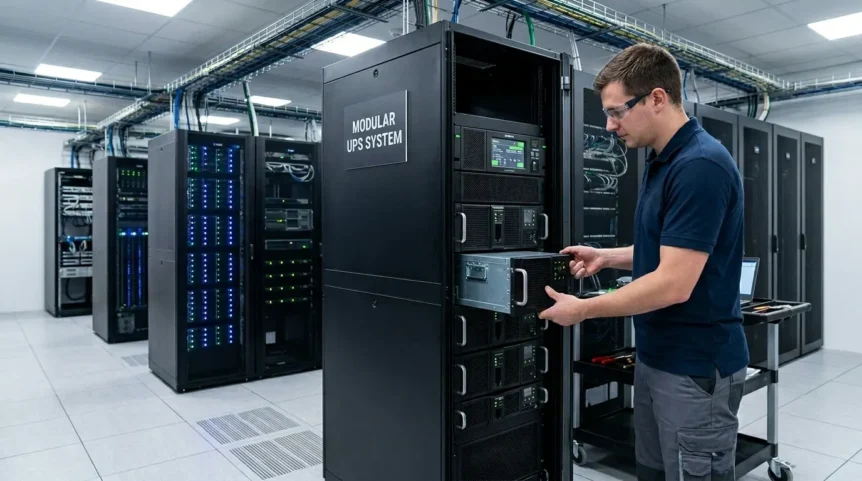
A modular UPS represents a paradigm shift in critical power backup architecture, utilizing independent building blocks to secure modern infrastructure. This smart architecture replaces rigid single-unit hardware, giving expanding enterprises unmatched operational flexibility.
Its core value proposition centers on effortless capacity expansion and accelerated on-site maintenance. Facilities can scale or service their system dynamically without triggering a total operational shutdown of critical connected loads.
What is a Modular UPS?
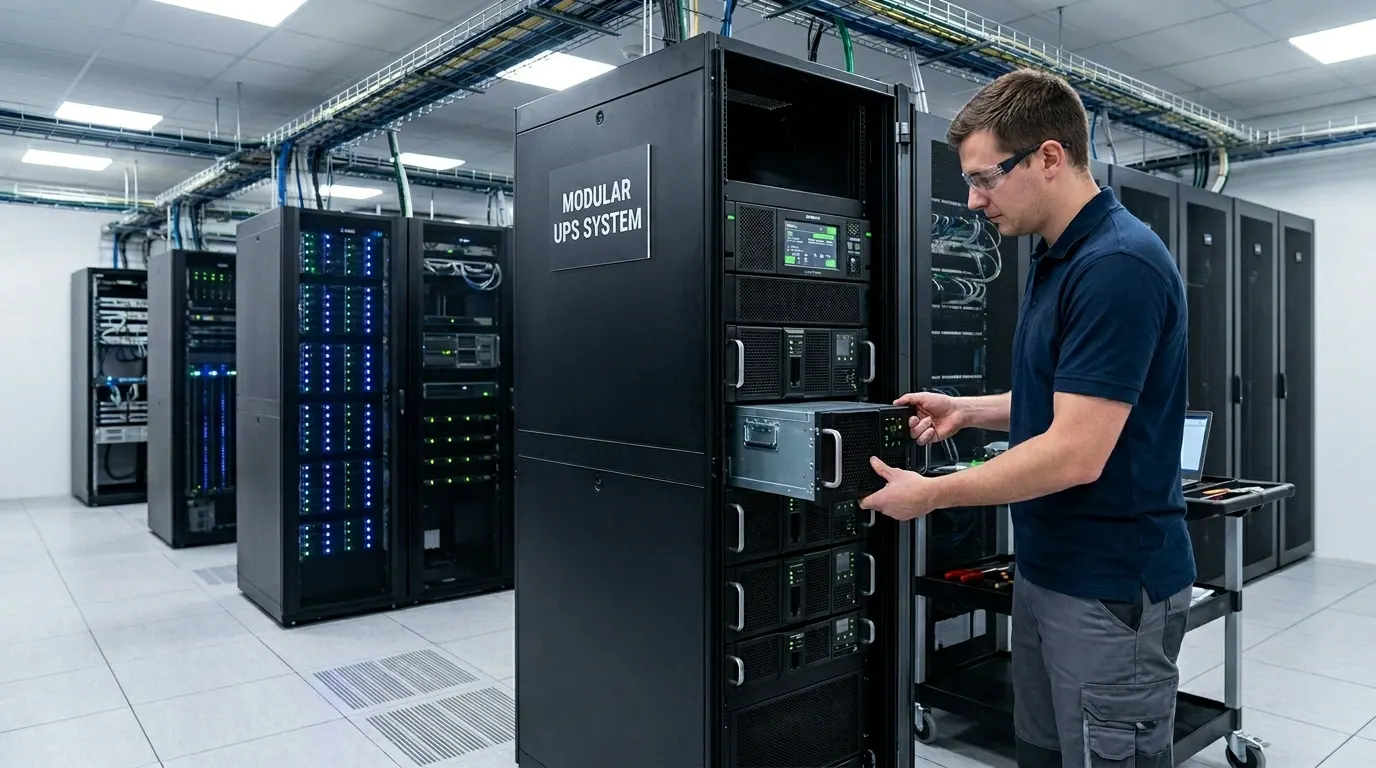
Technician maintaining a modular UPS system in a modern data center with server racks.
Understanding the physical layout of this advanced technology reveals why it outperforms legacy equipment in modern industries.
A modular UPS system consists of multiple independent power modules and battery strings housed within a single rack cabinet. Each individual module functions as a self-contained uninterruptible power supply unit. Each individual block houses its own rectifier, static inverter, and dedicated microprocessor controller.
Read Also: Best Critical Power Solutions, Stop Power Outages!
How Does a Modular UPS Work?
How Does a Modular UPS Work
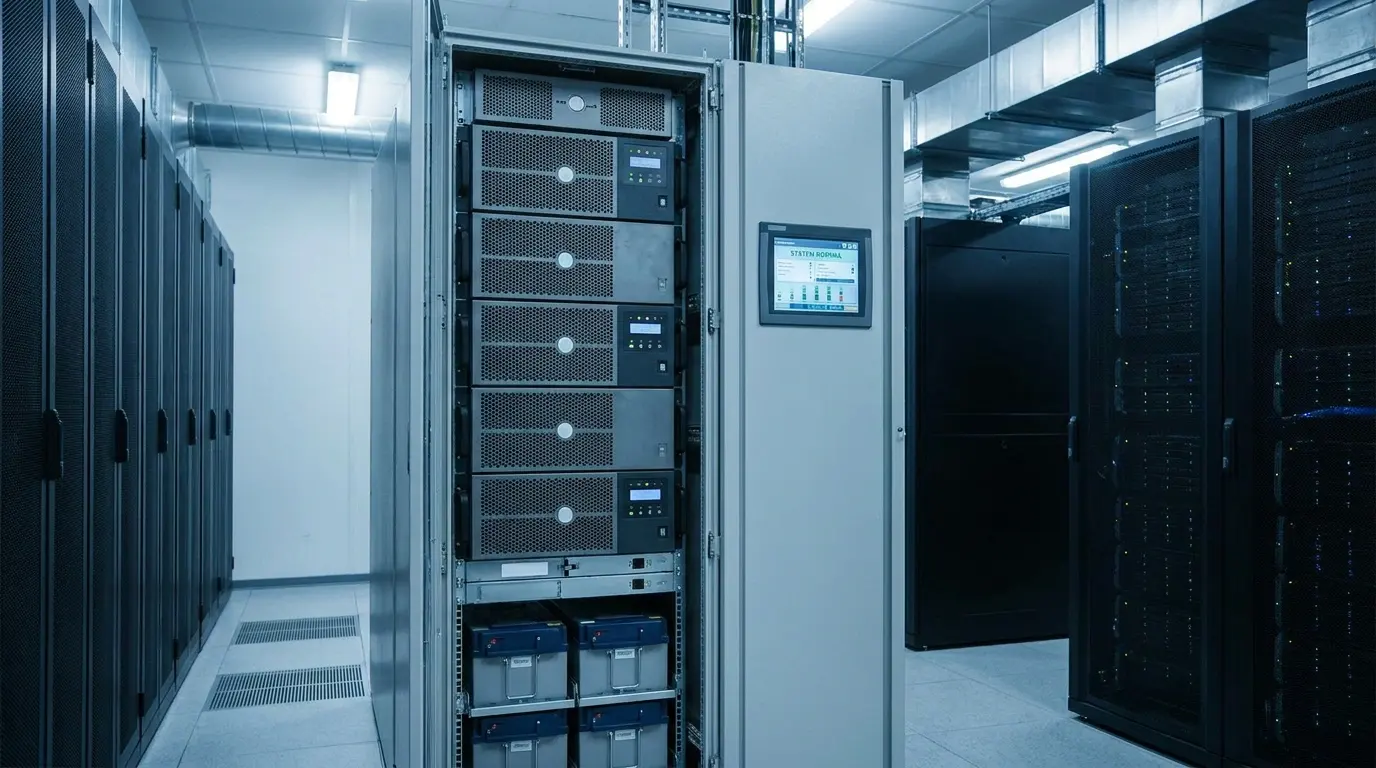
The operational mechanism relies on seamless, automated transitions to guarantee an uninterrupted flow of clean electricity. Under normal utility grid conditions, the system continuously filters incoming power, charges the energy storage, and feeds the equipment.
During a power outage or major voltage fluctuation, the system shifts instantly. The inverter modules seamlessly switch to battery power with zero transfer time to protect your hardware. All installed units work in a parallel configuration to evenly distribute the electrical load.
Read Also: Best Power Quality Solutions, Save Your Electronics!
Key Benefits of Implementing a Modular UPS
Adopting a decentralized power structure yields immediate operational advantages over traditional monolithic systems.
1. Seamless Scalability
Key Benefits of Implementing a Modular UPS – Seamless Scalability
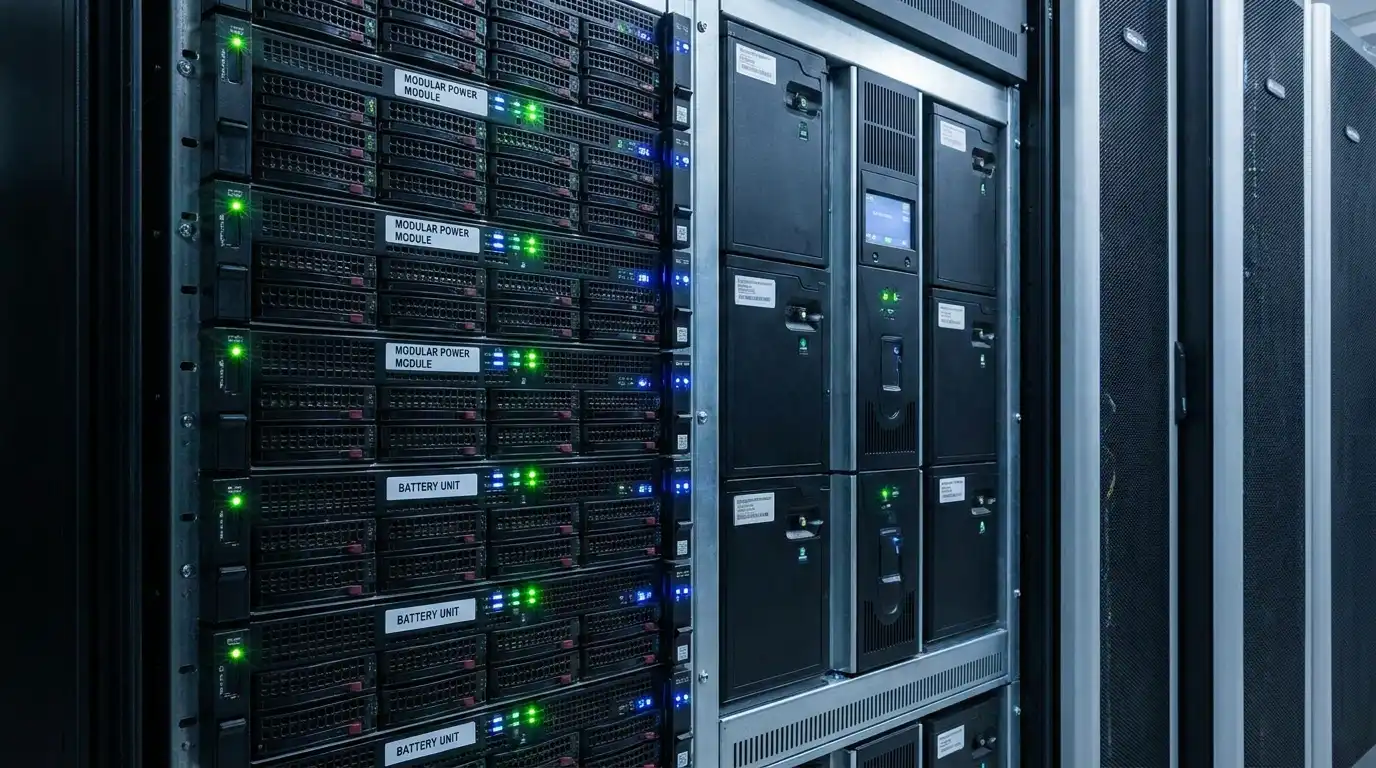
This setup delivers pay-as-you-grow scalability, empowering companies to expand capacity effortlessly as infrastructure demands climb. Businesses can easily handle load growth, such as adding new server racks, without over-purchasing hardware upfront.
To increase capacity, technicians simply slide new plug-in modules directly into the pre-wired system chassis. This eliminates the need for expensive, disruptive upgrades and optimizes initial capital expenditure.
Read Also: The Best Power Distribution Solution for Your Needs
2. N+1 Redundancy for High Reliability
Achieving continuous system availability becomes straightforward when utilizing an $N+1$ redundant architecture. This framework ensures that you always have one extra backup module online beyond your actual operational requirement.
If any active module suffers an unexpected component failure, the backup unit instantly absorbs the electrical load. This automated process occurs without causing any power interruption to the critical system.
Read Also: Uninterruptible Power Supply: Types, Functions & Components
3. Hot-Swappable Maintenance
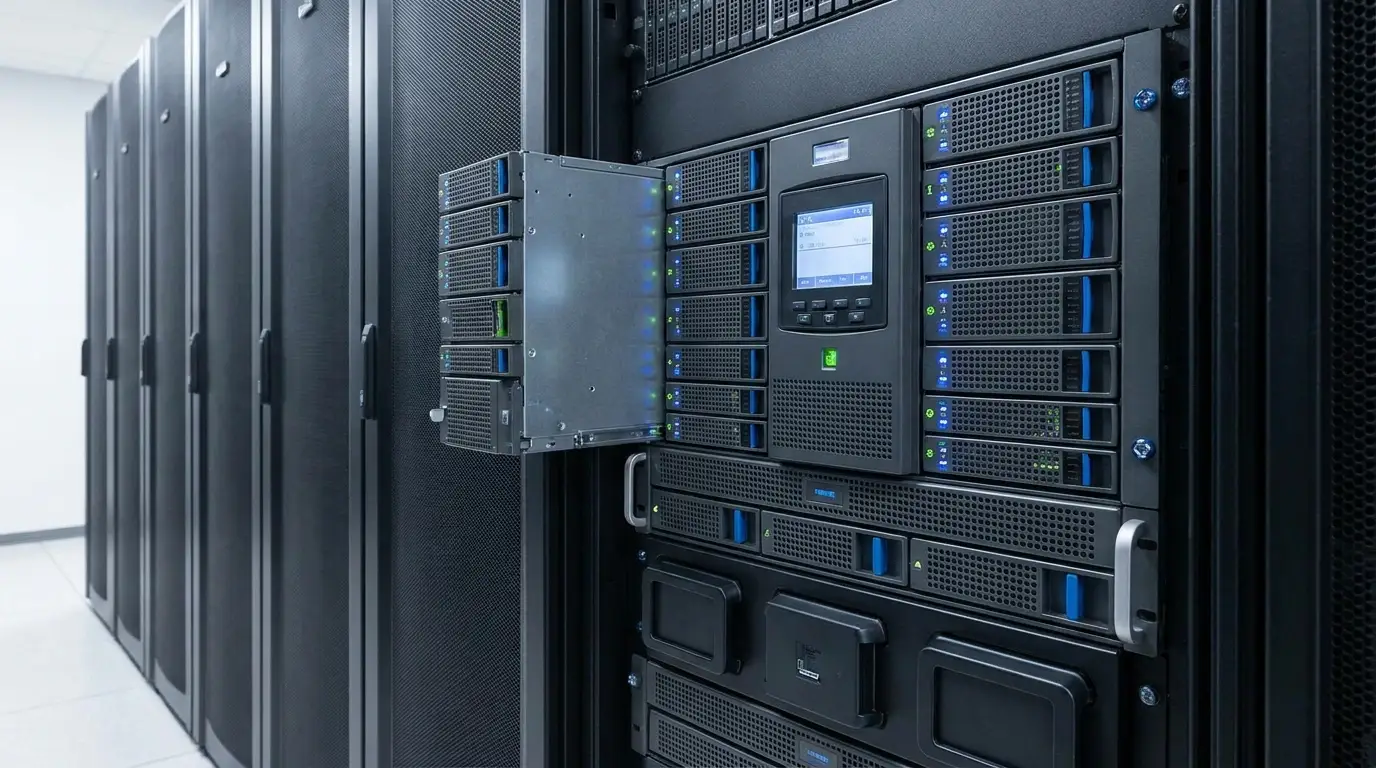
Key Benefits of Implementing a Modular UPS – Hot-Swappable Maintenance
The hot-swappable feature radically transforms routine servicing by eliminating planned facility downtime. Technicians can safely replace or service individual power blocks while the main system remains completely energized.
The critical load continues running on the remaining active units during the brief maintenance process. This capability ensures that your business maintains 100% system uptime during repairs.
Read Also: Data Center UPS Systems: Functions and How They Work
4. Low Mean Time to Repair (MTTR)
Minimizing the mean time to repair ($MTTR$) is essential for mitigating risks within modern enterprise environments. Traditional systems often require complex, hours-long troubleshooting on-site by specialized factory engineers.
In contrast, fixing a modular setup requires simply swapping the faulty block with a working one. This streamlined process reduces the total repair time from hours to just a few minutes.
Read Also: Rack Mount UPS: Types, Functions, and Tips for Choosing
Modular UPS vs. Monolithic (Conventional) UPS
Evaluating these two distinct design philosophies helps decision-makers choose the right strategy for long-term reliability.
1. Conventional Monolithic Design
Traditional systems rely on a single, massive hardware block to manage the entire electrical load. This rigid structure creates a dangerous single point of failure for your whole facility.
If a core internal component breaks down, you often face extensive, costly system downtime. Furthermore, expanding capacity later usually requires purchasing a completely new, separate standalone UPS unit.
2. Modern Modular Design
Modern architecture distributes critical power processing into multiple, smaller isolated sub-systems. This intelligent layout isolates faults to prevent a single component failure from disabling the system.
If one block stops working, the remaining modules keep running to support your equipment. This localized design safeguards your operations against unexpected, catastrophic power supply failures.
Cost and Energy Efficiency of Modular UPS
Optimizing operational costs requires looking closely at how effectively equipment handles fluctuating electrical loads.
Conventional units only achieve peak energy efficiency when operating at 50% to 75% of their total rated capacity. If your actual business load is low, the efficiency of a legacy system drops sharply, wasting expensive electricity.
A modular UPS solves this by allowing you to right-size your active power modules to match your true usage. This ensures your system always operates at its peak eco-mode efficiency curve to lower utility bills.
Target Applications: Who Needs a Modular UPS?
Certain sectors require absolute power continuity, making this flexible technology an indispensable asset for daily operations.
- Data Centers: Protecting critical server infrastructure and preventing catastrophic data loss during grid instability.
- Healthcare Facilities: Guaranteeing uninterrupted, clean power to diagnostic imaging tools, life-support machines, and intensive care units.
- Finance and Banking: Safeguarding high-frequency transaction processing networks and central data systems from going offline.