
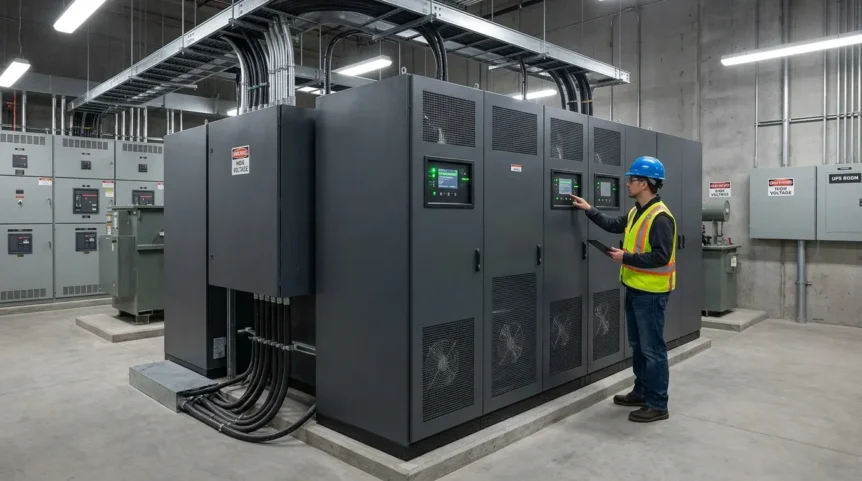
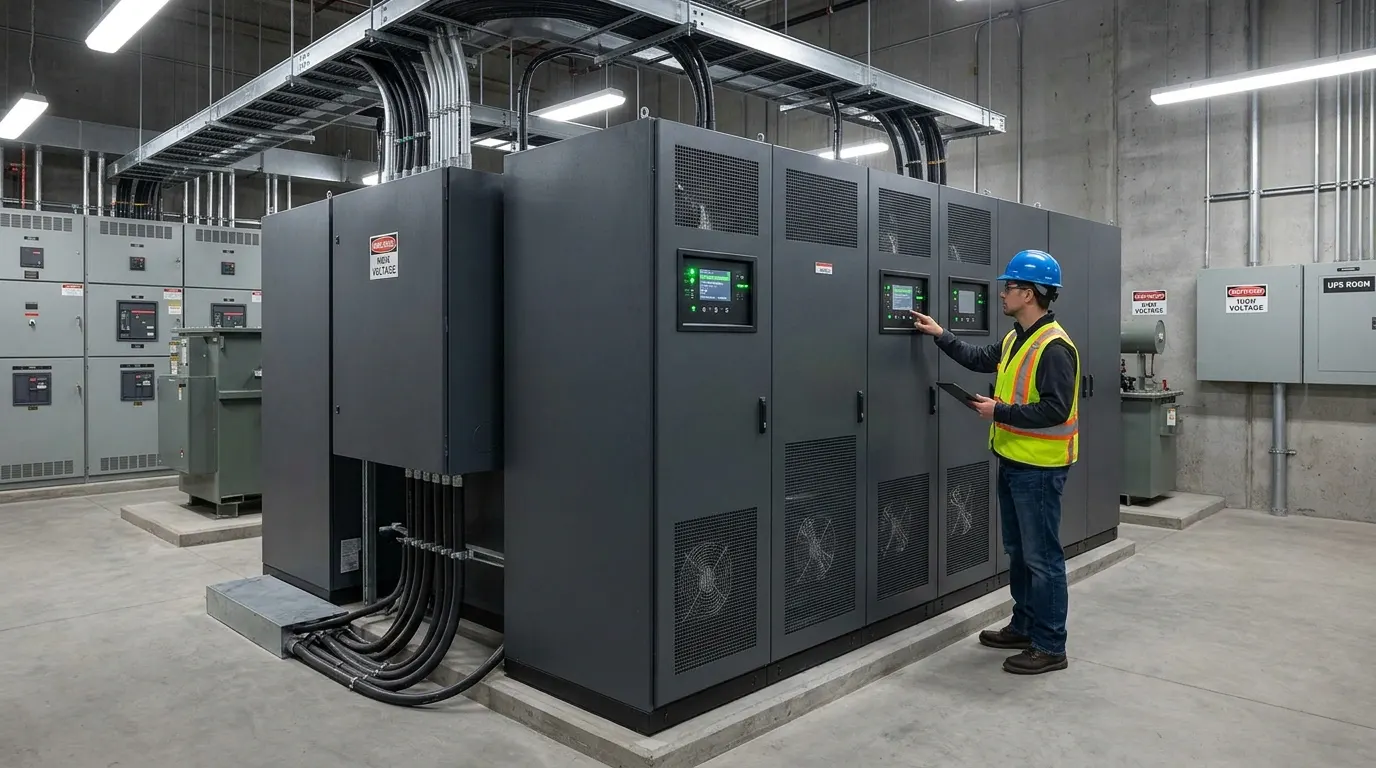
In the demanding world of modern manufacturing and infrastructure, power stability is the backbone of operational continuity. An industrial uninterruptible power supply serves as a critical shield against the devastating financial and safety risks posed by unexpected electrical failures.
By ensuring a seamless transition during grid instability, these systems protect sophisticated hardware from damage and costly downtime. Investing in high-performance power protection is not merely an operational luxury but a fundamental necessity for maintaining peak industrial efficiency.
What is an Industrial Uninterruptible Power Supply (UPS)?
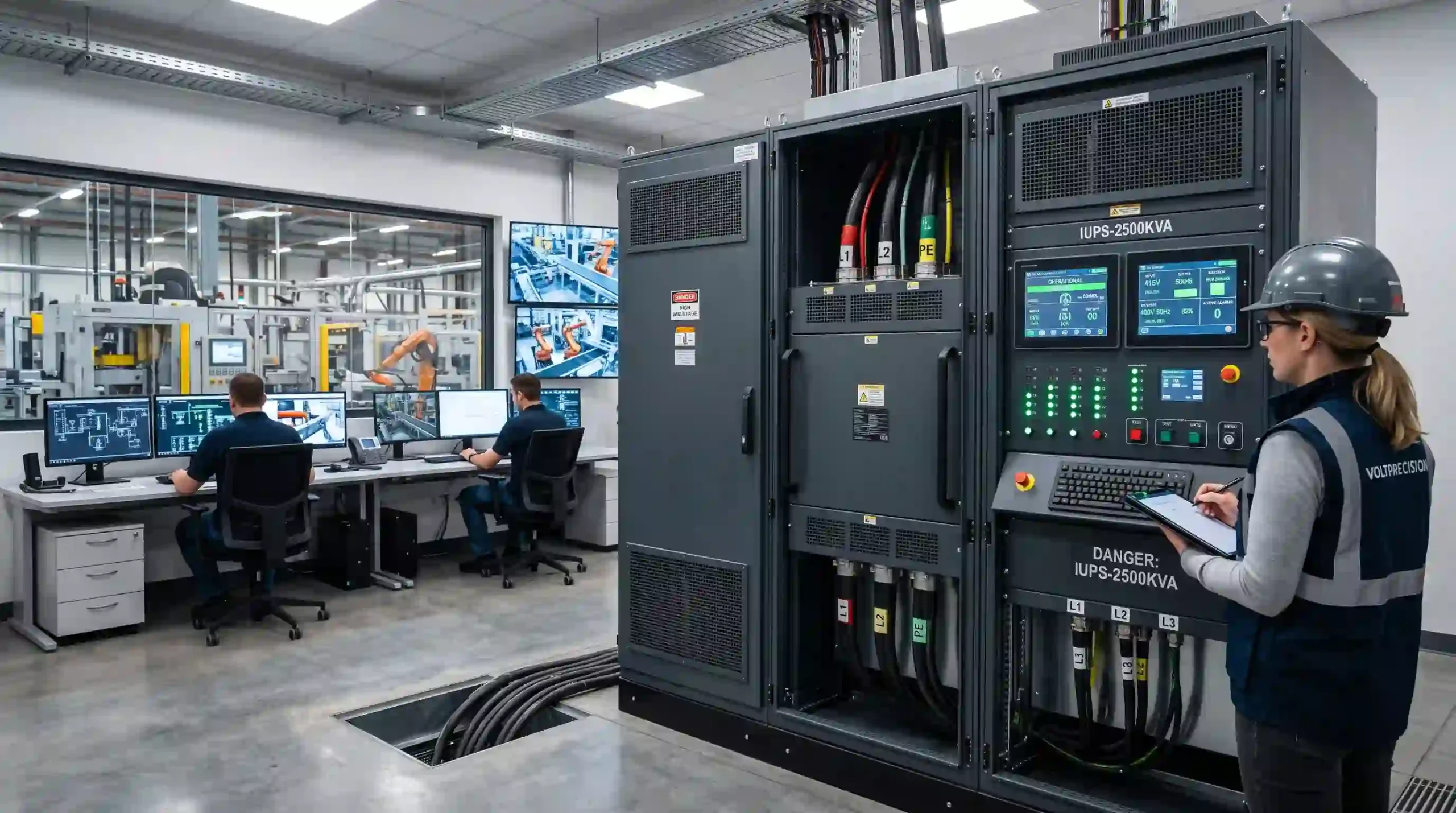
What is an Industrial Uninterruptible Power Supply (UPS)
An industrial uninterruptible power supply is a robust, high-performance backup power solution designed for the most challenging operational environments. It is specifically engineered to shield mission-critical equipment from the threats of power outages, voltage surges, and frequent electrical fluctuations.
Unlike standard units, this hardware is built to maintain reliable power delivery within factories, oil refineries, and power plants. It ensures that essential industrial processes continue to function without interruption, regardless of external grid instability.
Read Also: Industrial Power Systems: Core Components & Maintenance
Industrial vs. Commercial UPS: Key Differences
Standard office UPS systems lack the durability and specialized engineering required to survive the rigors of heavy-duty industrial application sites. These consumer-grade units generally fail when exposed to the harsh conditions typical of modern industrial facilities.
1. Environmental Resilience
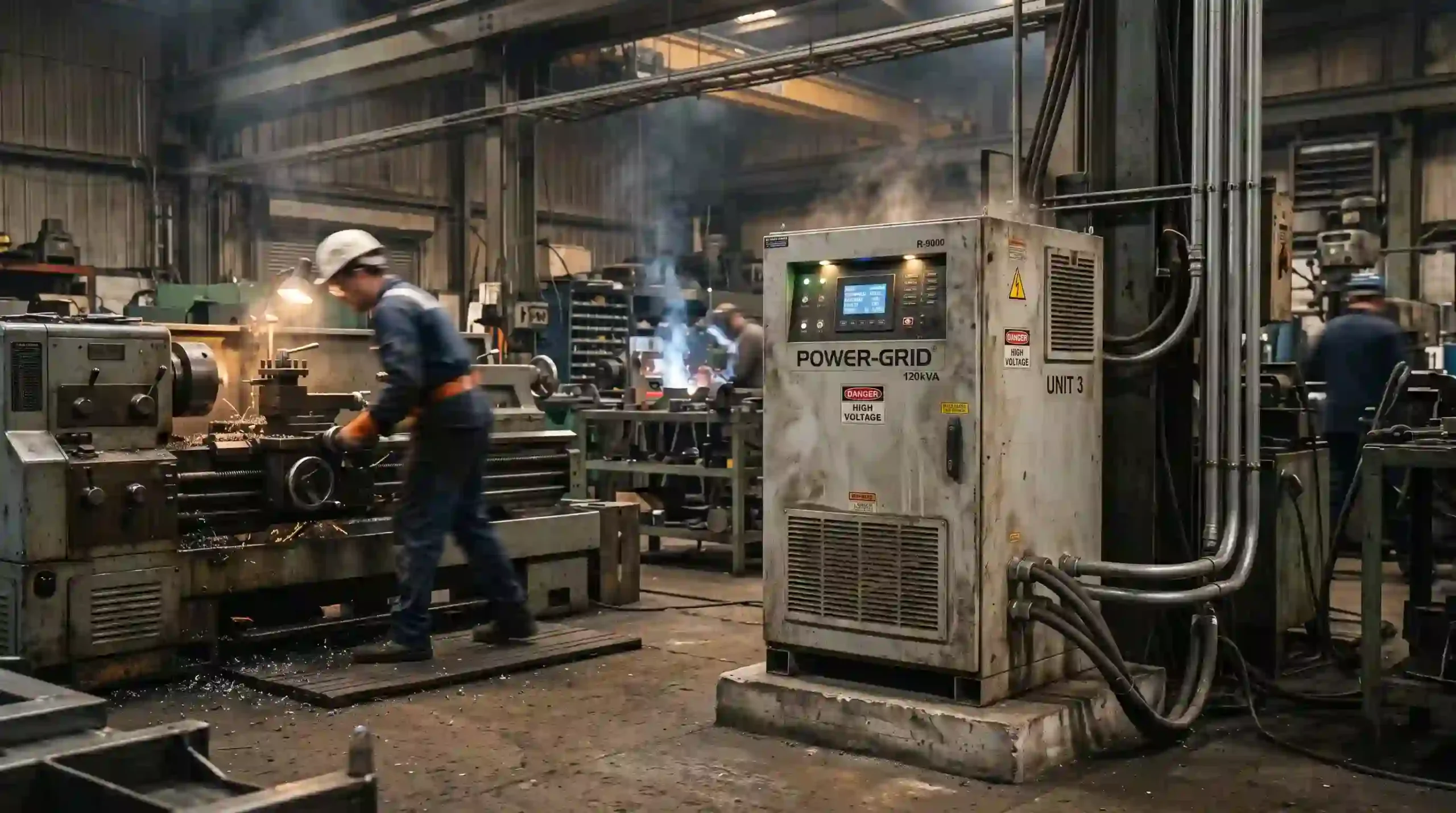
Industrial vs. Commercial UPS The Main Difference Is Environmental Resilience
Industrial units are built to withstand extreme temperatures, high humidity levels, and significant physical vibration. They feature hardened enclosures that protect internal electronics from dust, moisture, and corrosive gases.
This design ensures consistent operation even in the toughest environments found in manufacturing or extraction sites. Standard components would degrade rapidly under such stress, making industrial-grade protection essential for reliability.
Read Also: Data Center Solutions: Guide to Scalable Infrastructure
2. Power Capacity and Scalability
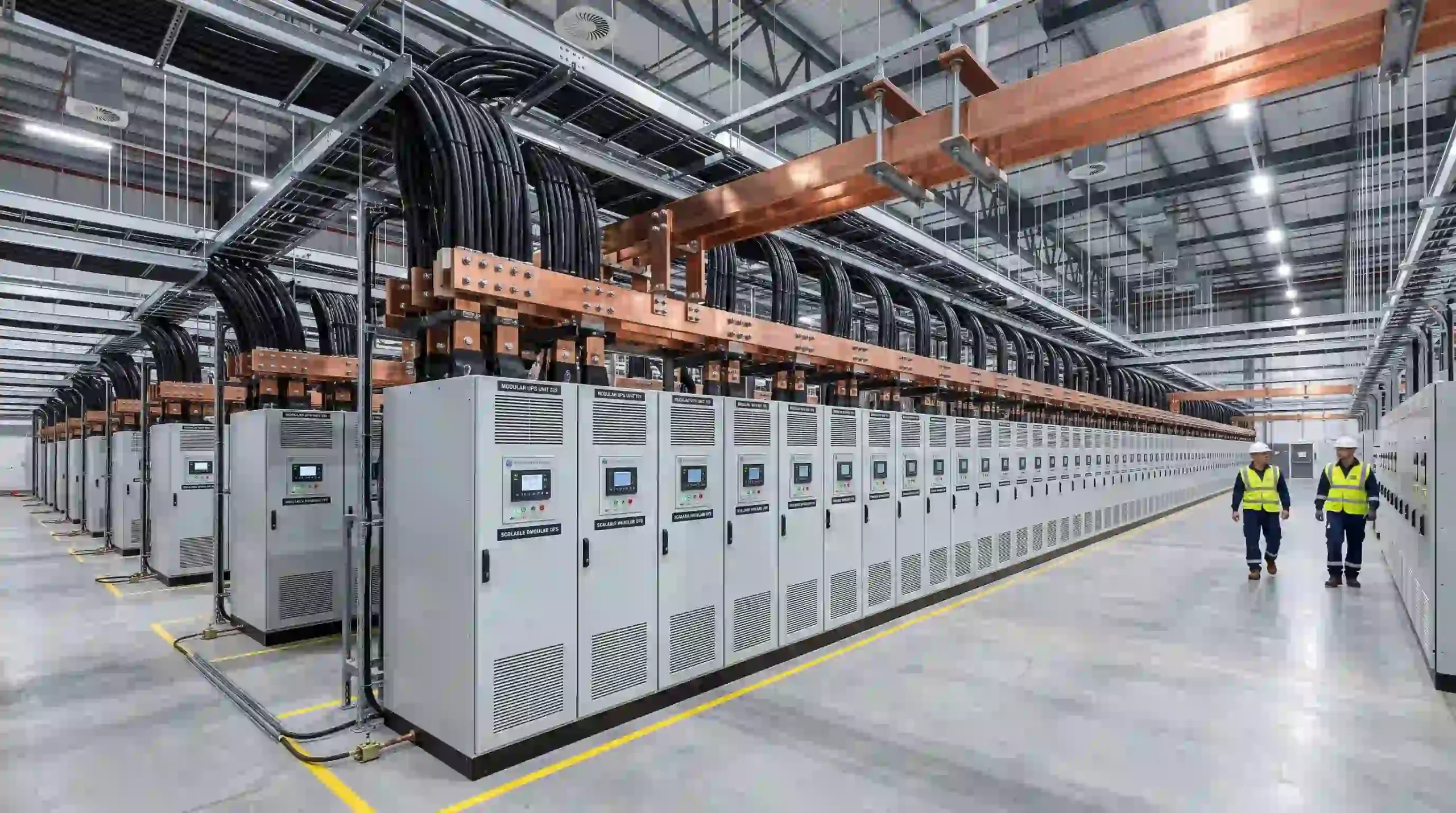
Industrial vs. Commercial UPS The Main Difference Is Power Capacity and Scalability
These systems offer massive kVA/kW capacity tailored to support heavy-duty machinery and complex emergency shutdown systems. They are designed to scale alongside expanding production lines without sacrificing performance or safety standards.
High-capacity designs ensure that even the largest industrial loads receive sustained, stable power during critical events. This scalability is a vital requirement for plants planning long-term growth and increased operational demands.
Read Also: Double Conversion UPS: Guide to Online Power Backup
3. Industrial-Grade Components
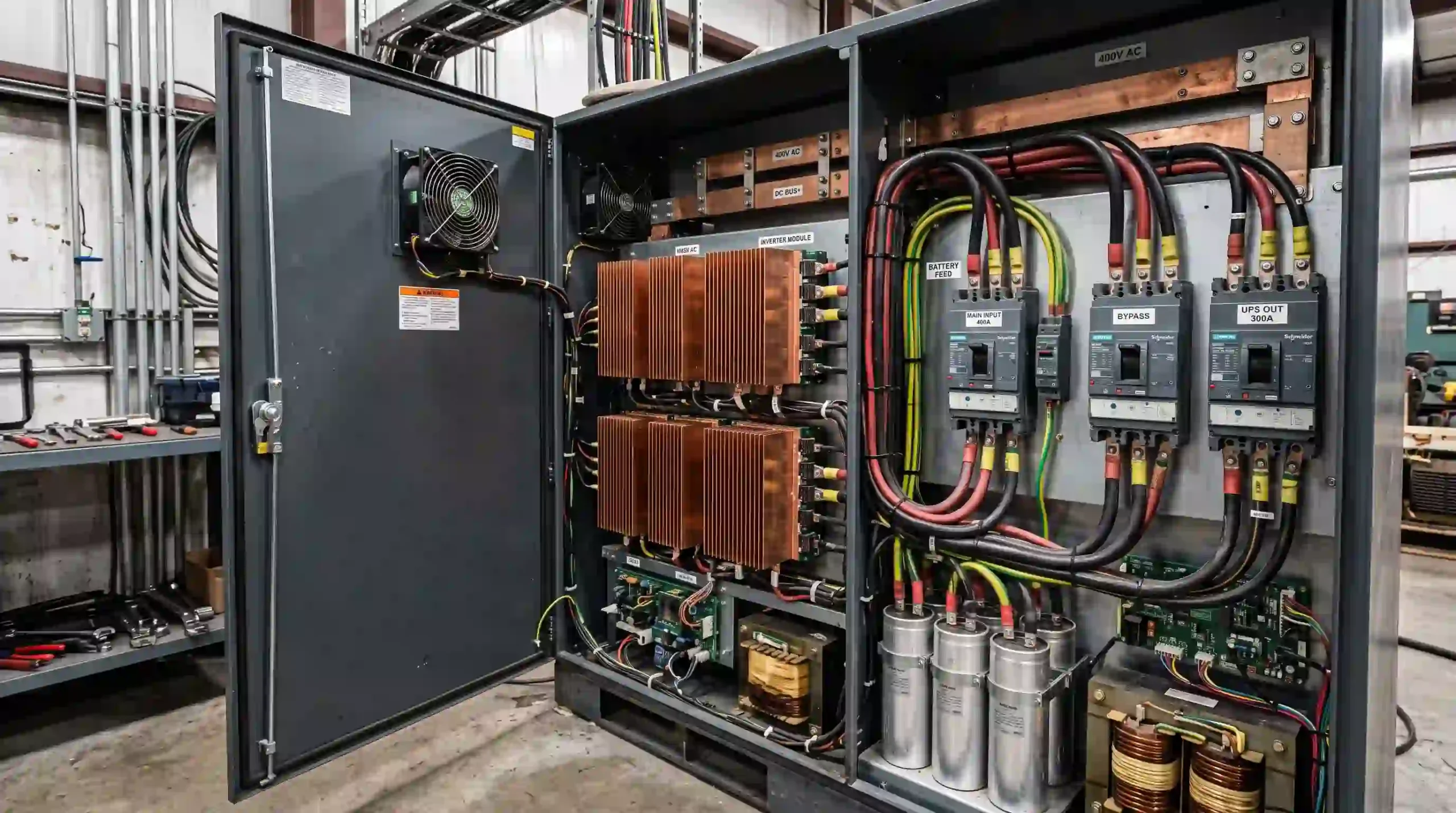
Industrial vs. Commercial UPS The Main Difference Is Industrial-Grade Components
Systems utilize rugged isolation transformers and heavy-duty circuitry engineered to manage high inrush currents effectively. These components prevent thermal stress and hardware failure during the startup of large industrial motors.
By prioritizing build quality, manufacturers ensure the power protection system survives frequent switching and electrical load changes. This robustness distinguishes professional industrial hardware from common, lightweight power backup alternatives.
Read Also: Power Distribution Networks: Key Components & Architecture
Core Components of an Industrial UPS System
The architecture of these systems is designed for maximum redundancy to ensure a continuous and clean power flow. Each component plays a specific role in maintaining the integrity of the electricity supplied to the load.
1. Rectifier
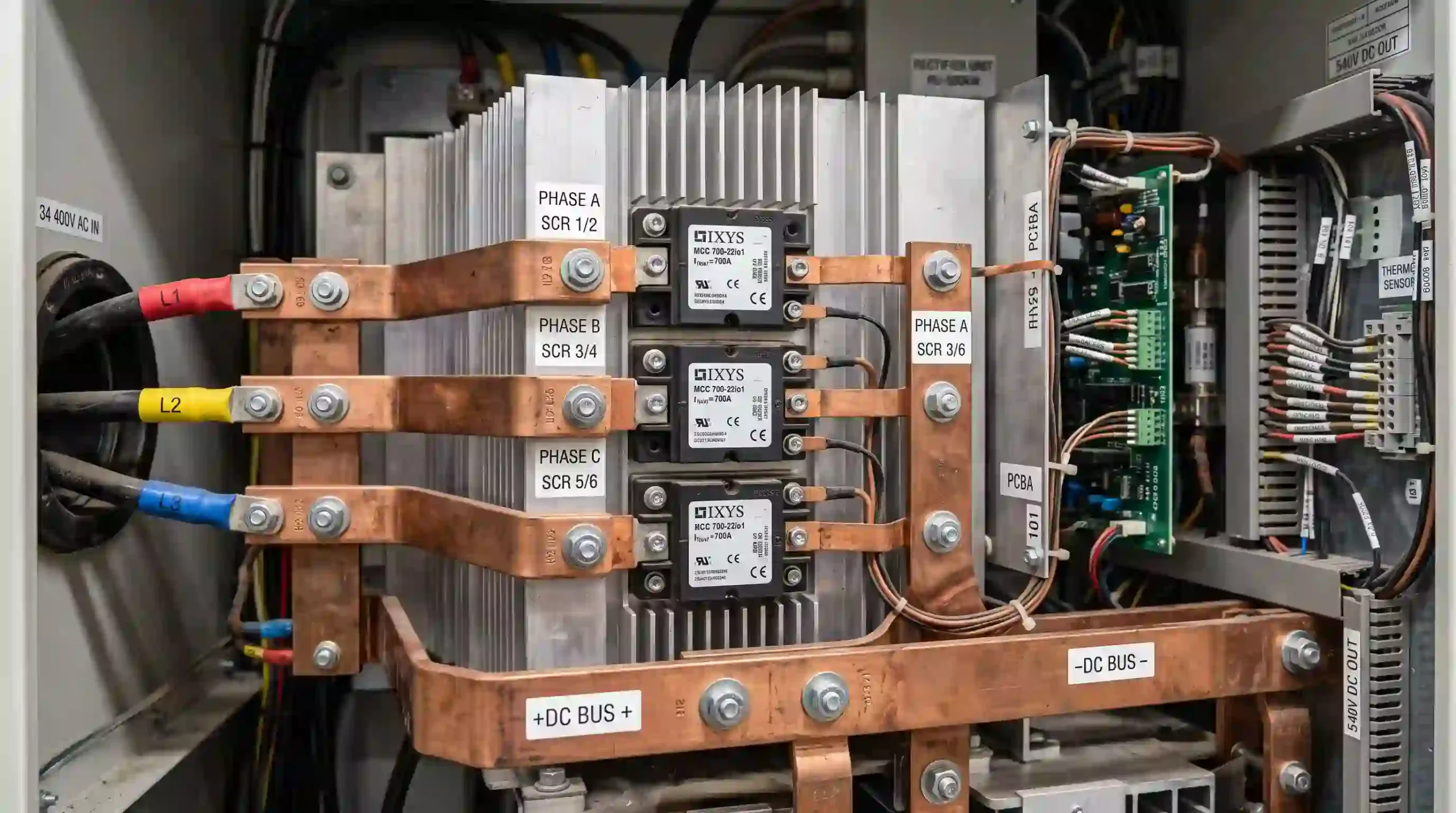
Core Components of an Industrial UPS System Rectifier
The rectifier serves as the primary gateway, converting incoming AC power from the grid into stable DC power. This stage is critical for charging the battery bank while simultaneously providing power to the system’s inverter.
Modern rectifiers are designed for high efficiency, minimizing energy waste during the conversion process. They ensure the energy stored in the battery is always ready for emergency deployment.
Read Also: Line-Interactive UPS Guide: Complete Power Protection
2. Inverter
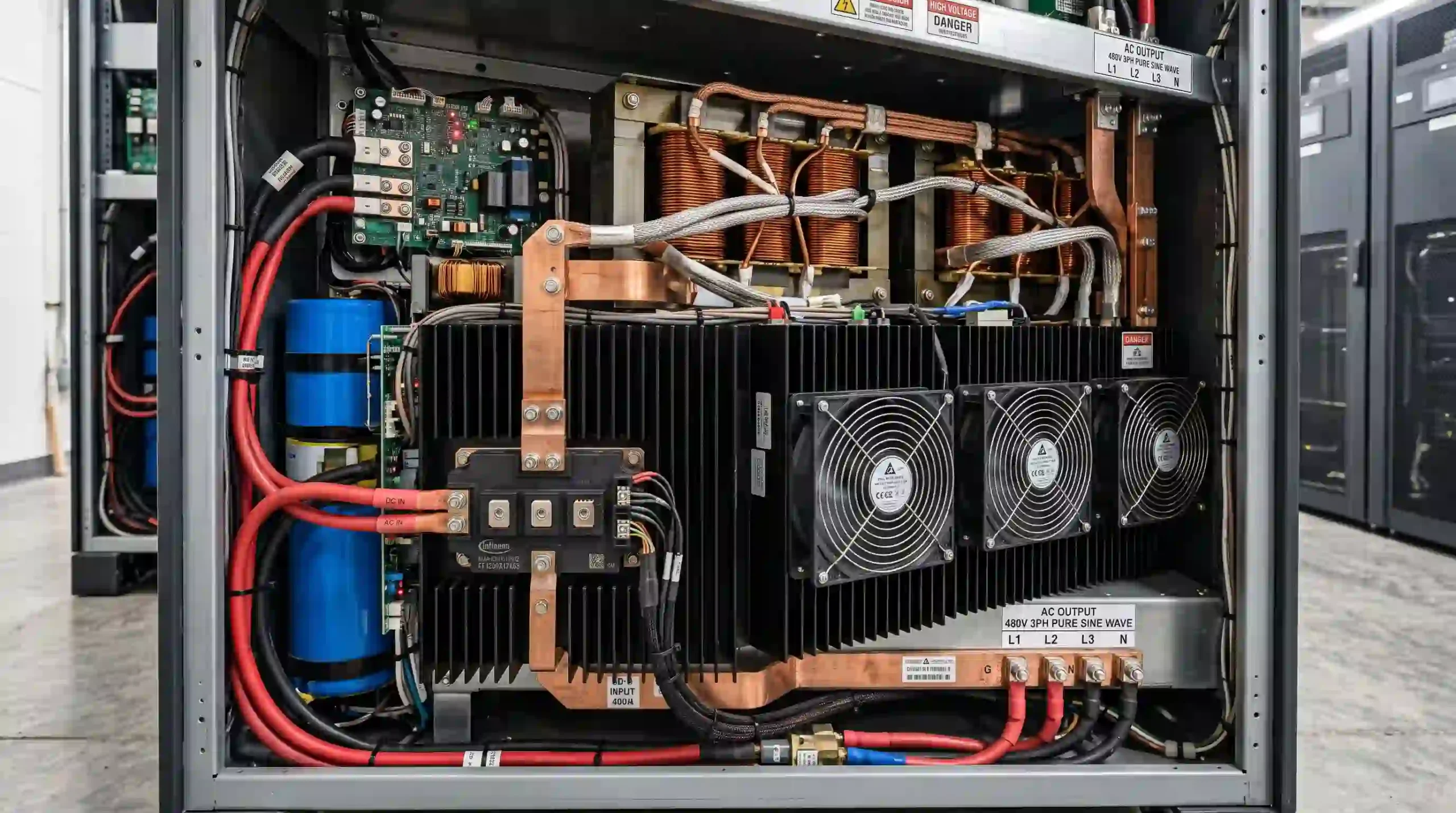
Core Components of an Industrial UPS System Inverter
The inverter acts as the brain, transforming DC electricity back into high-quality, pure AC power for equipment. It constantly filters the output to remove electrical noise and ensure a perfect sine wave.
By delivering clean energy, the inverter protects sensitive electronic controls from power-related damage. Its performance is the deciding factor in the reliability of the entire electrical protection chain.
Read Also: UPS Generator Systems: Complete Power Protection Guide
3. Battery Bank
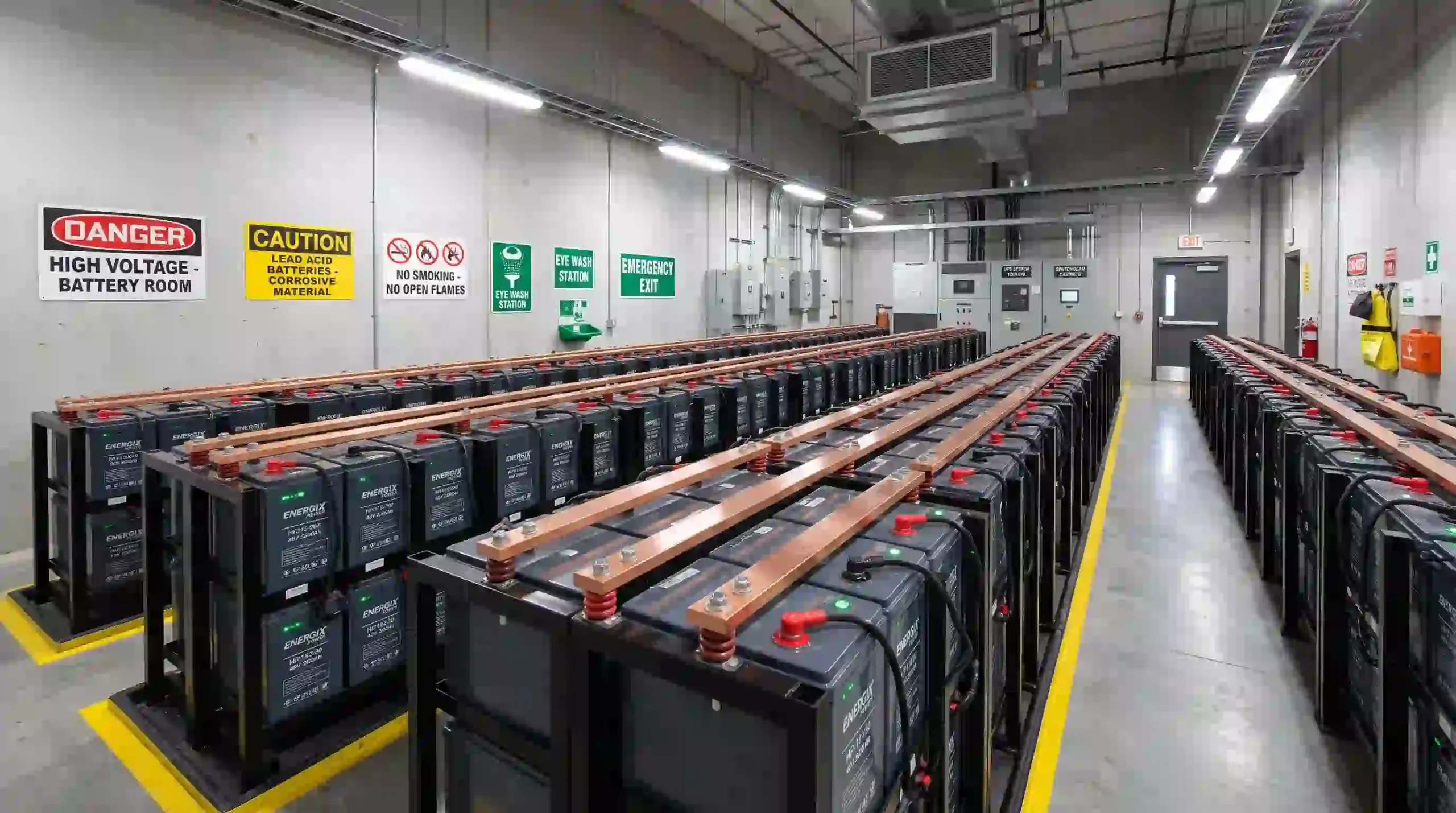
Core Components of an Industrial UPS System Battery Bank
The battery bank serves as the essential energy reservoir, storing DC current for immediate use during power outages. High-capacity industrial batteries are specifically selected for their longevity and high discharge rates.
Periodic maintenance and testing of the bank are required to ensure capacity remains sufficient for emergencies. Without a reliable battery system, the entire UPS would fail to bridge the gap during power loss.
Read Also: Data Center Infrastructure: Architecture & Key Components
4. Static/Maintenance Bypass Switch
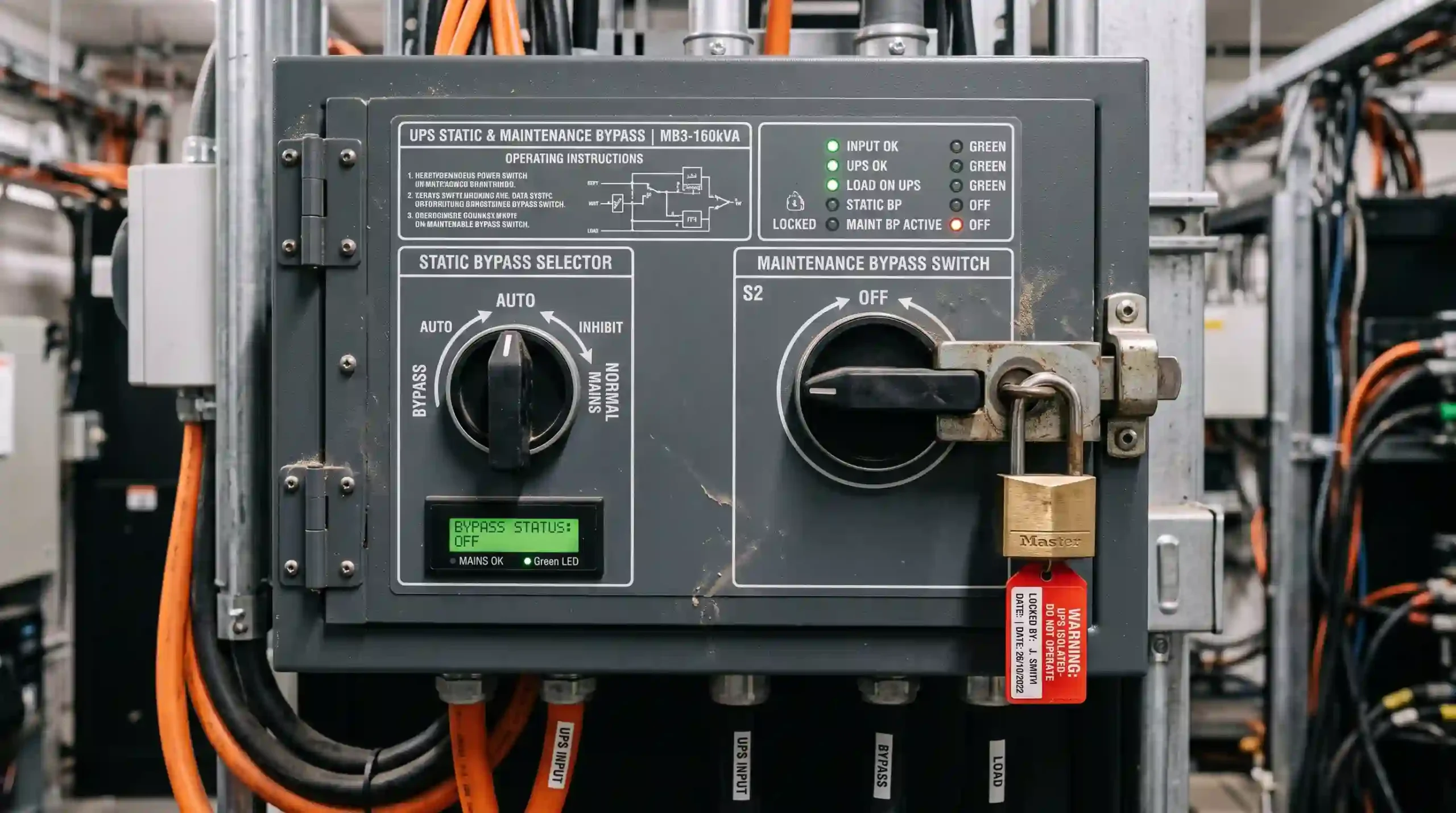
Core Components of an Industrial UPS System Static/Maintenance Bypass Switch
The static bypass switch provides a fail-safe, allowing the load to be powered directly from the grid if the UPS fails. This critical feature ensures uptime during internal electronic faults or catastrophic system failures.
Furthermore, a maintenance bypass allows technicians to service or replace components safely without shutting down the industrial load. This capability is non-negotiable for 24/7 operations that cannot afford a single minute of downtime.
Read Also: Backup UPS Systems: Ultimate Protection for Electronics
Common Topologies for Industrial UPS
Selecting the right UPS topology is critical to matching the level of power protection to the sensitivity of the connected industrial load.
1. Online Double Conversion

Common Topologies for Industrial UPS Online Double Conversion
This topology provides total isolation from grid fluctuations by constantly converting power from AC to DC and then back to AC. It ensures zero transfer time, guaranteeing that sensitive equipment never experiences a dip in voltage.
The online double conversion method is the gold standard for high-stakes industrial environments. It provides the cleanest output, making it ideal for precision instruments and complex automation systems.
Read Also: Modern Data Center Design: Architecture & Power Guide
2. Line-Interactive
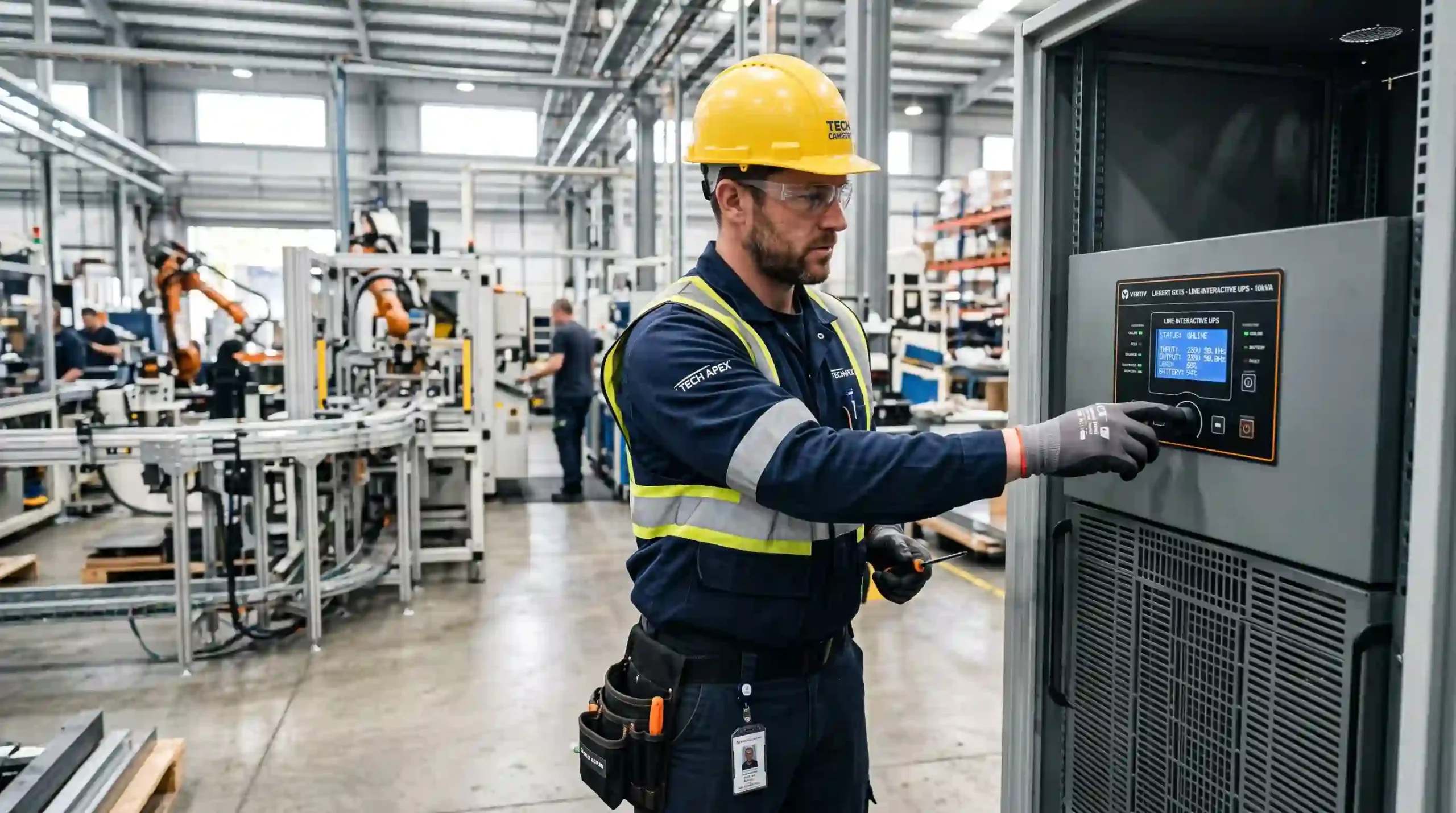
Common Topologies for Industrial UPS Line-InteractiveCommon Topologies for Industrial UPS Line-Interactive
The line-interactive topology utilizes Automatic Voltage Regulation (AVR) to correct minor voltage variations before they reach the load. It is a cost-effective solution for facilities that need protection against surges without requiring full double-conversion.
While efficient, it is best suited for less sensitive equipment that can handle short transfer times. It remains a popular choice for secondary infrastructure where power quality demands are moderate.
Read Also: Power Line Conditioner: Is One Really Necessary for Gear?
Power Quality Challenges Solved by Industrial UPS
Industrial electrical grids are often plagued by disturbances that can cripple sensitive machinery and lead to expensive production losses.
1. Power Outages and Brownouts

Power Quality Challenges Solved by Industrial UPS Power Outages and Brownouts
Blackouts leave machines without energy, while brownouts cause critical voltage drops during the startup of heavy motors. An industrial UPS bridges these gaps instantly, preventing system crashes and data loss.
By compensating for these fluctuations, the system keeps production lines moving seamlessly. This reliability is vital for maintaining productivity in facilities with unstable utility power.
Read Also: Understanding Power Conditioners and UPS: Which Do You Need?
2. Voltage Surges and Spikes
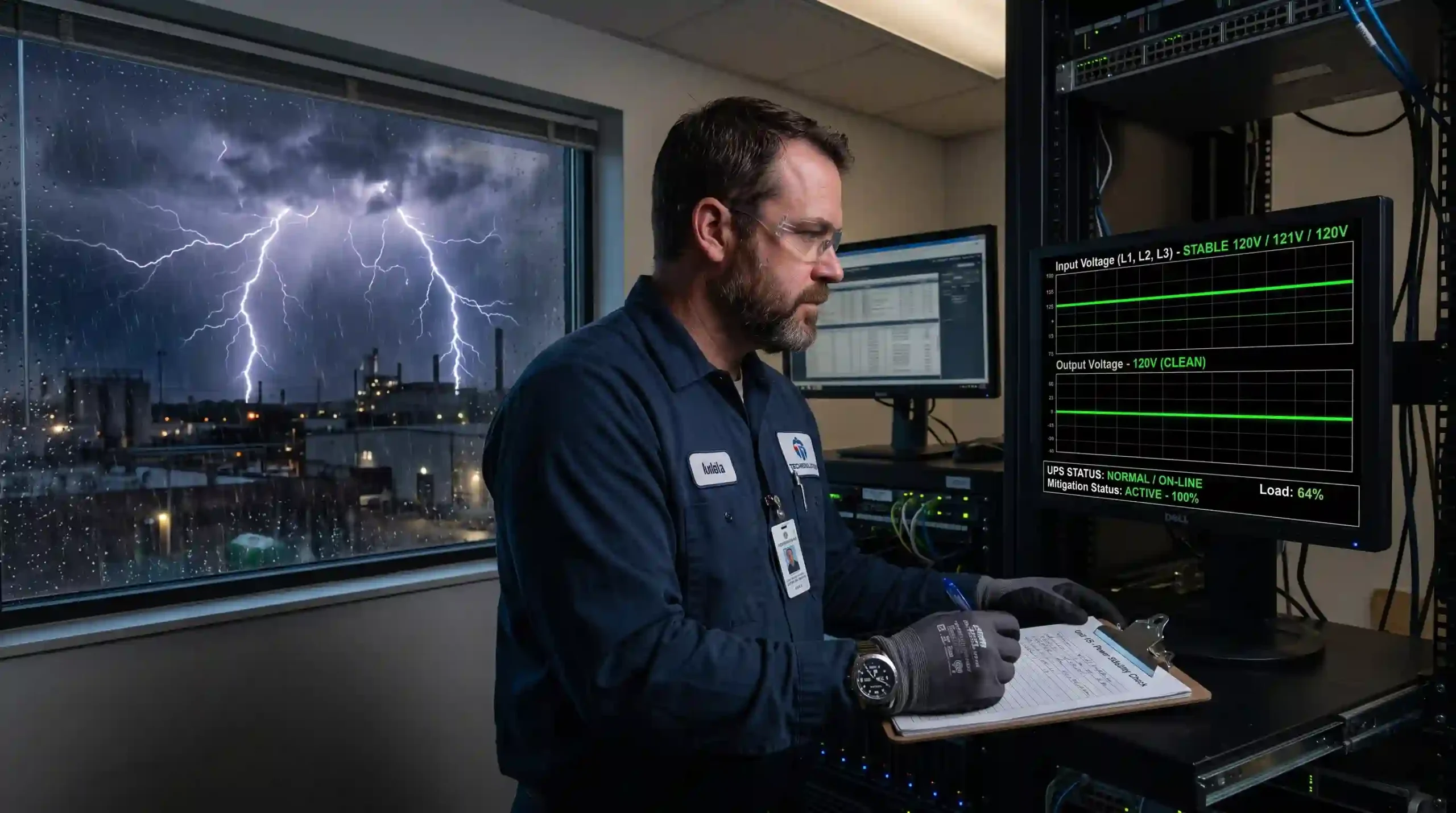
Power Quality Challenges Solved by Industrial UPS Voltage Surges and Spikes
Electrical surges and spikes caused by lightning strikes or sudden heavy load switching can permanently destroy delicate microprocessors. The UPS clamps these transient voltages to safe levels, protecting internal hardware.
Consistent protection against these unpredictable events extends the lifespan of expensive industrial machinery. It ensures that internal electronics remain shielded from external grid-related electrical stress.
Read Also: Modern Power System Protection: Prevent Failures
3. Harmonic Distortion
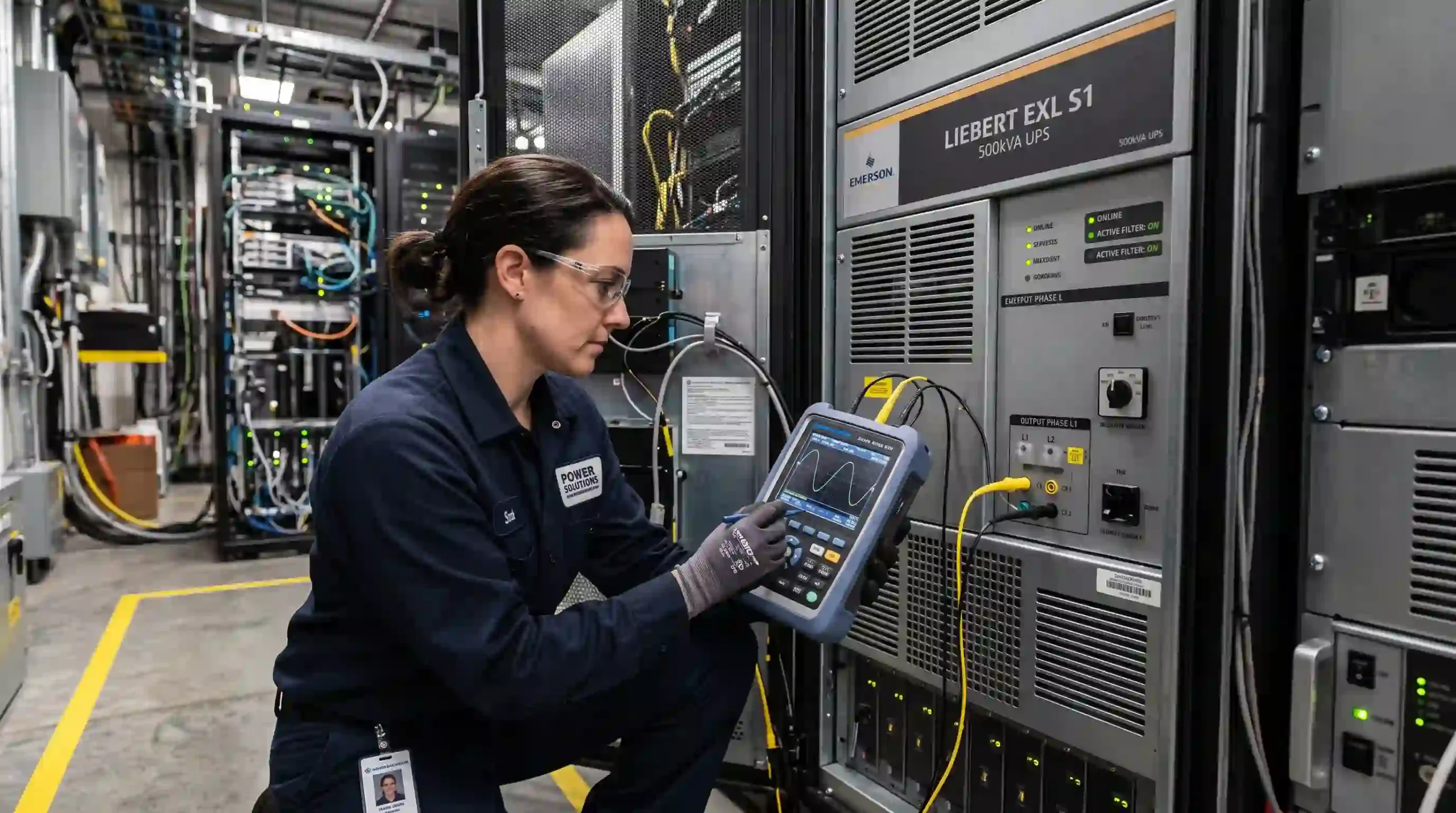
Power Quality Challenges Solved by Industrial UPS Harmonic Distortion
Harmonic distortion creates electrical noise that can cause motor overheating and false readings in precision sensors. A high-quality UPS filters this noise, delivering clean, stable energy to sensitive industrial assets.
By mitigating these distortions, the system ensures consistent performance and reduces long-term maintenance costs. It creates a stable electrical environment essential for precision engineering and high-speed automation.
Read Also: Automatic Transfer Switch (ATS): Reliable Power Solutions
How to Choose the Right Industrial UPS
Engineers must carefully evaluate specific site requirements to select a power backup system that offers true reliability.
1. Assessing Load Capacity (kVA/kW)
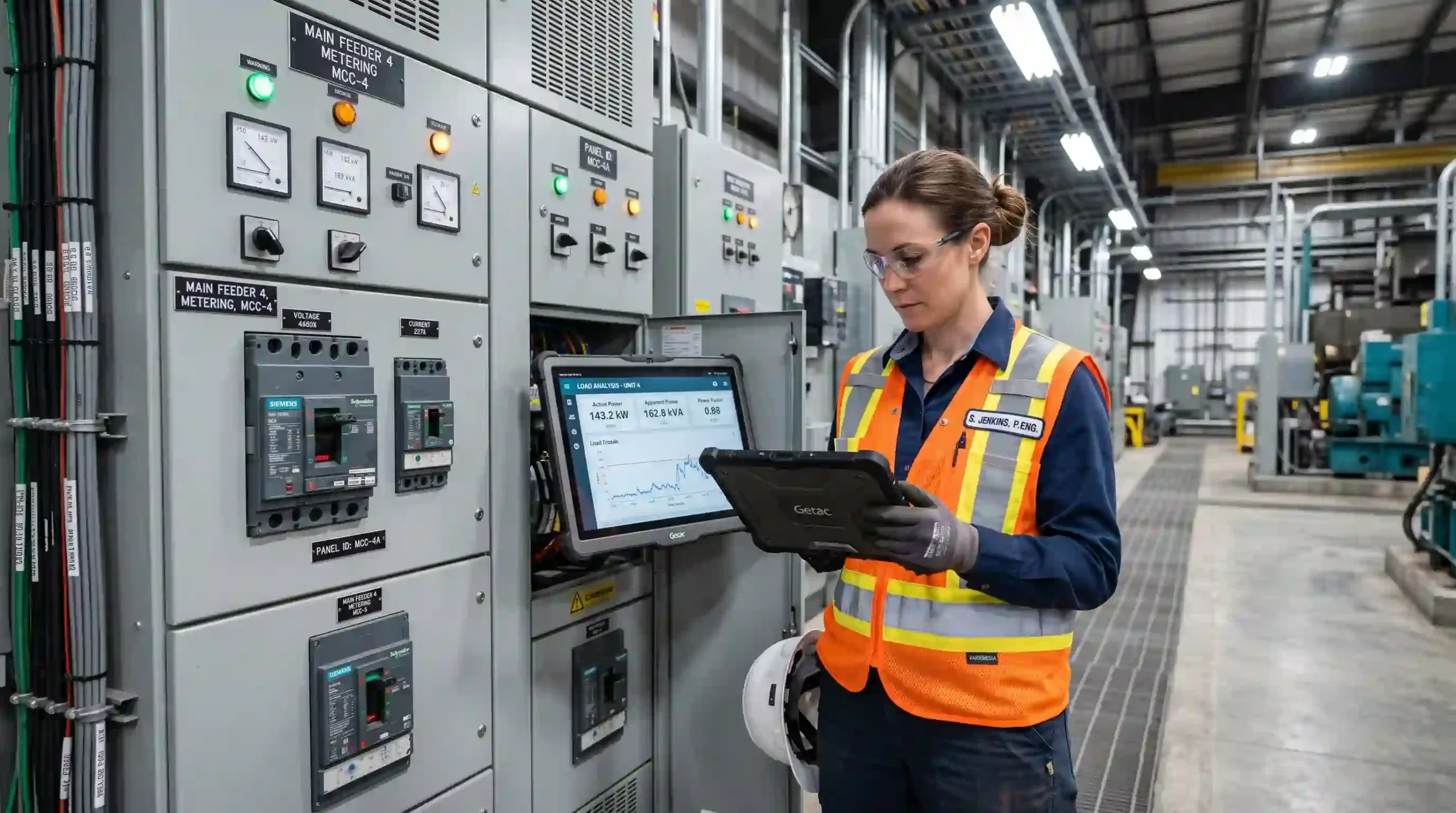
How to Choose the Right Industrial UPS Assessing Load Capacity (kVAkW)
Accurately calculating the total load is the first step toward selecting an appropriately sized UPS system. Always include a 20-30% safety margin to accommodate future equipment upgrades or peak load demands.
This buffer ensures that the UPS never operates at its absolute limit, which could trigger failures. Proper sizing is the foundation of a stable and long-lasting power protection infrastructure.
Read Also: UPS Maintenance Solutions: Prevent Costly Downtime
2. Determining Backup Runtime
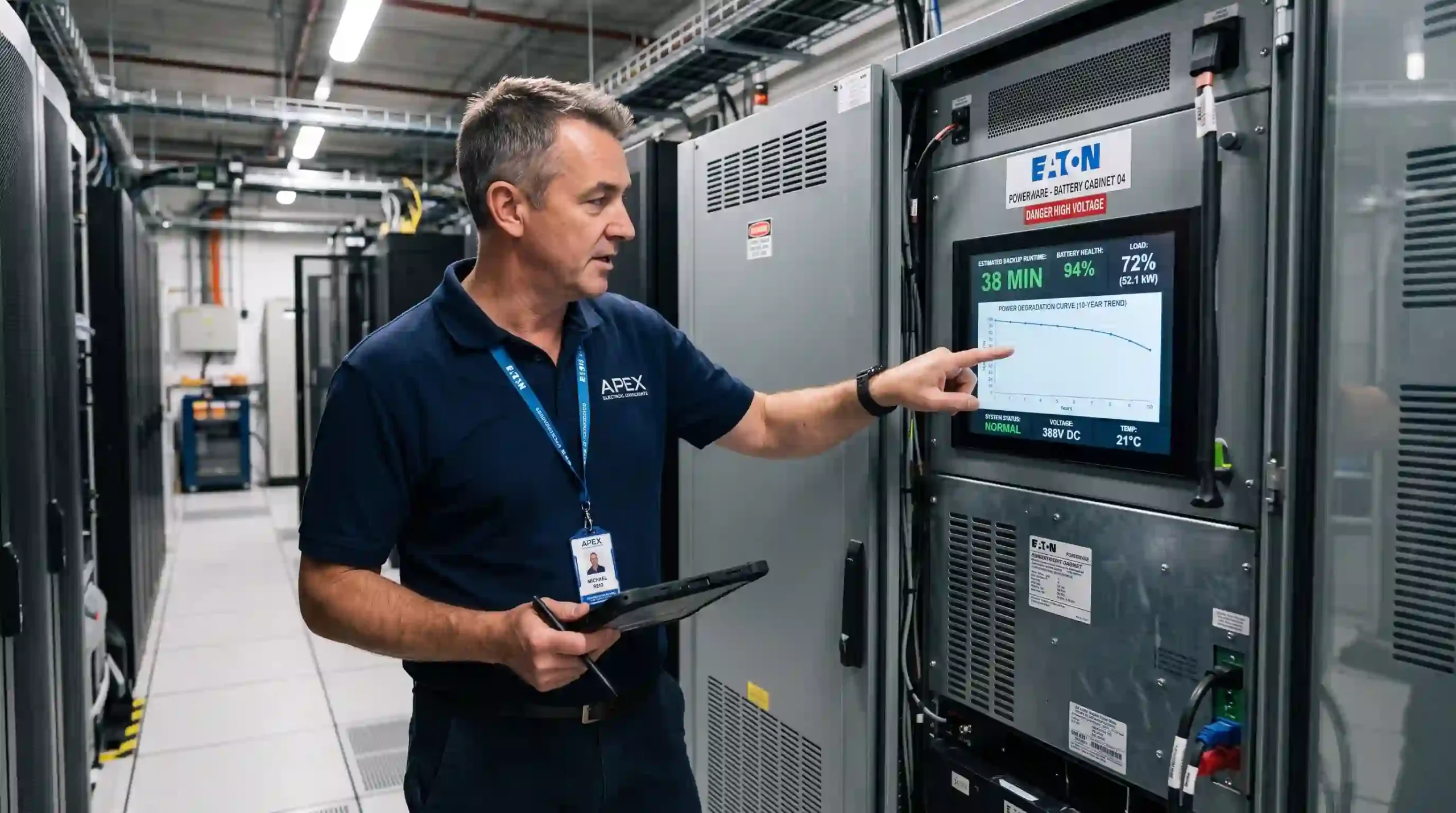
How to Choose the Right Industrial UPS Determining Backup Runtime
Facility managers must define the necessary backup runtime based on their specific recovery procedures. This duration must be long enough for a safe shutdown or until a secondary backup generator initializes.
Calculating this accurately prevents the risk of running out of power before critical tasks are finished. It is a balancing act between battery capacity, space requirements, and total cost.
Read Also: Industrial Power Supplies: A Complete Guide to Reliable Energy
3. Compliance and Certification
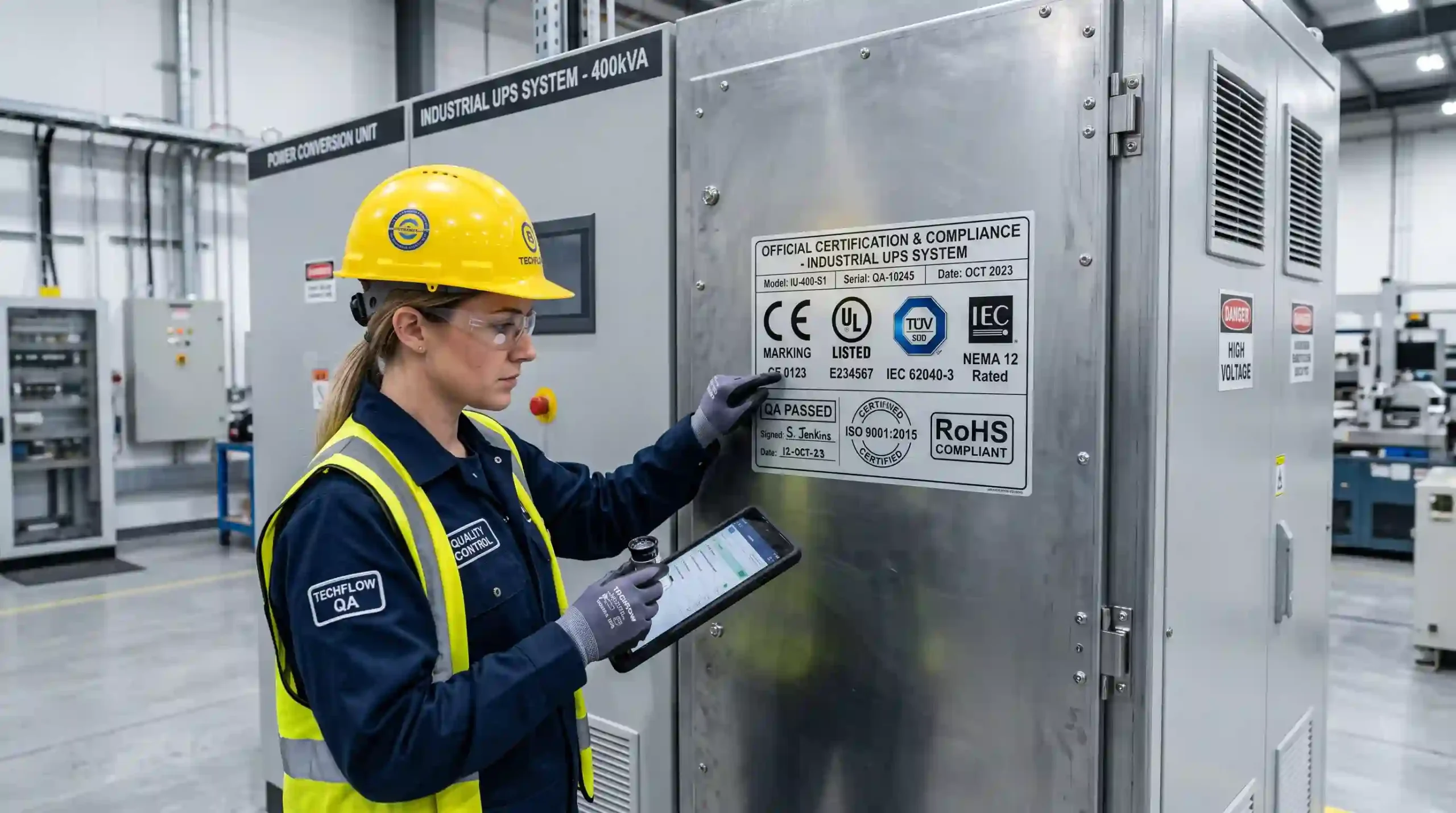
How to Choose the Right Industrial UPS Compliance and Certification
Ensuring the equipment meets IEC or NEMA standards is essential for guaranteeing safety, particularly in hazardous areas. Specialized explosion-proof certifications are often required for sites involving flammable gases or combustible dust.
Choosing certified hardware mitigates legal risks and ensures the system adheres to strict industry safety codes. Always verify that the selected unit has the necessary documentation for your specific operational zone.