


An uninterruptible power supply (UPS) is vital for securing operational continuity. Regular UPS maintenance includes detailed visual inspection and battery testing procedures. This discipline prevents catastrophic data loss and unexpected operational downtime during blackouts.
Neglecting these critical systems can lead to sudden, expensive hardware damage. Proactive care ensures your backup power acts as a reliable safety net. It ultimately keeps your business resilient against any sudden electrical disruptions.
What are the Different Types of UPS Maintenance?
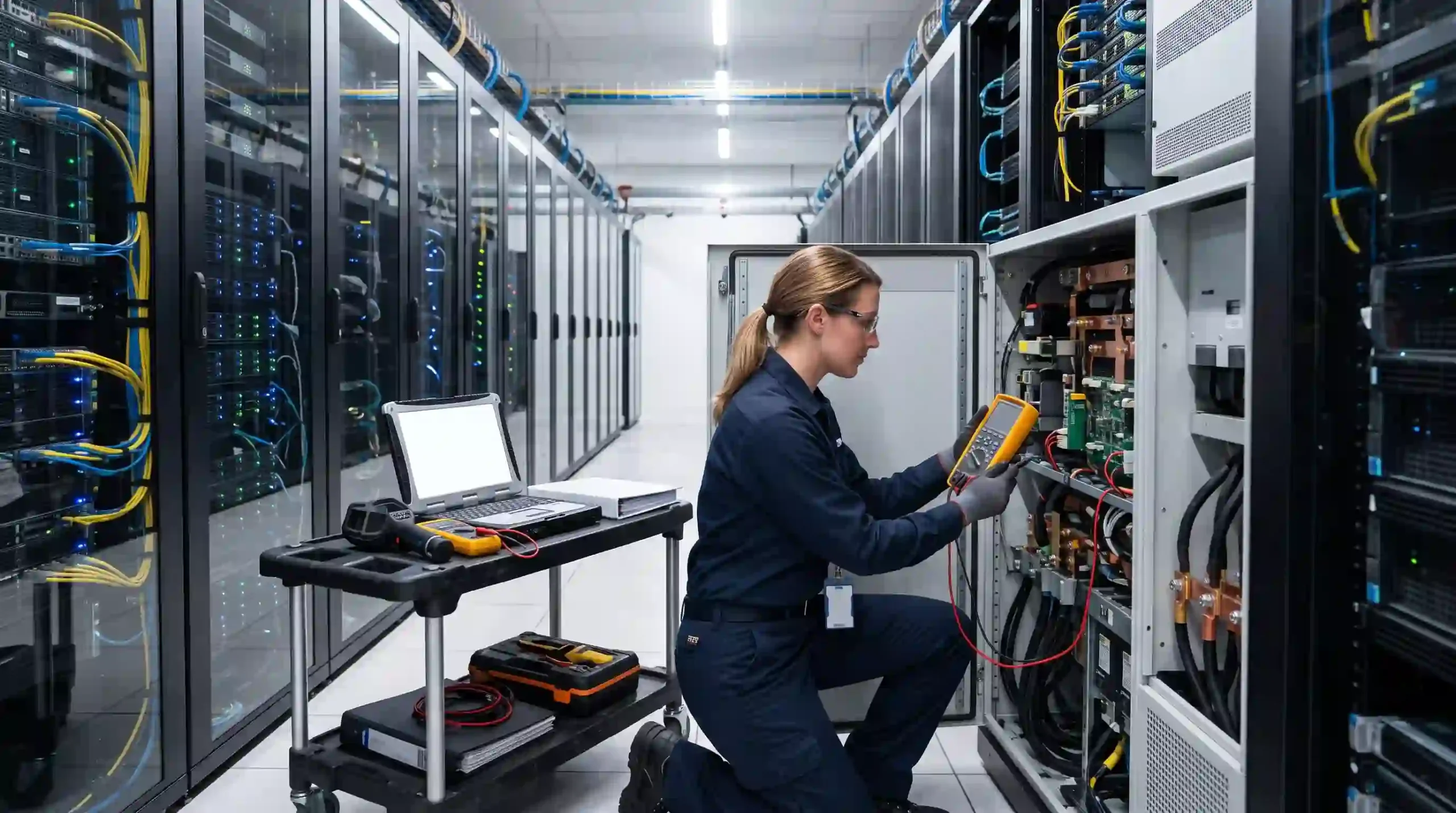
What are the Different Types of UPS Maintenance
Managing your power backup infrastructure requires a structured approach to technical service. Understanding the specific types of UPS maintenance helps optimize equipment performance.
Preventive UPS Maintenance
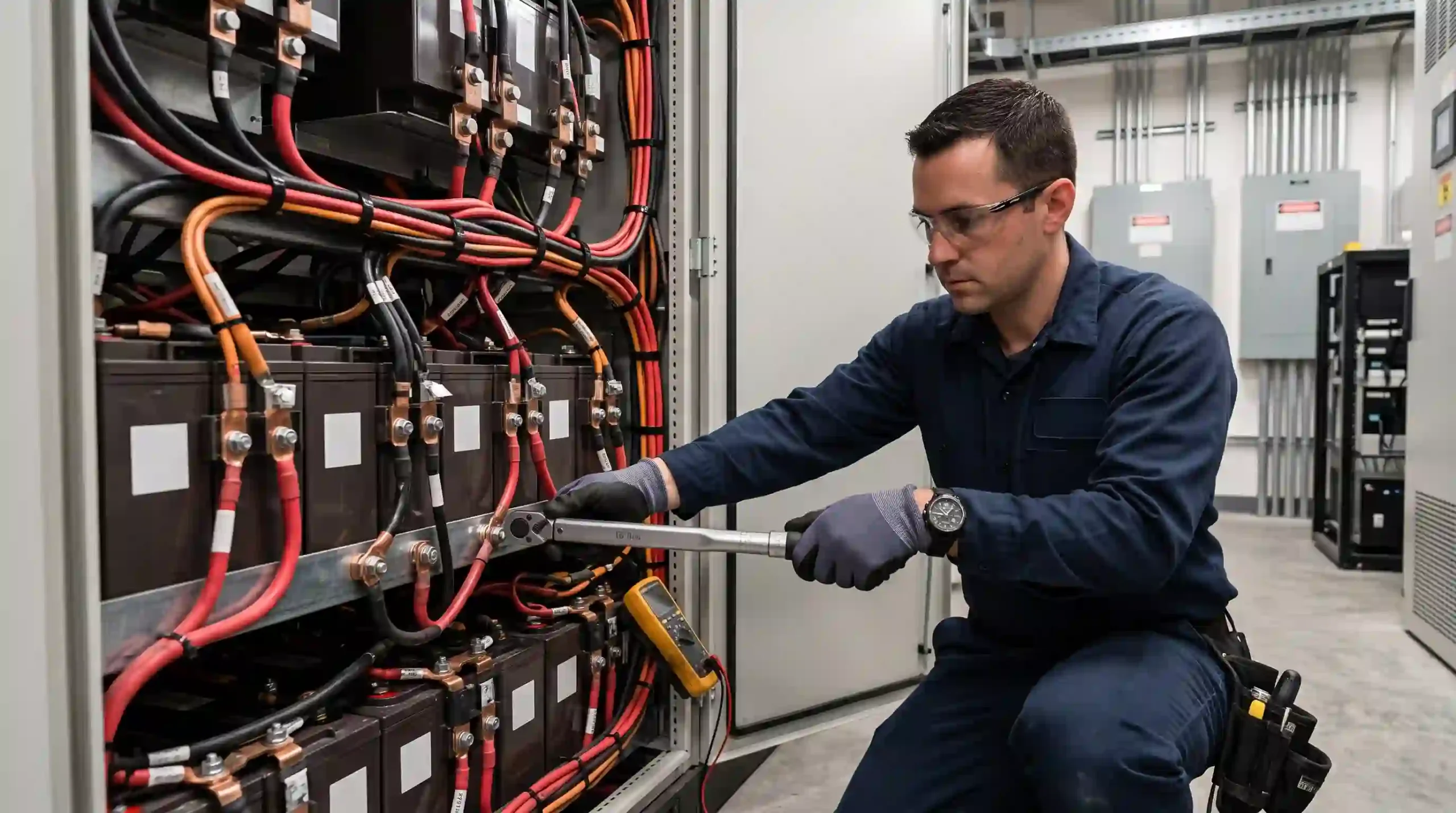
Preventive UPS Maintenance
A proactive preventive maintenance routine involves scheduled inspections every 3 to 6 months. Technicians clean internal electronics and check for early degradation before failures happen.
This planned approach minimizes operational risks and stabilizes your power distribution. Routine upkeep drastically lowers the chances of experiencing sudden, catastrophic system failure.
Read Also: Industrial Uninterruptible Power Supply: Reliable Power
Corrective Maintenance
When wear and tear is detected, corrective maintenance restores optimal functionality. This process involves the component replacement of weak parts like aged printed circuit boards. Replacing these parts before they fail maintains continuous system reliability.
Breakdown Maintenance
Running a system until it fails results in costly breakdown maintenance. This reactive approach triggers emergency repairs due to prolonged, severe equipment neglect. It causes massive operational delays and expensive unplanned downtime.
Your Essential UPS Maintenance Checklist
Implementing a structured UPS maintenance checklist helps IT managers maintain high system uptime. Following these clear steps ensures your equipment remains ready for any emergency.
1. Daily and Weekly Visual Inspections

Your Essential UPS Maintenance Checklist: Daily and Weekly Visual Inspections
Daily checks require monitoring the LED status indicators for any hidden alarm codes. Ensure the chassis is clear of debris and the ventilation slots are unobstructed.
Regularly listening for unusual noises helps detect underlying transformer hum issues early. Catching these small signs quickly prevents severe power disruptions later.
Read Also: Data Center Solutions: Guide to Scalable Infrastructure
2. Environmental and Temperature Control
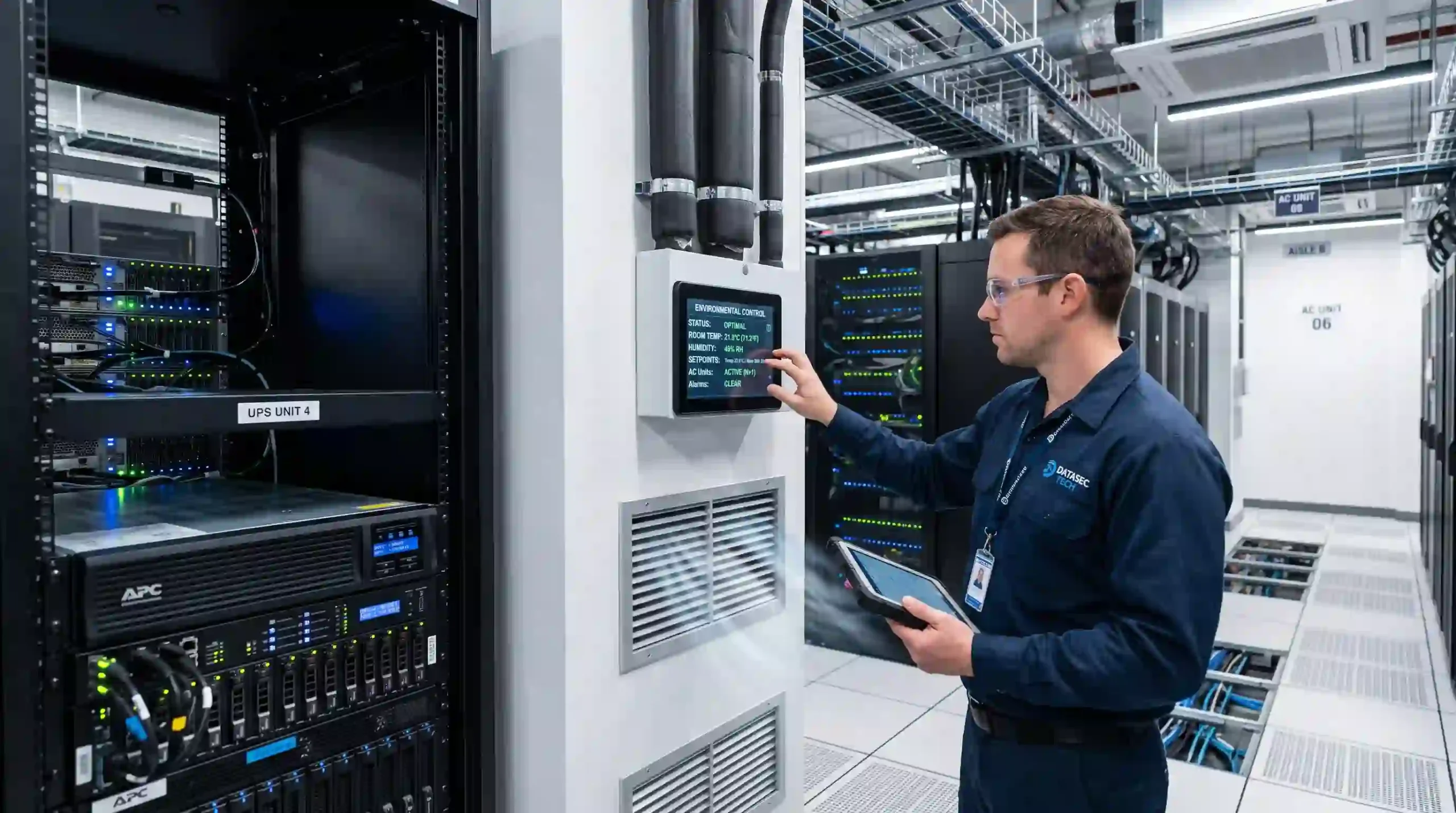
Your Essential UPS Maintenance Checklist Environmental and Temperature Control
Maintaining an optimal ambient temperature below 25°C is critical for health. High room temperatures quickly accelerate thermal runaway risks within sensitive electronics.
Keep the surrounding environment entirely dry to stop dangerous moisture accumulation. Proper climate control acts as a shield for your entire backup power system.
Read Also: Double Conversion UPS: Guide to Online Power Backup
3. Routine Cleaning and Dusting
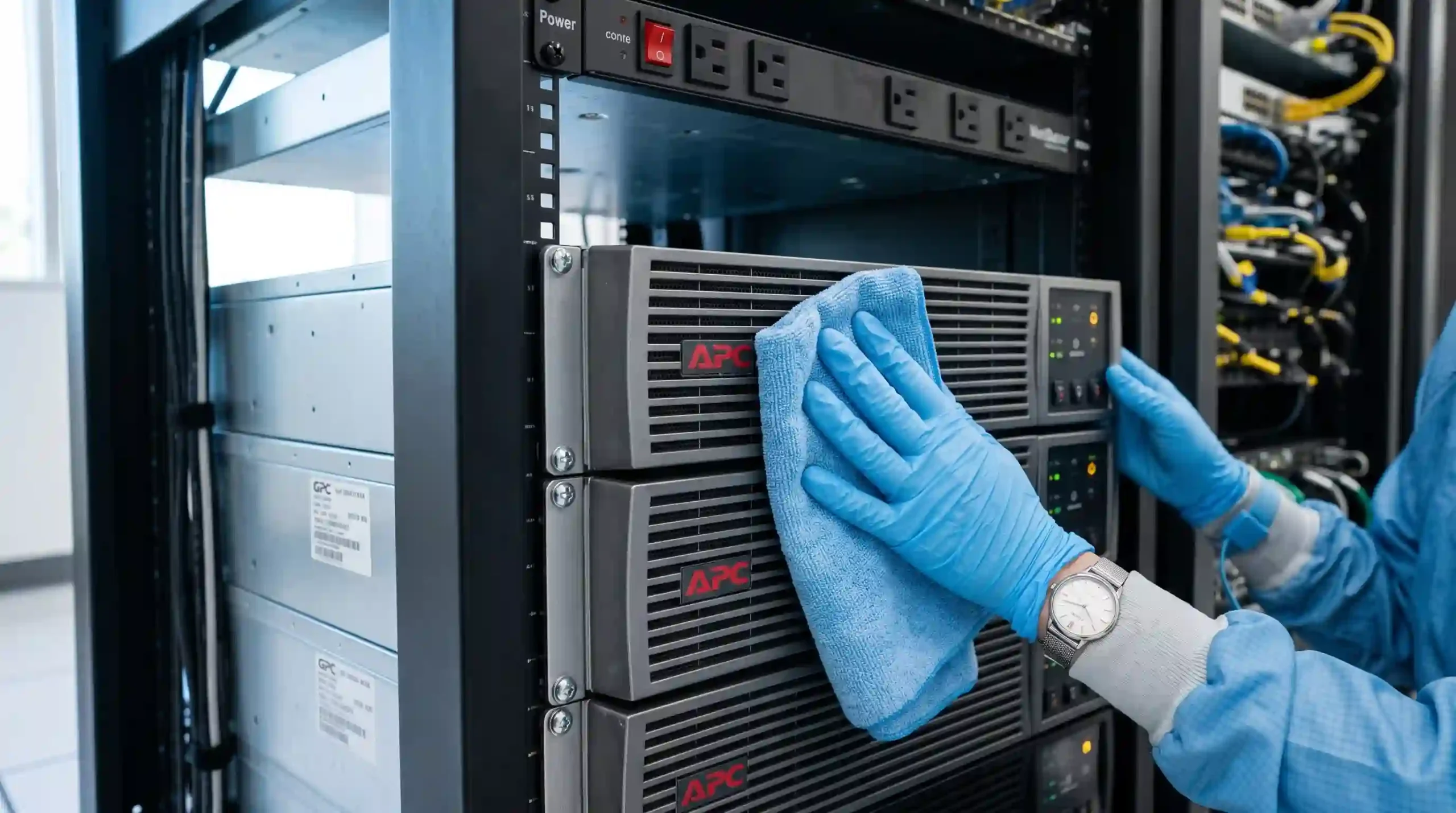
Your Essential UPS Maintenance Checklist Routine Cleaning and Dusting
Dust accumulation acts as an insulator that causes rapid internal overheating. Use a specialized ESD-safe vacuum cleaner to safely clear out internal debris.
Pay close attention to internal airflow channels and heat sinks during cleaning. Keeping these paths clear ensures the system retains its optimal cooling efficiency.
Read Also: Power Distribution Networks: Key Components & Architecture
4. Regular Battery Discharge Testing (Load Testing)
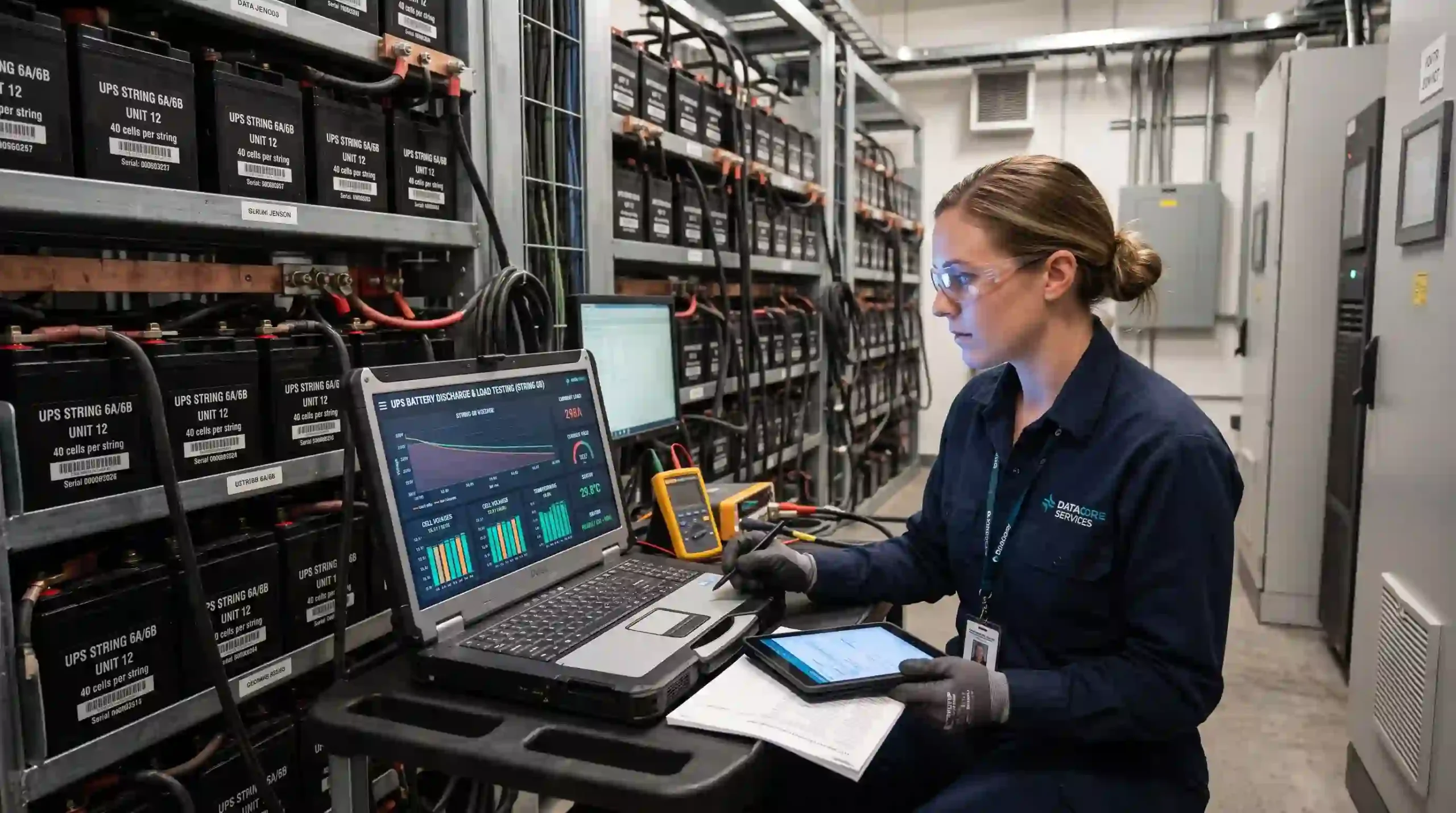
Your Essential UPS Maintenance Checklist Regular Battery Discharge Testing (Load Testing)
A periodic discharge test safely simulates a real-time utility power outage. This process evaluates how the system handles an actual electrical load demand.
It accurately verifies whether the cells can sustain operations during a blackout. Regular load testing prevents your backup system from failing when needed most.
Read Also: Line-Interactive UPS Guide: Complete Power Protection
Critical Components to Inspect During UPS Maintenance
Deep internal technical checks keep your critical power infrastructure perfectly stable. Monitoring specific parts prevents unexpected breakdowns across your entire electrical architecture.
1. The UPS Battery Bank
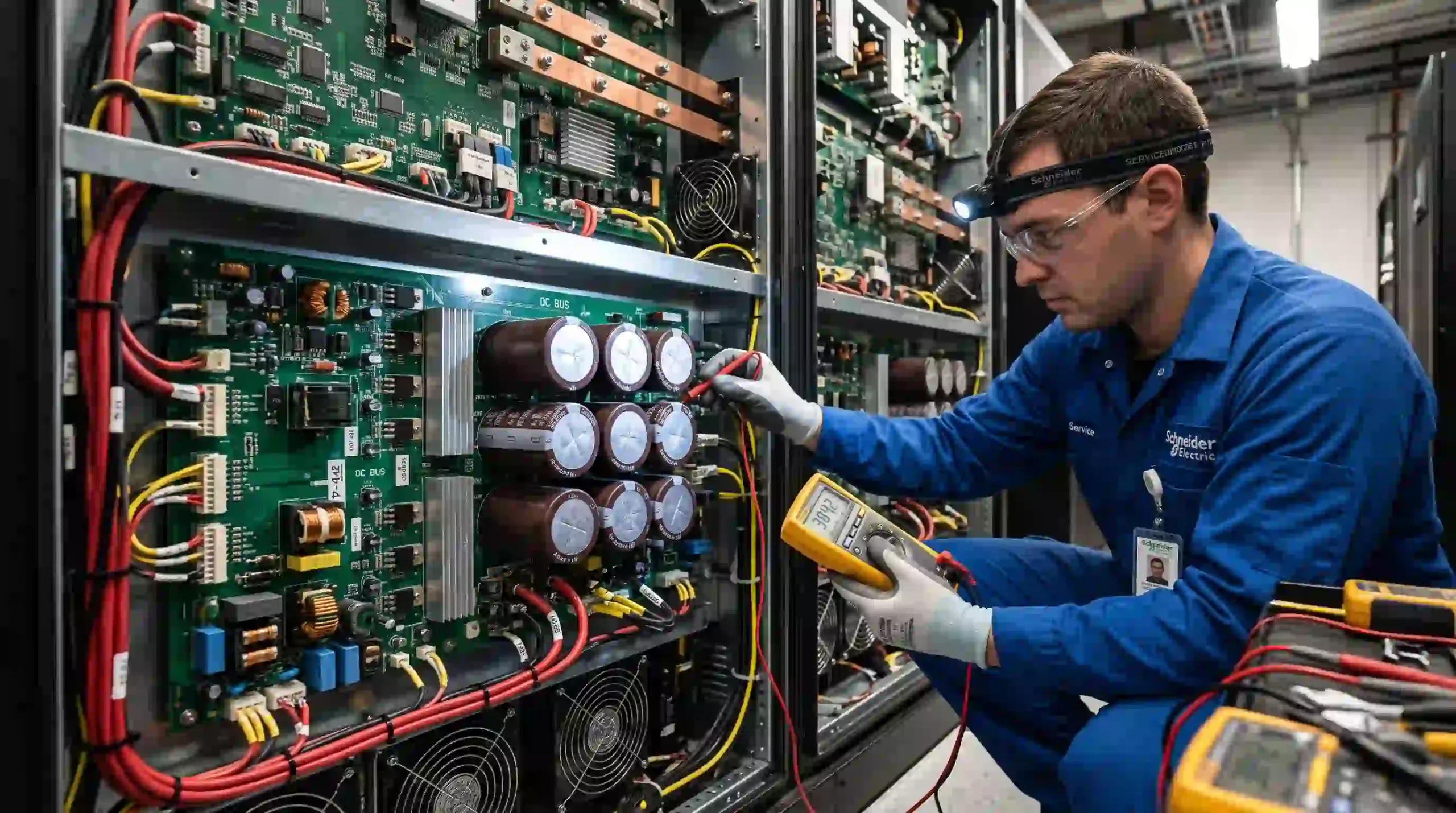
Critical Components to Inspect During UPS Maintenance: The UPS Battery Bank
The battery bank is the heart of energy storage but remains highly vulnerable. Standard valve-regulated lead-acid (VRLA) batteries typically last between 3 to 5 years.
Technicians must measure individual float voltage and internal resistance regularly. Monitoring these metrics prevents sudden battery degradation from compromising your system.
Read Also: Power Line Conditioner: Is One Really Necessary for Gear?
2. Capacitors
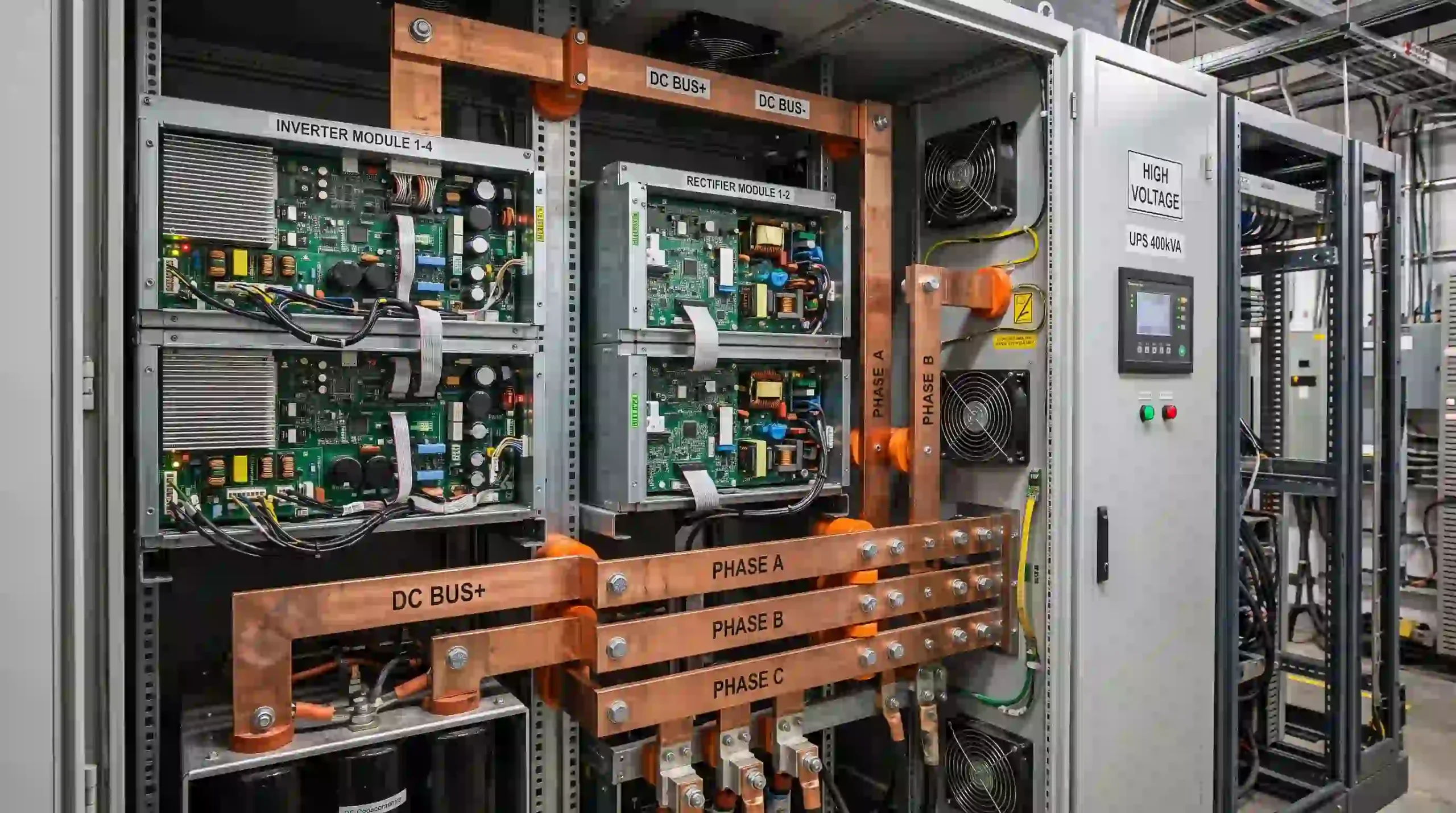
Critical Components to Inspect During UPS Maintenance Capacitors
Internal capacitors smooth out rough electrical current fluctuations during operation. Over time, these parts are highly prone to electrolyte leakage or physical swelling.
Regularly tracking their performance prevents dangerous harmonic distortion from ruining downstream electronics. Replacing them early safeguards your overall power conditioning quality.
Read Also: Modern Power System Protection: Prevent Failures
3. Cooling Fans
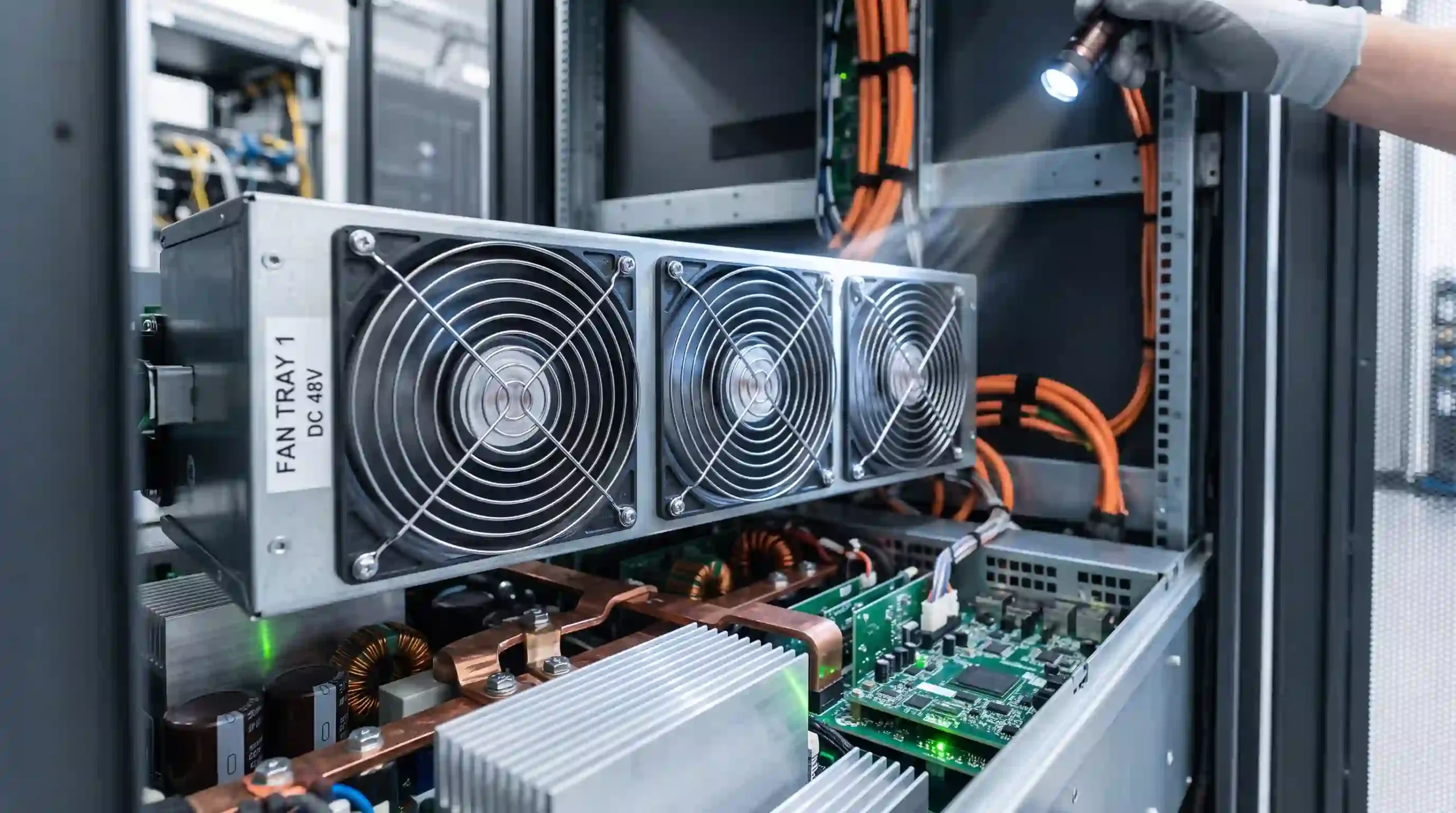
Critical Components to Inspect During UPS Maintenance: Cooling Fans
Dedicated cooling fans maintain steady, protective airflow across hot internal components. Technicians must verify smooth rotation and check for failing ball bearings.
Faulty fans cause immediate heat buildup, triggering a protective thermal shutdown. Keeping them functional prevents unexpected transfers to risky bypass mode.
Read Also: Automatic Transfer Switch (ATS): Reliable Power Solutions
4. Inverters and Rectifiers
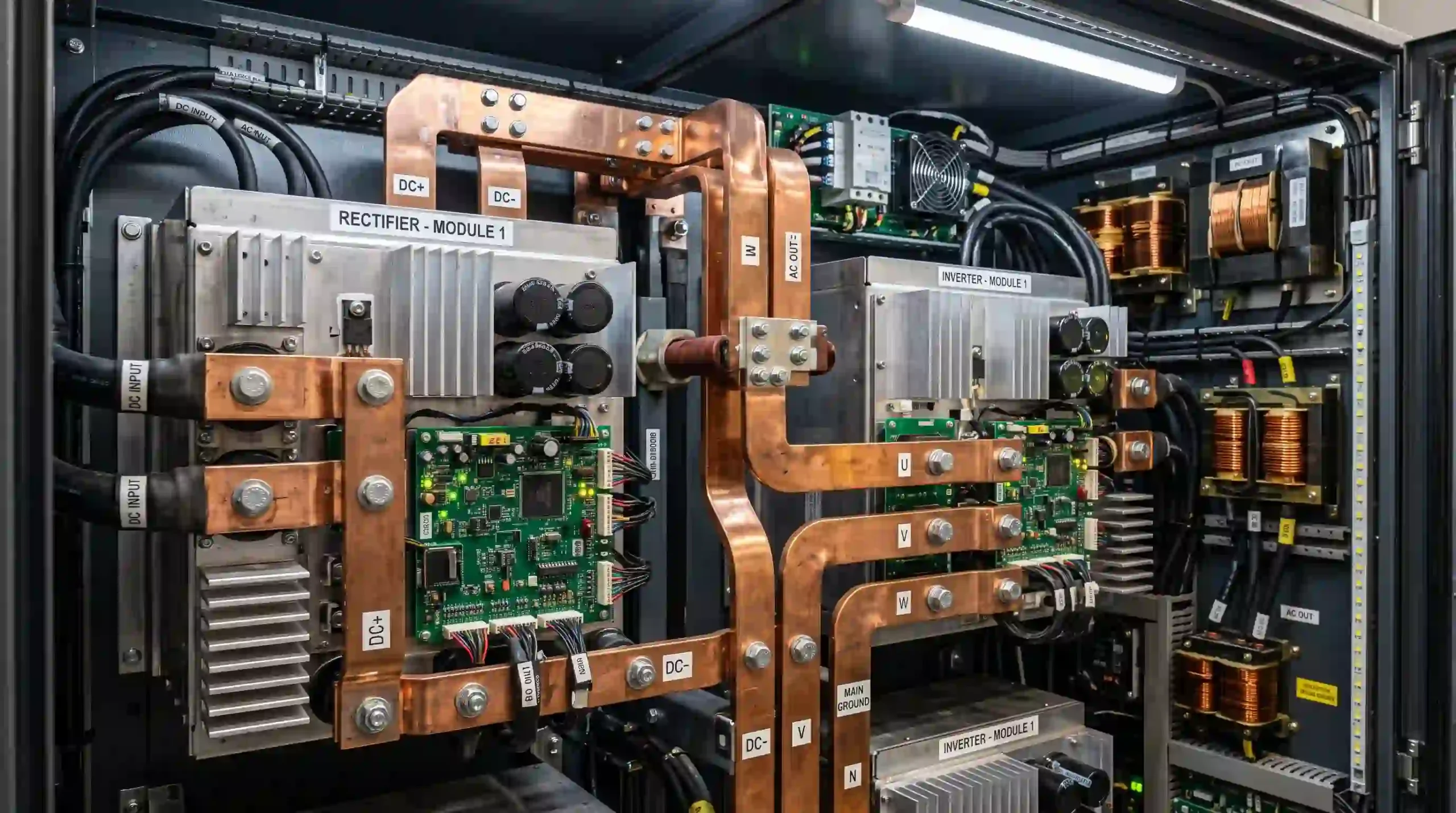
Critical Components to Inspect During UPS Maintenance: Inverter and Rectifiers
The rectifier converts incoming AC to DC, while the inverter delivers clean AC power. Inspecting these modules helps detect dangerous terminal corrosion or loose wire connections.
Maintaining these semi-conductor parts ensures highly efficient power conversion ratios. Clean connections prevent system faults and ensure clean, stable voltage regulation.
Read Also: Critical Facilities: A Guide to Essential Infrastructure
When to Schedule Professional UPS Maintenance Services?

When to Schedule Professional UPS Maintenance Services
While internal teams handle basic checks, expert field service technicians must perform advanced diagnostics. Schedule comprehensive professional UPS maintenance every 3 to 6 months to ensure deep system calibration.
Certified specialists use specialized tools to execute complex firmware updates and safety checks. They perform precise thermal imaging to detect hidden hot spots inside switchgear components. Investing in expert servicing guarantees your system complies with strict data center standards.
Read Also: Backup UPS Systems: Ultimate Protection for Electronics
Key Benefits of a Planned UPS Maintenance Strategy
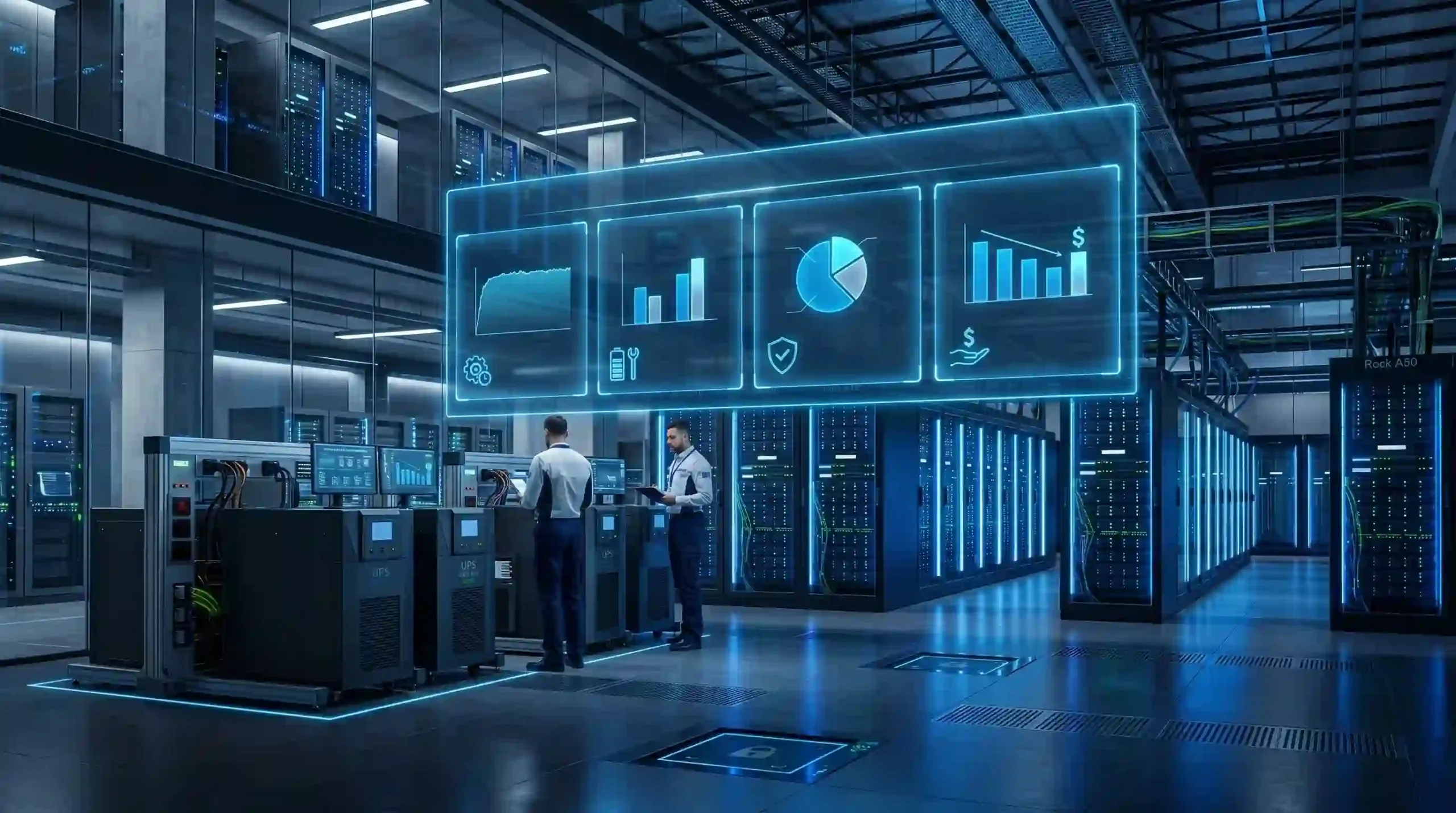
Key Benefits of a Planned UPS Maintenance Strategy
Deploying a strict, scheduled preventive maintenance program delivers long-term operational security. It transforms your power setup into a highly resilient asset.
- Extended Lifespan: Regular servicing significantly prolongs the operational life of expensive power cells and delicate inverter circuitry.
- Data and Hardware Protection: Proactive checks prevent devastating data corruption and save sensitive server racks from harsh voltage spikes.
- Cost Savings: Routine inspections minimize total cost of ownership by avoiding incredibly expensive emergency breakdown repairs.