
Modern electrical infrastructure demands highly reliable systems to manage electricity from generation sources to end-user applications. Finding the right architecture ensures operational safety and prevents unexpected downtime across business facilities.
Organizations must adopt smart grid advancements to optimize energy consumption and improve total cost of ownership. Scalable hardware designs allow factories and corporate offices to seamlessly handle increasing electrical load requirements.
What are Power Distribution Solutions?
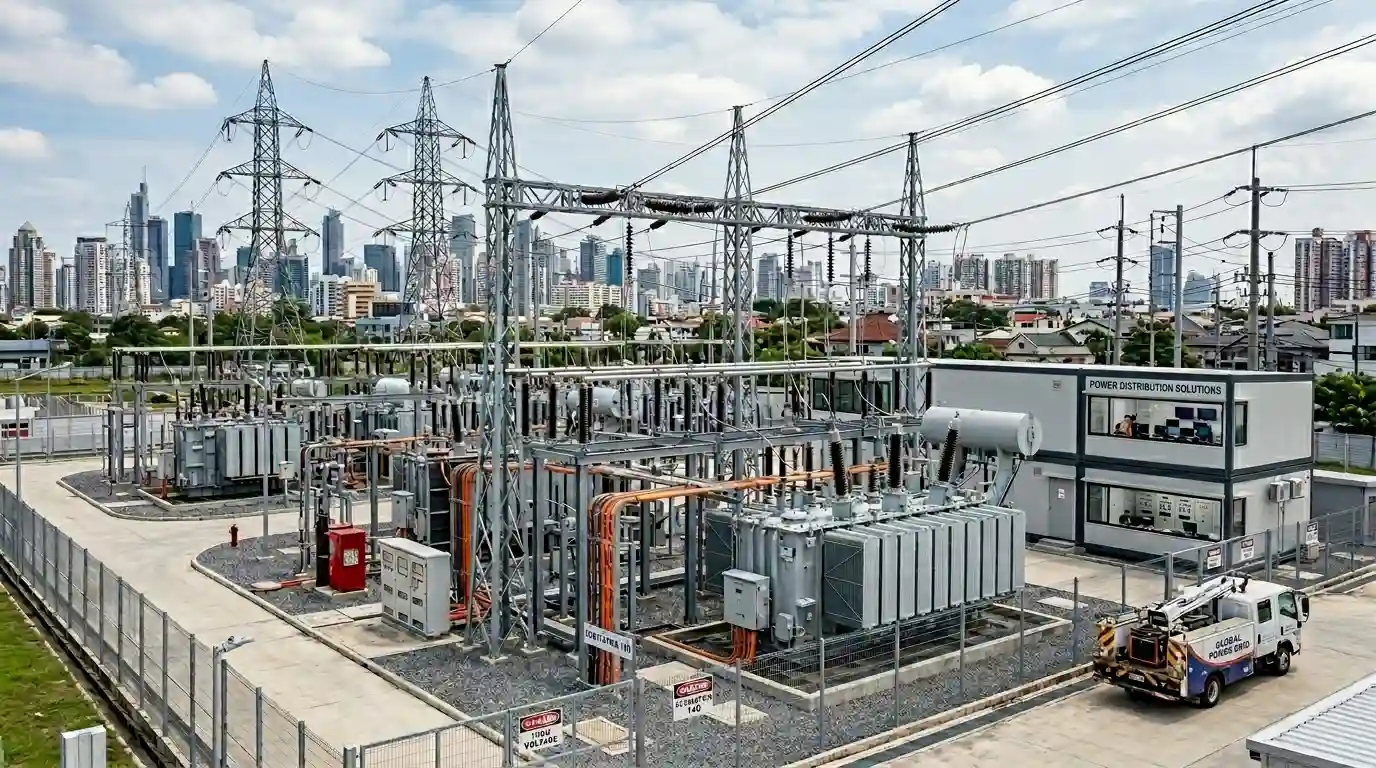
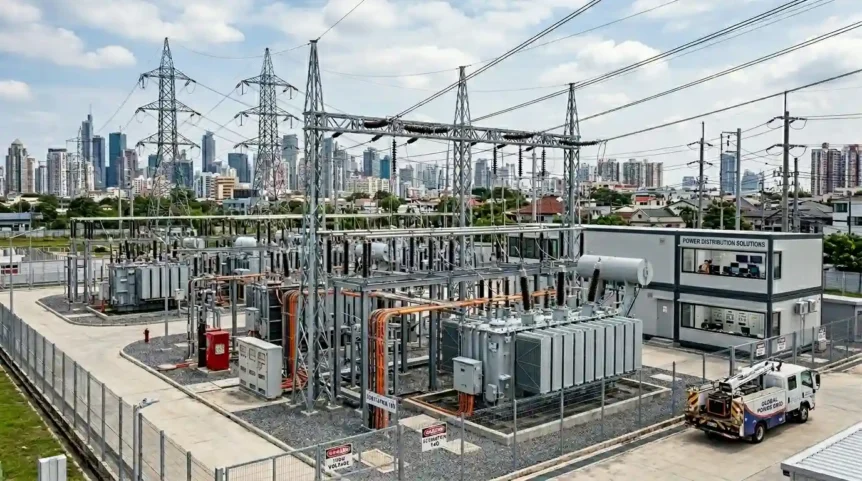
Electric power substation in urban area with power lines and transformers, city skyline in background.
Efficient power distribution solutions represent an integrated system of specialized hardware components, advanced software management tools, and safety strategies. Their primary objective is to safely, reliably, and continuously route electricity from utility grids or local generation plants down to various operational load endpoints.
These engineered architectures protect delicate machinery while ensuring optimal voltage levels across commercial buildings, large-scale industrial plants, and mission-critical IT installations. Utilizing modern infrastructure helps companies eliminate energy waste, streamline regular maintenance routines, and comply with strict environmental regulations.
Read Also: Best Power Quality Solutions, Save Your Electronics!
Key Power Distribution Equipment
Power Distribution Solutions
Building a resilient infrastructure requires selecting the correct combination of core heavy-duty hardware parts. These devices work in tandem to regulate high electrical current levels, prevent dangerous short circuits, and balance power demands across facility zones.
1. Substations & Transformers
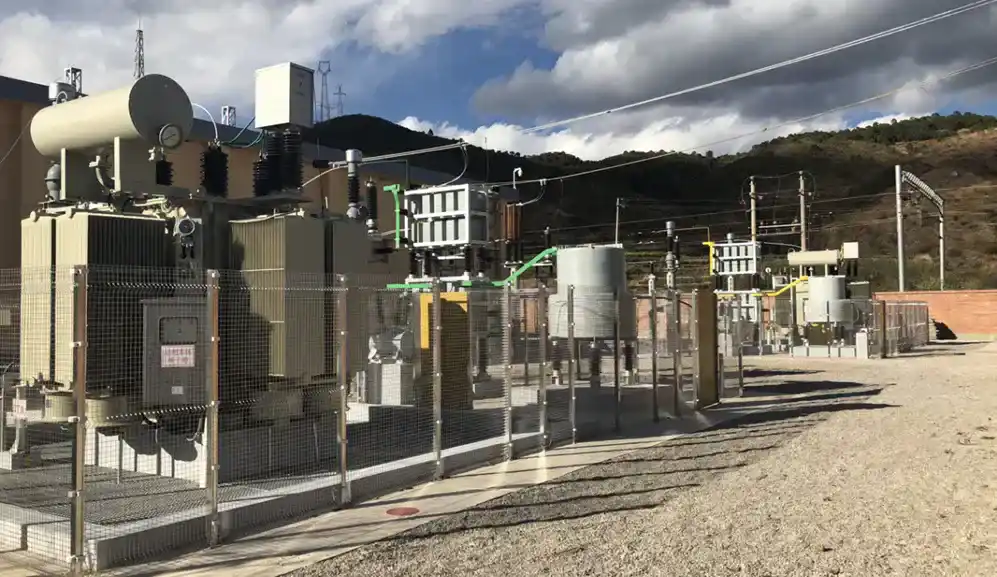
Electrical substations receive high transmission voltage directly from regional power grids. They use heavy-duty step-down transformers to lower these extreme voltages into medium or low-voltage levels safe for local facilities.
This conversion process minimizes energy loss during long-distance delivery while prepping the electricity for onsite use. Properly managed substations prevent hardware damage by isolating external grid fluctuations from corporate networks.
Read Also: Uninterruptible Power Supply: Types, Functions & Components
2. Medium & Low Voltage Switchboards
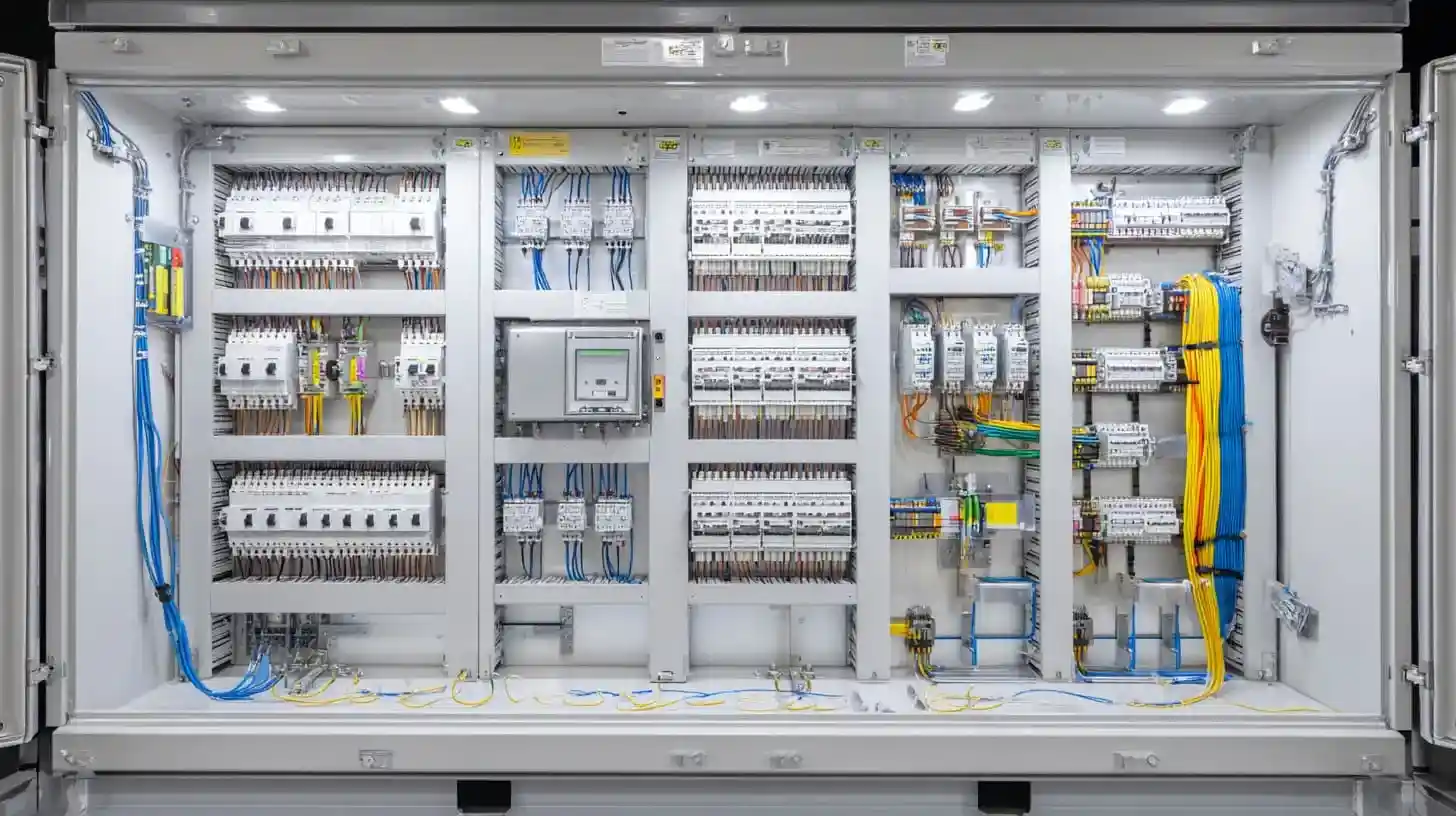
Centralized electrical switchboards serve as the main control hubs for routing current safely across complex facility layouts. They house vital protective components that safely isolate faults and prevent widespread system blackouts.
These panels permit technicians to manually or automatically redirect energy flows during urgent maintenance tasks. Their rugged design shields workers from accidental arc flash hazards during regular system operations.
3. Busbar Trunking System (BTS)
The modern busbar trunking system utilizes solid copper or aluminum conductor tracks enclosed within a protective modular casing. It replaces traditional thick, heavy cable runs, offering a compact footprint inside tight building risers.
This layout facilitates fast installation times and allows effortless relocation of tap-off units when power needs change. Lower transmission losses make it highly desirable for green building designs.
4. Distribution Boards & Meter Panels
Sub-distribution boards divide main incoming electricity into smaller, manageable branch circuits for specific building sections. They contain localized circuit breakers to protect individual appliances or lighting grids from overcurrent events.
Integrated meter panels accurately track consumption metrics per floor, allowing management to bill departments or tenants correctly. Scannable layouts ensure maintenance teams can quickly isolate single faulty circuits.
Power Distribution Solutions for Data Centers
Power Distribution Solutions for Data Centers
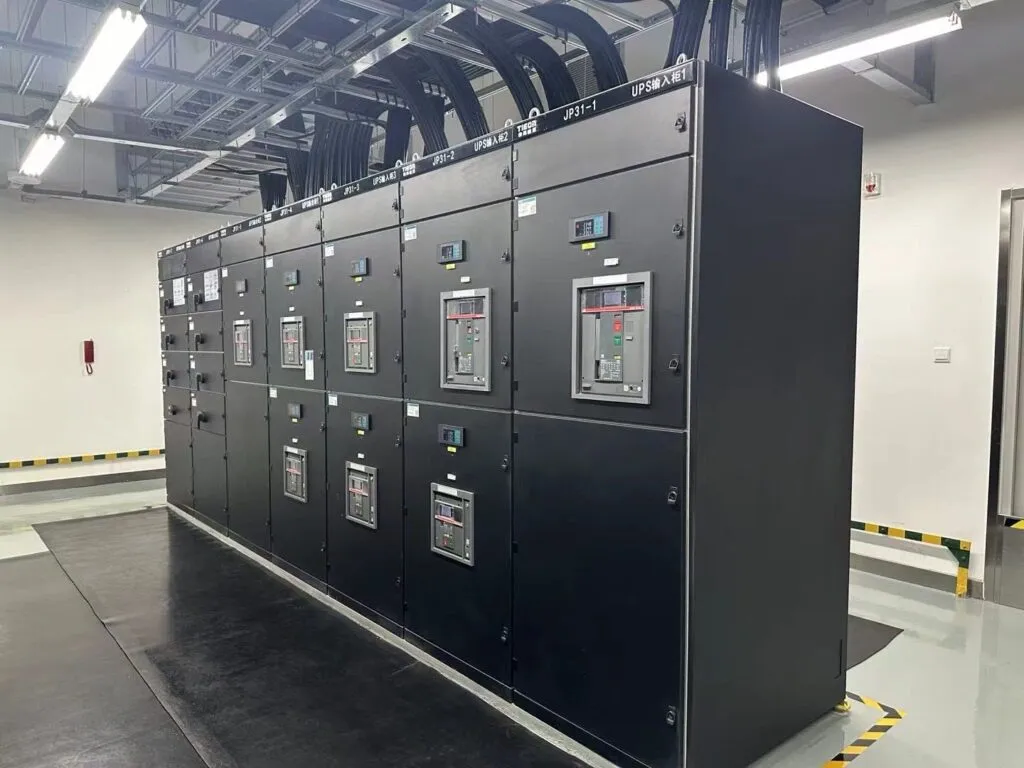
Data center facilities require specialized electrical designs capable of guaranteeing maximum uptime for critical computing infrastructure. Even minor voltage sags can cause severe data corruption or halt international digital transactions entirely.
1. Power Distribution Units (PDUs)
Floor-mounted power distribution units take clean, conditioned electricity from large uninterruptible power supplies. They transform voltage levels down to match the strict operational requirements of delicate IT hardware components.
These units then clean up residual electrical noise before routing power safely down toward server enclosures. Their built-in isolation technology shields computing racks from upstream electrical faults.
Read Also: Data Center UPS Systems: Functions and How They Work
2. Smart & Metered PDUs
Rack-level intelligent PDUs feature integrated network interfaces that provide live tracking of power consumption data. Network administrators monitor current, voltage, and power factors closely to avoid hazardous circuit overloads.
Analyzing this data allows operators to calculate precise power usage effectiveness scores across the server room. Automated alarms notify staff instantly before a single rack reaches maximum threshold limits.
3. Remote Power Panels (RPP)
Compact remote power panels function as extended sub-distribution boards placed directly next to high-density server rows. They save precious raised-floor space by removing bulky circuit breaker arrays from primary power rooms.
This layout shortens cable runs to individual racks, reducing clutter and improving airflow dynamics. They offer easy scalability as data storage requirements expand over time.
Automation & Energy Management Solutions
Power Distribution Solutions
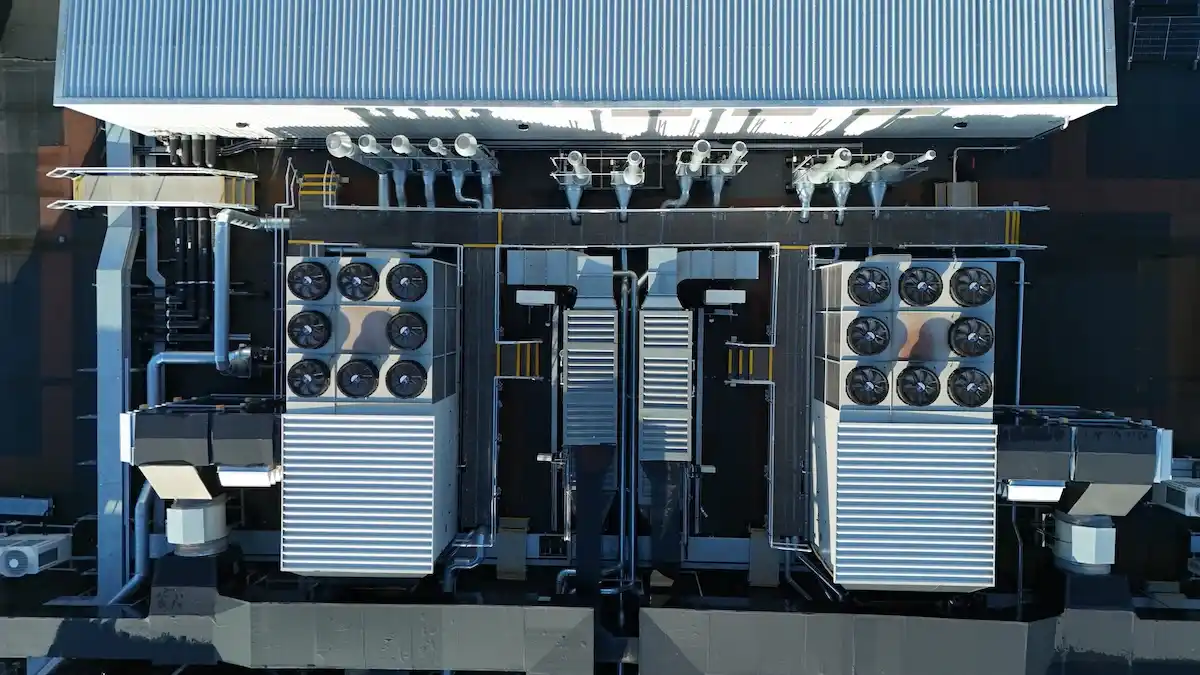
Combining physical hardware with intelligent monitoring software allows facilities to dynamically adapt to shifting electrical conditions. Automated systems dramatically lower human error risks while optimizing daily energy expenditures.
1. Smart Grid & SCADA Systems
Industrial SCADA systems provide central operators with full visual oversight of the complete power grid infrastructure. They gather real-time diagnostics from distant sensors to pinpoint faults before outages occur.
This automated data collection enables intelligent grid balancing by dynamically adjusting to peak demand spikes. Predictive analytics help technicians schedule system maintenance during non-critical hours.
Read Also: Best Critical Power Solutions for 2026, Stop Power Outages!
2. Building Management System (BMS) Integration
Linking power distribution infrastructure directly into a building management system yields unparalleled operational efficiency. The software synchronizes main electrical loads with active HVAC machinery and office lighting schedules.
It automatically lowers energy usage in unoccupied zones to reduce unnecessary operational overhead costs. Centralized dashboards show clear consumption trends for quick environmental compliance auditing.
3. Automatic Transfer Switches (ATS)
An automatic transfer switch constantly monitors the stability of incoming municipal grid electricity. If the main utility power fails, it immediately commands backup diesel generators to start up.
The switch then safely shifts critical facility loads to the emergency supply within milliseconds. This rapid transition guarantees business continuity across hospital wings and production assembly lines.
Power Quality & Protection Solutions
Power Distribution Solutions
Maintaining high power quality involves safeguarding systems against voltage fluctuations, harmonics, and sudden external spikes. Implementing robust defense devices prevents premature component aging and catastrophic hardware meltdowns.
1. UPS & ATS Integration
Pairing an uninterruptible power supply with an automatic transfer switch creates an airtight operational defense system. The battery backup fills the immediate energy gap during initial power grid failures.
This prevents servers or medical machinery from rebooting while backup generators spin up to speed. Once generator power stabilizes, the system transitions smoothly without dropping a single watt.
Read Also: Static Transfer Switch: Components, How It Works & Benefits
2. Active Harmonic Filters & Surge Protectors
Advanced active harmonic filters inject counter-currents to cancel out electrical distortions caused by modern non-linear loads. This stabilizes voltage wave clean lines, protecting sensitive electronics from overheating over time.
Heavy-duty surge protective devices divert extreme voltage transients caused by lightning strikes away from internal equipment. This safety layer saves thousands in potential equipment replacement fees.
3. Circuit Breakers (MCB/MCCB)
Miniature circuit breakers handle lower current paths, protecting localized office lighting and wall outlets from overloads. Larger molded case circuit breakers manage high-amperage industrial machinery feeds with adjustable trip settings.
Both device categories instantly cut off electricity when dangerous short circuits are detected by internal elements. Their quick action prevents catastrophic electrical fires from spreading through building walls.
Modern Challenges and Innovations in Power Distribution
Power Distribution Solutions
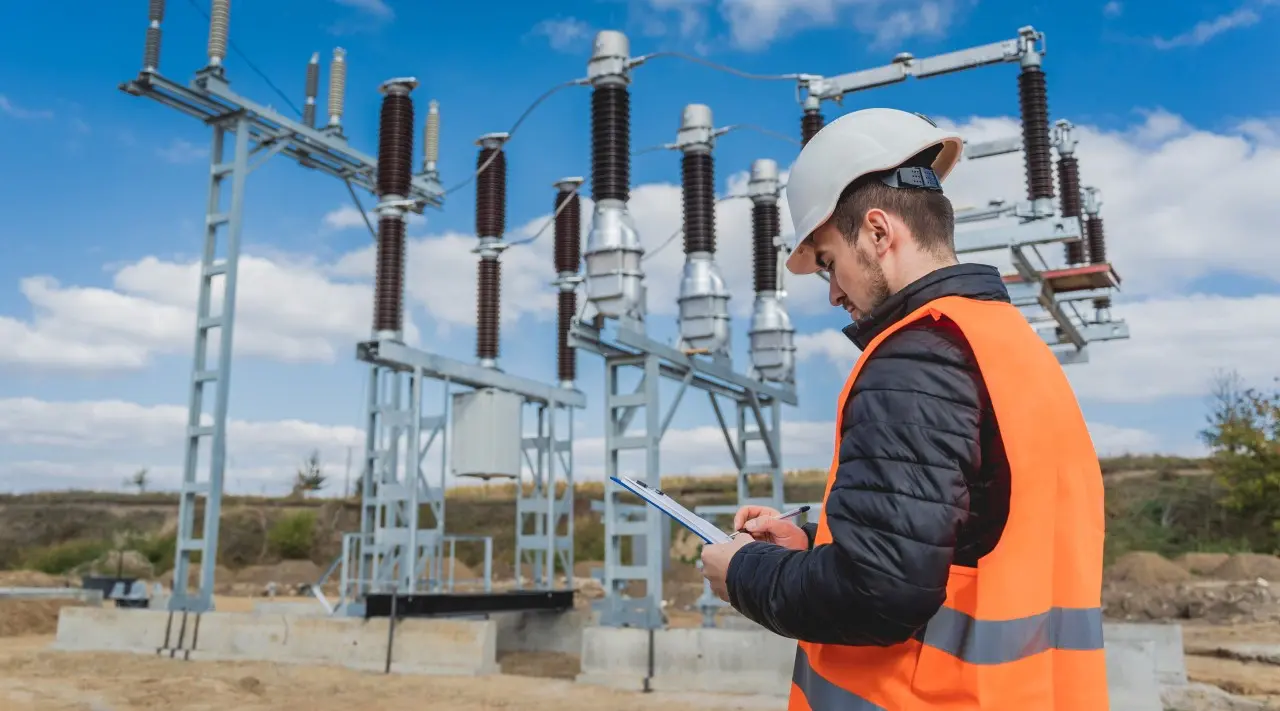
The global push toward carbon neutrality forces power engineers to redesign traditional grid frameworks. Overcoming line deficiencies and incorporating volatile green energy sources require innovative, localized approach modifications.
1. Minimizing Power Loss
Engineers combat technical line losses by strategically positioning distribution transformers as close to massive load centers as possible. Shorter low-voltage cable runs reduce natural resistance heating losses within conductors.
Utilizing high-efficiency amorphous core transformers further slashes fixed core energy dissipation around the clock. These layout tweaks noticeably lower monthly utility costs for industrial complexes.
2. Renewable Energy Integration
Integrating large-scale rooftop solar installations requires advanced bi-directional power flow management systems. Urban grids must smoothly handle sudden generation drops caused by passing cloud covers.
Deploying specialized battery energy storage systems captures excess daytime solar production for use during peak evening hours. This leveling out of power spikes prevents localized transformer overloading issues.
3. Grid Stability & Distributed Generation (DG)
Implementing a decentralized network of distributed generation sources greatly increases local power grid reliability. Small microturbines and solar arrays provide immediate emergency power close to point-of-use locations.
This localized redundancy prevents regional grid collapses from taking down entire municipal water or transport networks. Smart controller modules keep local voltage levels highly stable during peak hours.