
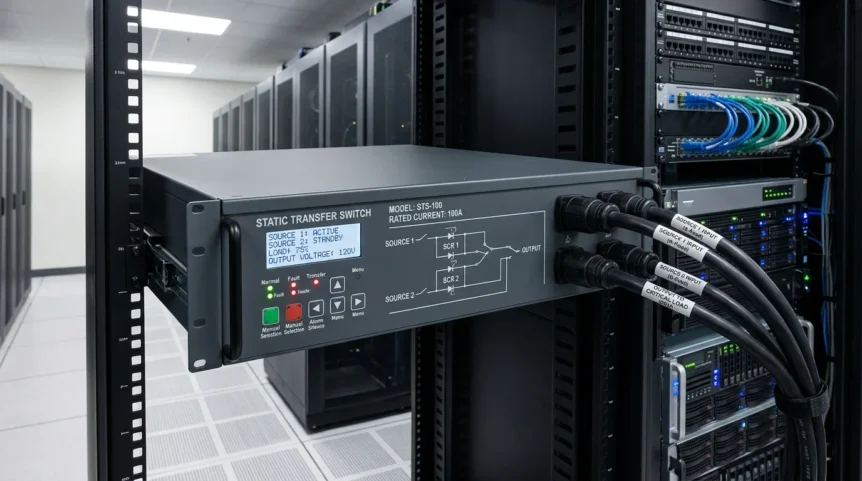
In today’s digital age, unexpected power outages can lead to catastrophic data loss and expensive operational downtime. For mission-critical environments, relying on slow, traditional backup switches is no longer a viable option.
Modern systems require high-performance electrical solutions to run uninterrupted. Advanced static transfer switches ensure your infrastructure remains resilient against grid failures.
What is a Static Transfer Switch?
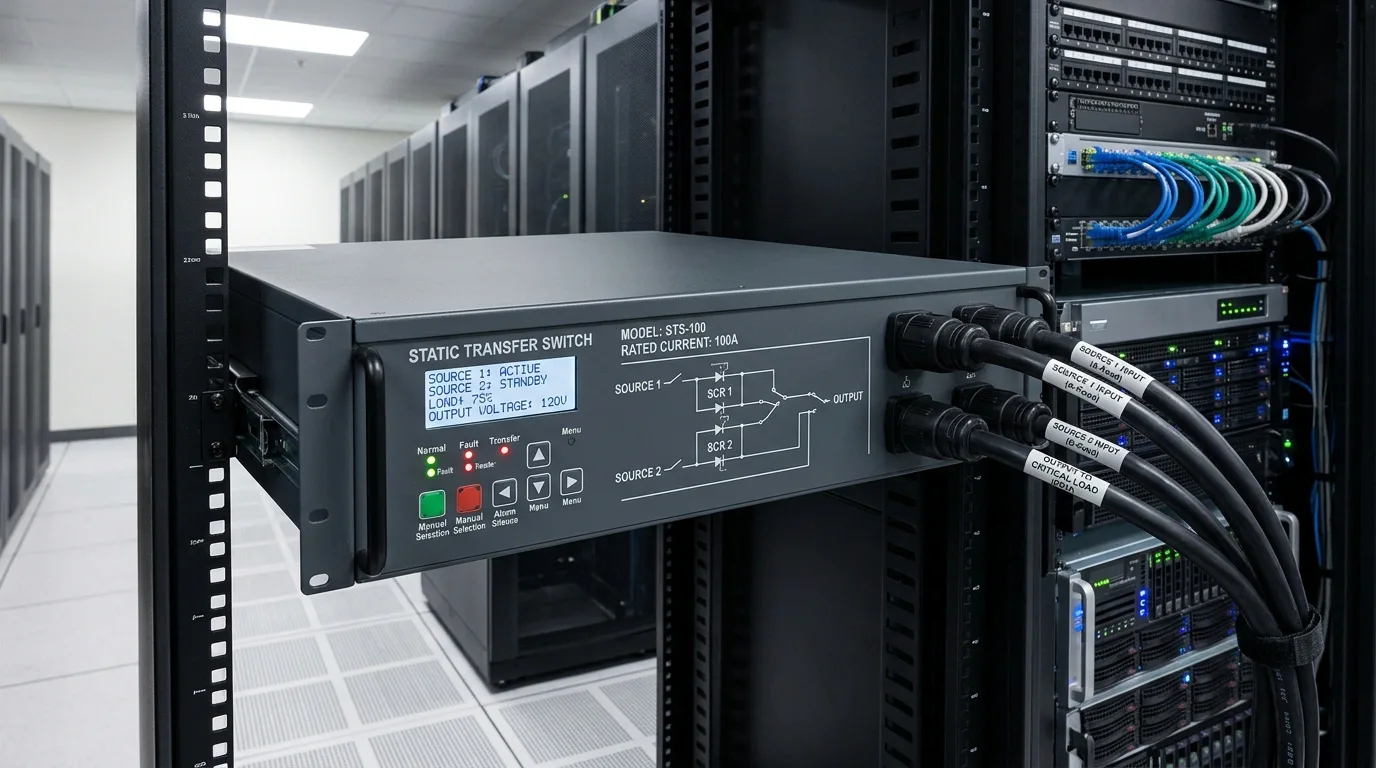
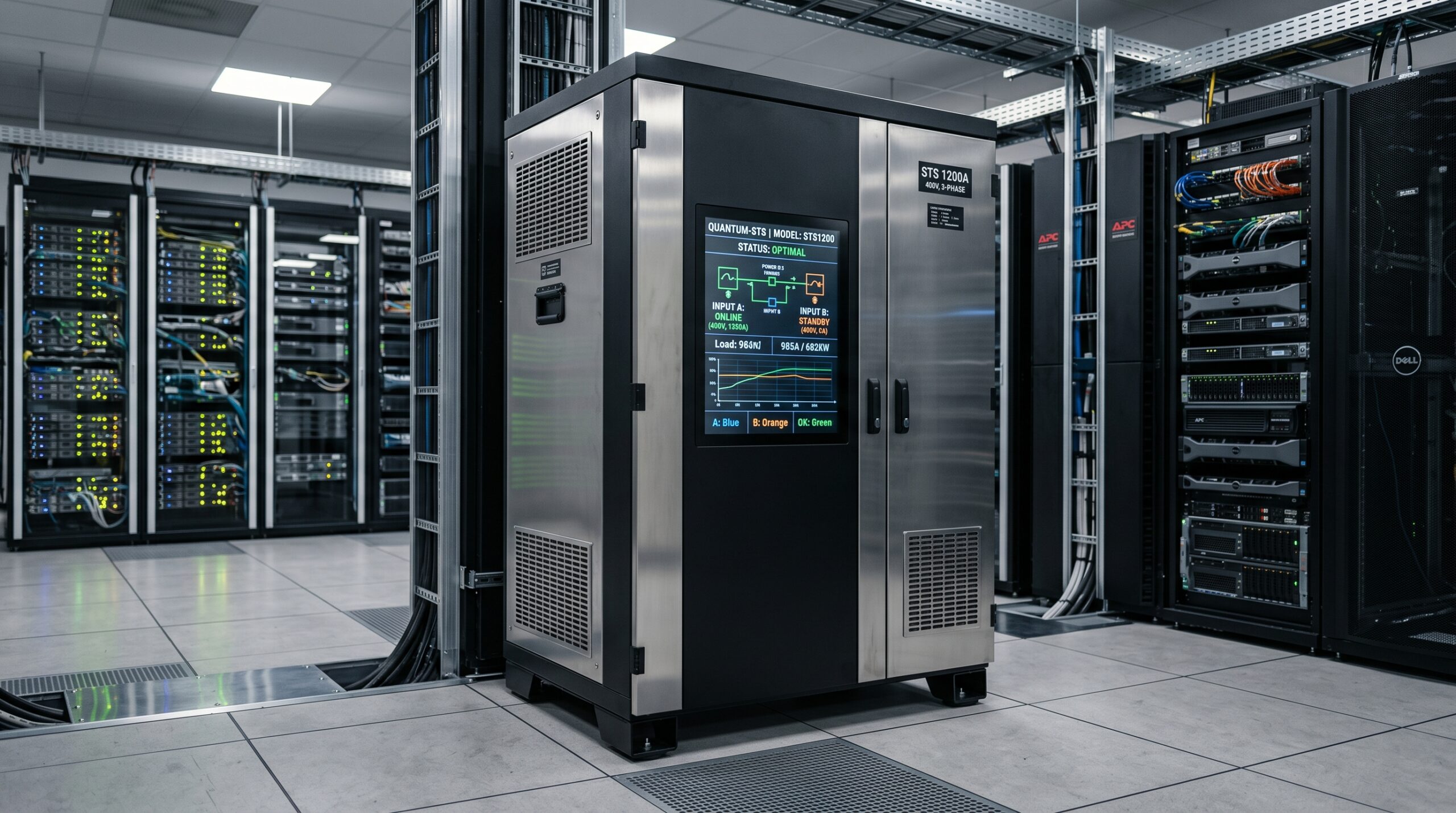
Data center with static transfer switch and server racks, featuring cables and digital control panel.
A static transfer switch (STS) is an advanced, solid-state electrical device designed to safeguard critical machinery. Its primary function is to automatically and seamlessly transfer electrical loads between two independent AC power sources.
By utilizing high-speed silicon-controlled rectifiers (SCRs) or thyristors, it operates without any mechanical movement. This ensures maximum uptime and continuous power for sensitive electronic equipment worldwide.
Read Also: Rack Mount UPS: Types, Functions, and Tips for Choosing
How Does a Static Transfer Switch Work?
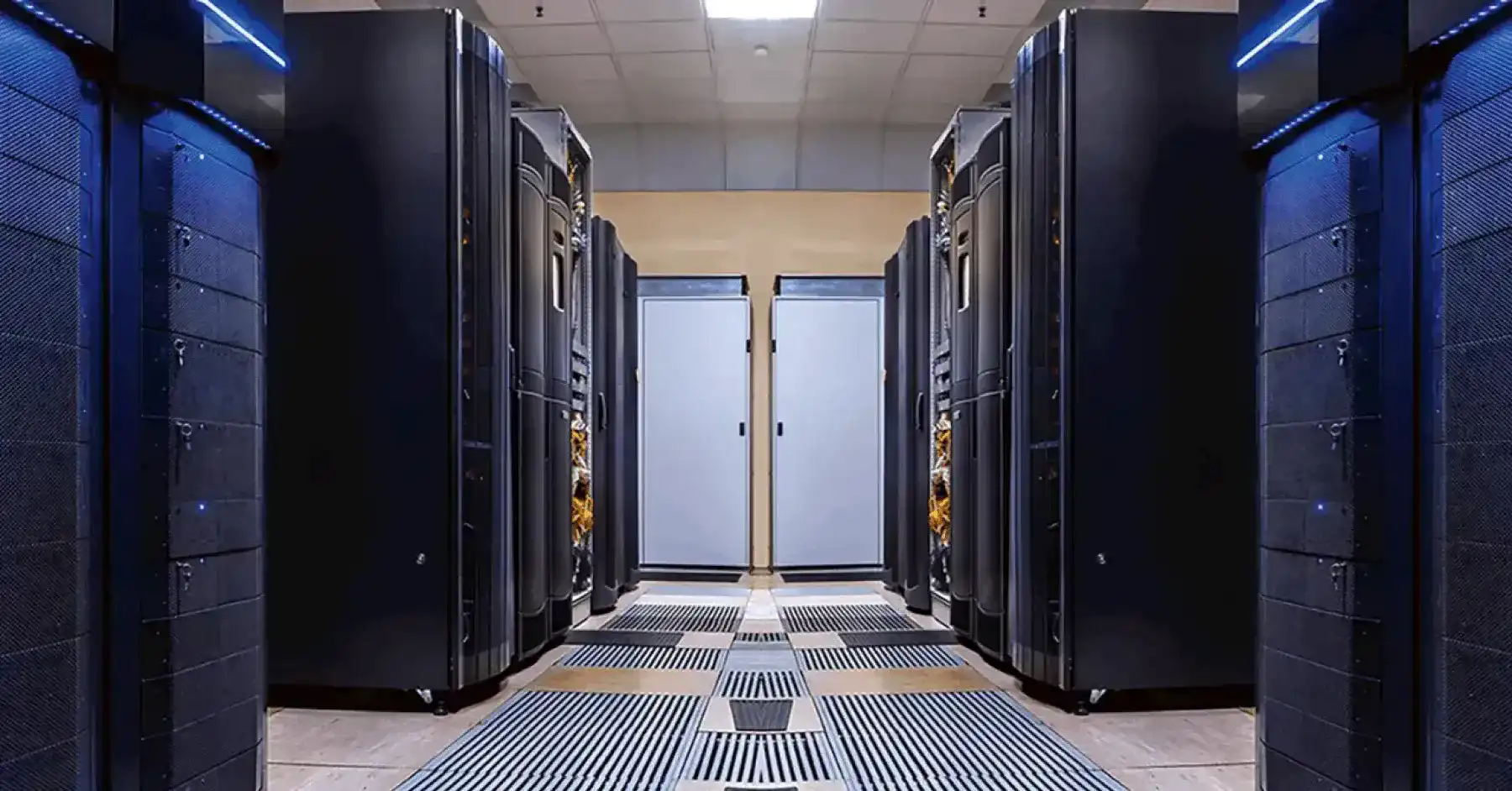
Static Transfer Switch – SPS Sales
An STS achieves continuous power supply by constantly analyzing the quality of its electrical feeds. When a fault occurs on the active line, it executes an instant electronic switching process. This rapid transition prevents equipment reboots and protects vital infrastructure from severe power disruptions.
1. Real-Time Monitoring
The advanced internal sensors of the switch constantly track the incoming electrical waveforms. They measure vital metrics like voltage, phase angle, and frequency from both sources simultaneously.
If the primary source deviates from safe operational parameters, the system triggers an immediate response. This proactive oversight ensures that the connected load never receives unstable or damaging electrical currents.
Read Also: Data Center UPS Systems: Functions and How They Work
2. Ultra-Fast Transfer Time (Milliseconds)
The true power of this system lies in its ultra-fast transfer time, which ranges from 1 to 4 milliseconds. This lightning-fast speed represents less than a quarter of a single electrical cycle.
Because the transition happens so rapidly, sensitive servers and IT hardware do not detect any power interruption. Consequently, your data infrastructure remains perfectly stable without experiencing harmful resets or system crashes.
3. Solid-State Switching Technology
Unlike traditional backup systems, this technology relies completely on solid-state components rather than physical contacts. This specialized design entirely eliminates the risk of mechanical wear and tear over extended operational periods.
Without moving parts to slow the process down, the device delivers reliable and instant switching. This innovative approach significantly extends the overall service life of your critical power distribution network.
Key Components of a Static Transfer Switch
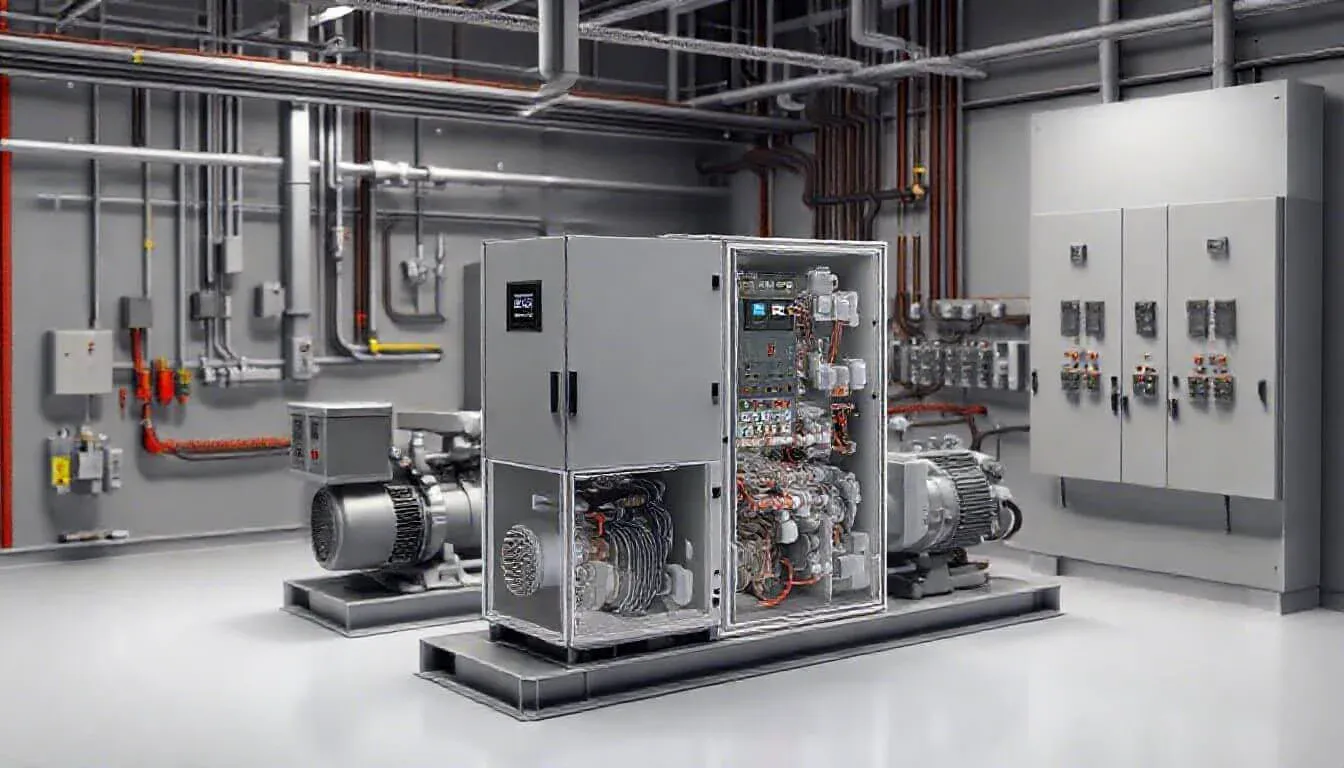
Key Components of a Static Transfer Switch
The incredible speed and reliability of this device depend on its premium internal hardware layout. Each component works in perfect harmony to ensure a secure, spark-free power transition.
1. Thyristors (Silicon-Controlled Rectifiers – SCR)
Thyristors act as the heavy-duty, high-speed electronic gates that handle the main electrical current. They are arranged in specialized anti-parallel SCR pairs to successfully accommodate alternating current.
These robust components can handle massive electrical rushes without failing or degrading over time. Their rapid electronic gating capability forms the foundation of modern, uninterrupted power delivery systems.
Read Also: What is a 3 Phase UPS? Working Principles & Benefits
2. Microcontroller Control Module
The advanced microcontroller control module serves as the intelligent brain of the entire switching system. It constantly analyzes complex power waveforms to detect hidden electrical anomalies instantly.
Once it spots a power drop, it immediately sends precise firing signals to the thyristors. This precise coordination ensures that power transfers occur safely at the perfect electrical moment.
3. Built-In Protection Systems
To maintain operational safety, the device includes specialized built-in protection systems within its chassis. These setups feature high-speed fuses and robust surge suppressors to block harmful electrical spikes.
Additionally, an integrated electrical interlock system prevents power sources from short-circuiting together. This comprehensive safety layer keeps your expensive downstream machinery fully insulated from damage.
Advantages and Disadvantages of Using an STS
Implementing this technology brings immense operational value, though it requires a clear understanding of its unique characteristics. Balancing these factors helps optimize facility management budgets.
1. Key Benefits of STS
The most significant advantage of this system is its ability to provide a seamless power transfer. Because it features zero moving parts, users benefit from exceptionally high reliability and low maintenance.
Furthermore, it offers supreme protection against sudden voltage sags that plague modern electrical grids. This ensures your critical business operations remain fully functional during external grid instability.
2. Limitations and Challenges
On the downside, these advanced systems demand a much higher upfront cost than mechanical alternatives. The sophisticated solid-state design also adds installation complexity, requiring certified engineers for proper setup.
Additionally, operational thyristors generate constant heat dissipation during heavy power delivery cycles. Facilities must install proper cooling fans or ventilation systems to manage internal panel temperatures.
Common Applications of Static Transfer Switches
Common Applications of Static Transfer Switches
Many modern industries rely heavily on continuous power to prevent financial losses and ensure public safety. In these fields, solid-state switches serve as a crucial line of defense.
1. Data Centers and IT Infrastructure
Modern data centers require continuous power to protect live consumer services. Implementing this technology helps facilities easily meet strict Tier 4 uptime standards.
By shielding complex server racks and storage arrays, it prevents catastrophic data corruption. This keeps cloud applications online and accessible to global users around the clock.
Read Also: Select What Is a Modular UPS? Its Benefits and How It Works
2. Healthcare Facilities and Medical Equipment
Within modern healthcare facilities, maintaining a stable power supply is a matter of life and death. Critical zones like operating rooms and intensive care units cannot tolerate even minor power flickers.
The installation of a rapid transfer system keeps life-support systems running without a single hiccup. This provides doctors with the reliable infrastructure they need to save lives safely.
3. Telecommunication Networks
Global telecommunication networks rely on constant connectivity to link millions of smart devices worldwide. Remote BTS towers and central data hubs face frequent grid power fluctuations daily.
Using an active solid-state switch prevents communication dropouts during sudden primary line failures. This keeps emergency services and vital cellular networks operating smoothly.
4. Automated Manufacturing and Industrial Robotics
Heavy industrial plants utilize advanced automated manufacturing systems to maintain high production outputs. Sudden voltage fluctuations can cause sophisticated industrial robotics and CNC machines to lose calibrations.
Integrating a fast switch shields these motorized assets from unexpected electrical grid drops. This saves factories from expensive material waste and prolonged production line stoppages.
Key Considerations for Selecting and Installing an STS
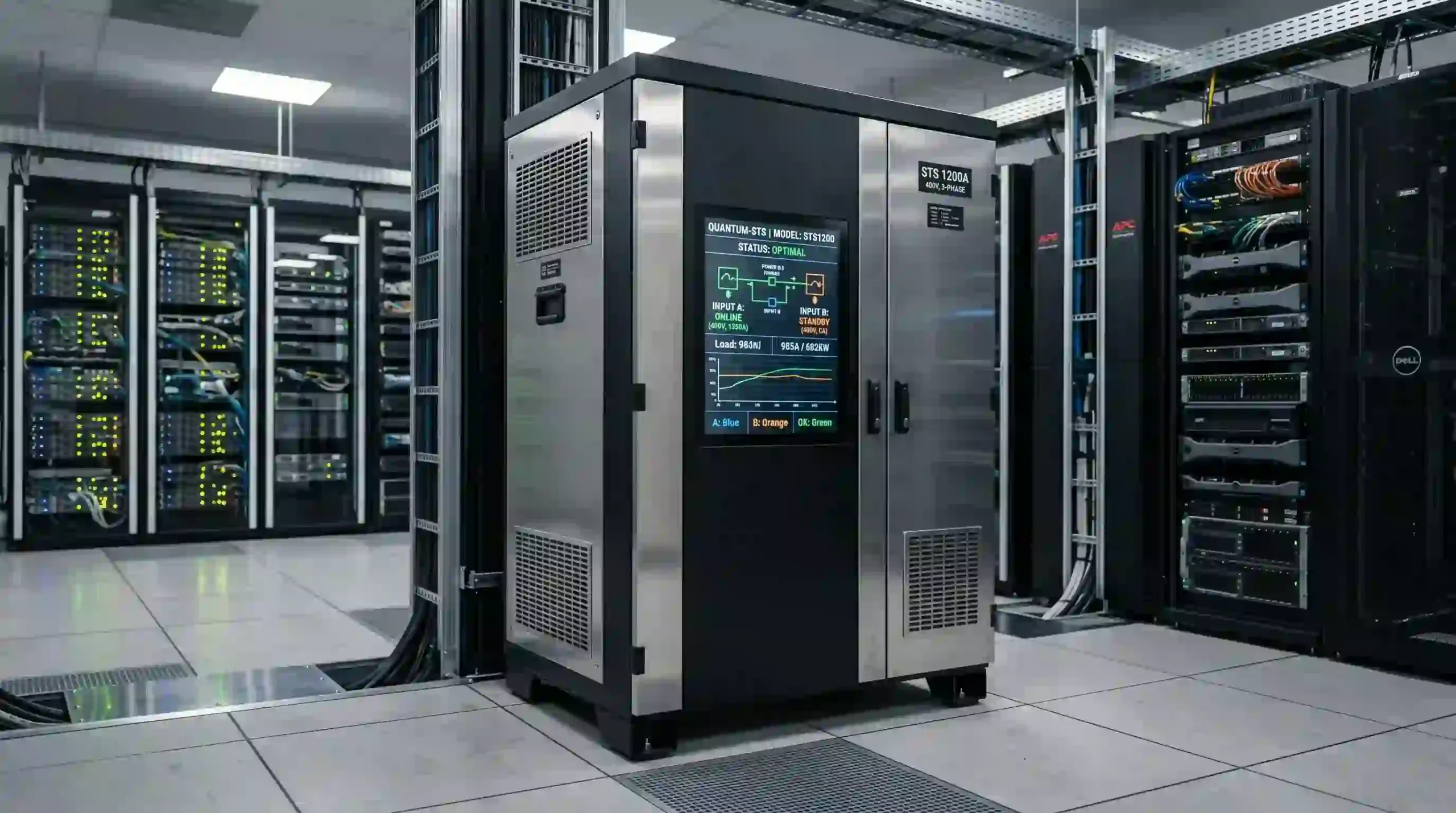
Static Transfer Switch
Choosing the right equipment requires a deep analysis of your current facility layout and electrical demands. Proper planning ensures seamless integration and long-term operational safety.
1. Amperage and Current Capacity Rating
Engineers must choose a device with a matching amperage rating to handle peak electrical loads safely. Available options range widely from low-capacity bench units to massive industrial systems.
Overloading a switch can lead to thermal failure and severe damage to internal components. Therefore, calculating total maximum power consumption is a mandatory first step in procurement.
Read Also: Rack Mount UPS: Types, Functions, and Tips for Choosing
2. Power Source Synchronization
For the safest possible transfer, both incoming power feeds should maintain ideal source synchronization. This means their phase angle and frequency outputs must align closely with each other.
Transferring between unsynchronized sources can generate dangerous inrush currents that stress downstream gear. Advanced switches include phase-checking logic to ensure transfers happen only under safe conditions.
3. Phase Configurations (Single-Phase vs. Three-Phase)
Electrical systems are generally divided into single-phase and heavy-duty three-phase configurations. Single-phase models are perfectly suited for standard server racks and smaller office IT deployments.
Meanwhile, three-phase versions are required to feed large industrial plants and massive data hubs. Selecting the correct phase type ensures full compatibility with your existing power infrastructure.
4. Technical Resources and Industry Guidelines
To guarantee a successful deployment, always consult official manufacturer manuals and engineering documentation. Reviewing comprehensive technical data sheets helps prevent costly installation mistakes.