
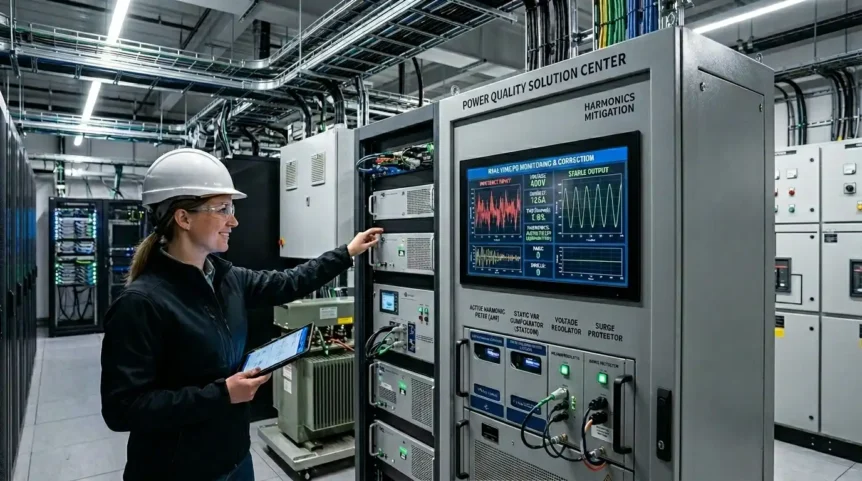
Modern industries rely heavily on continuous electrical power to maintain seamless operations. However, unstable electricity can trigger severe hardware damage and costly downtime. Implementing robust power quality solutions ensures your infrastructure remains resilient against unexpected grid anomalies.
These advanced technical systems safeguard sensitive digital equipment from expensive operational failures. By maintaining structural electrical stability, businesses can optimize overall energy consumption effectively. Let us explore how modern facilities can mitigate common power distribution risks.
Understanding the Core Power Quality Issues
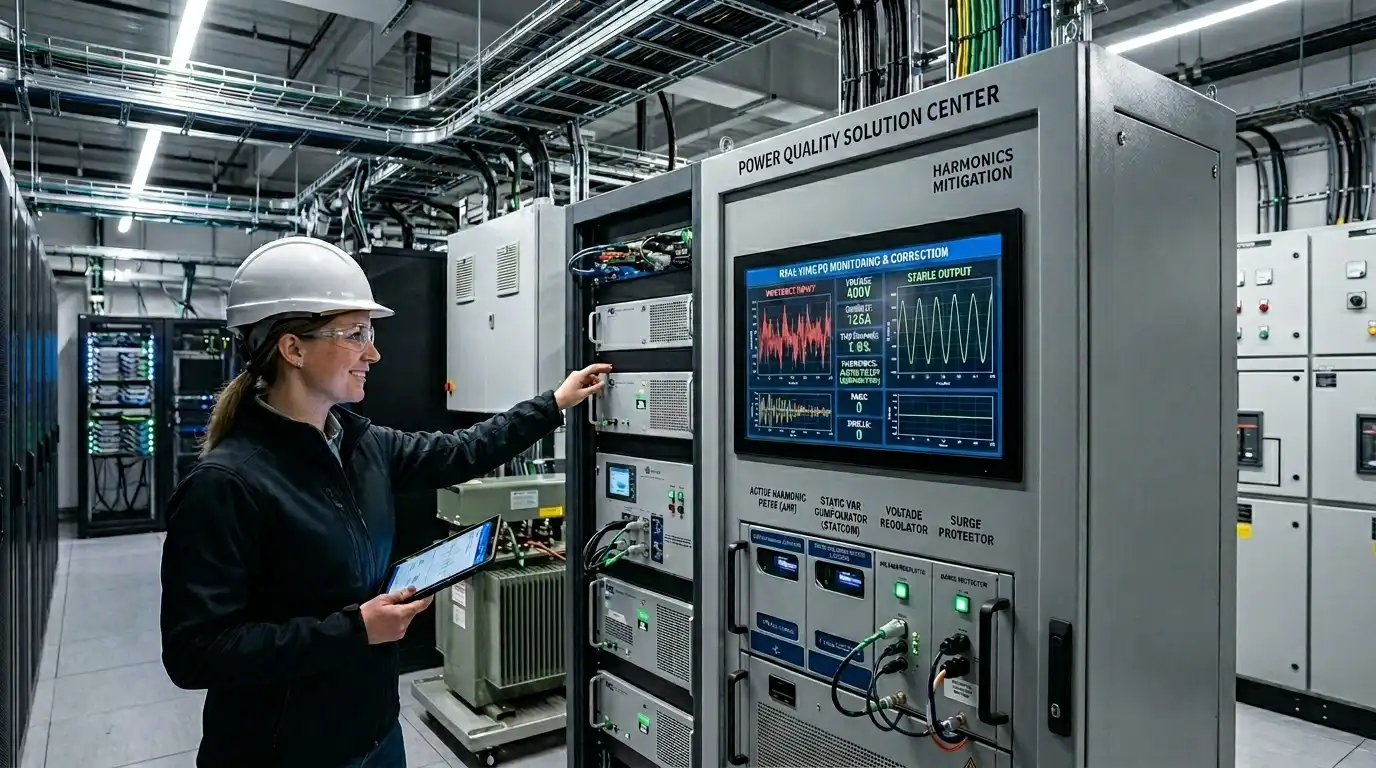
Best Power Quality Solutions, Save Your Electronics! – SPS Sales
Before deploying any protective electrical hardware, modern engineers must accurately diagnose the underlying grid anomalies. Identifying these specific system vulnerabilities helps facilities select the most effective remediation equipment.
1. Harmonics Distortion
Non-linear electrical loads like variable speed drives, modern computers, and office LED lighting alter the standard fundamental frequency. This continuous waveform distortion generates unwanted high-frequency currents throughout the local distribution network.
Consequently, internal distribution transformers and facility power cables suffer from severe overheating. This hidden thermal stress significantly shortens equipment lifespan and lowers overall system reliability.
Read Also: Best Critical Power Solutions for 2026, Stop Power Outages!
2. Voltage Sags and Swells
A voltage sag represents a temporary drop in electrical amplitude, typically triggered by heavy motor starting currents or distant grid faults. Conversely, a voltage swell is a sudden spike caused by rapid load rejection or direct lightning strikes.
Sags often cause sensitive industrial controllers to reset unexpectedly, halting automated production lines entirely. Meanwhile, transient swells can permanently destroy internal circuit boards and delicate semiconductor components.
3. Voltage Flicker and Unbalance
Voltage flicker involves rapid, continuous fluctuations in electrical amplitude that cause visible lighting disruptions. This constant instability degrades corporate workplace comfort and accelerates mechanical wear in sensitive machinery.
Voltage unbalance occurs when electrical loads are distributed unevenly across a standard three-phase system. This physical asymmetry induces counter-torque in industrial motors, leading to excessive vibration and premature insulation breakdown.
Advanced Power Quality Solutions for Industrial and Commercial Sectors
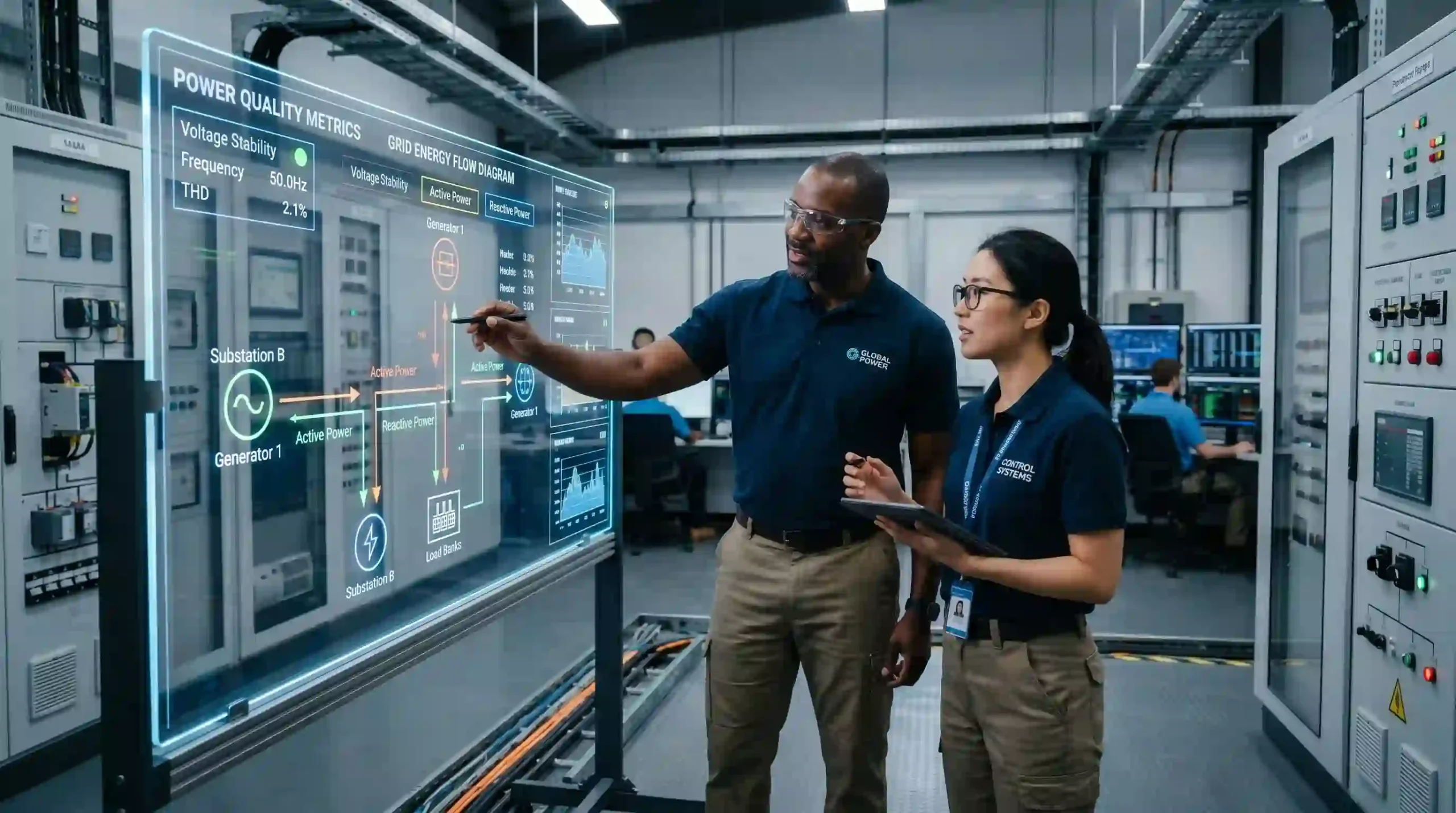
Power Quality Solutions
Industrial facilities require automated, high-level technological interventions to neutralize dynamic electrical disturbances. These intelligent systems provide real-time mitigation to protect large-scale commercial operations from severe grid instability.
1. Active Power Filter (APF)
An active power filter utilizes sophisticated power electronics to monitor current waveforms continuously. It detects real-time total harmonic distortion and instantly injects an equal, opposite compensating current into the system.
This immediate countermeasure effectively cancels out dangerous harmonic frequencies before they propagate. As a result, APFs maintain an exceptionally clean sine wave for non-linear industrial loads.
Read Also: Static Transfer Switch: Components, How It Works & Benefits
2. Static Var Generator (SVG)
A static var generator represents the modern evolution of traditional reactive power compensation. Unlike older technology, this electronic system provides instantaneous, step-less power factor correction under highly dynamic conditions.
SVGs rapidly inject or absorb reactive current to balance phases and stabilize local grid voltage. This ultra-fast response prevents localized voltage drops far better than conventional mechanical systems.
3. Automatic Voltage Regulator (AVR) / Stabilizers
An automatic voltage regulator continuously adjusts fluctuating input electricity to maintain a steady output. It ensures equipment receives a constant 220V single-phase or 380V three-phase supply.
By filtering out hazardous sags and swells, AVRs shield delicate machinery from volatile grid conditions. This reliable regulation is vital for maintaining consistent production quality in automated factories.
Facility-Level Equipment and Component Solutions

Power Quality Solutions
Optimizing power reliability also requires the strategic installation of localized hardware components. These facility-level devices target specific electrical nodes to insulate vulnerable infrastructure from external distribution shocks.
1. Power Factor Correction: Capacitor Banks vs. Passive Filters
Traditional capacitor banks excel at improving basic displacement power factor by reducing reactive current strain on upstream transformers. They provide a cost-effective method for lowering monthly utility demand penalties.
In contrast, passive filters combine specific inductors and capacitors tuned to block exact harmonic orders. They provide targeted harmonic suppression while simultaneously offering necessary reactive power support.
Read Also: Rack Mount UPS: Types, Functions, and Tips for Choosing
2. Uninterruptible Power Supply (UPS)
A centralized uninterruptible power supply serves as the ultimate defense against complete blackouts and severe sags. It uses internal battery storage to deliver instantaneous backup power when main utility lines fail.
This continuous energy bridge keeps critical control systems and data centers running without a millisecond of interruption. It prevents catastrophic data loss and ensures orderly emergency shutdowns.
3. Surge Arresters and TVSS (Transient Voltage Surge Suppressors)
A surge arrester is designed to intercept high-energy transient overvoltages caused by lightning strikes. It safely diverts thousands of volts away from internal wiring directly into the grounding system.
Similarly, a transient voltage surge suppressor clamps smaller, high-frequency switching spikes close to sensitive equipment. Together, they form a multi-layered shield against destructive electrical surges.
Analytical and Maintenance Approaches to Power Quality
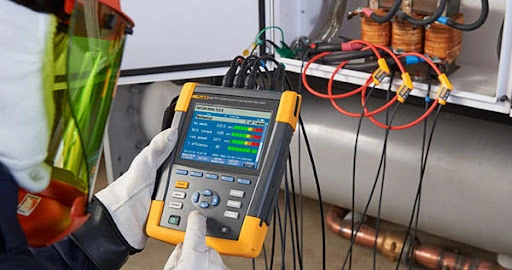
Power Quality Solutions
Hardware solutions must be guided by precise data and systematic operational procedures. Combining periodic diagnostic assessments with predictive engineering prevents electrical failures before they manifest.
1. Power Quality Audit (PQA) & Assessment
A professional power quality audit utilizes specialized power quality analyzers connected directly to main distribution panels. These logging instruments record precise electrical parameters, tracking sags, swells, and crest factors over time.
The resulting diagnostic report reveals hidden system vulnerabilities and identifies specific sources of electrical pollution. This empirical data allows engineers to implement targeted, highly cost-effective solutions.
Read Also: What Is a Modular UPS? Its Benefits and How It Works
2. Predictive Maintenance Strategies
Predictive maintenance relies on specialized diagnostic tools like a high-resolution thermal imager. Thermographic scans quickly identify loose busbar connections and overheating transformers caused by harmonic current overload.
Detecting these localized thermal anomalies early allows facilities to schedule repairs before catastrophic equipment failure occurs. This proactive strategy drastically reduces unplanned operational downtime.
3. Best Practices in Electrical Installation Design
Achieving superior power stability begins with adhering to rigorous grounding standards during initial facility design. Low-impedance grounding paths effectively minimize electromagnetic interference across sensitive communication lines.
Additionally, physical isolation can be achieved by separating data lines from heavy power cables. Utilizing dedicated isolation transformers further attenuates dangerous common-mode electrical noise.
Modern Challenges: Renewable Energy and Electric Vehicles (EV)
The global transition toward green technology introduces unique power stability complexities. Modern distribution grids must adapt to the intermittent nature of renewables and heavy electrified transportation loads.
1. Solar PV Inverters with Smart PQ Control
Modern solar PV inverters do far more than just convert direct current into usable alternating current. Advanced models feature intelligent PQ control algorithms designed to stabilize local distribution grids actively.
When utility voltage drops, these smart inverters dynamically inject reactive power to support the network. This automated grid-forming capability prevents localized brownouts in areas with high solar penetration.
2. Electric Vehicle (EV) Charging Infrastructure
The rapid proliferation of rapid EV charging stations introduces significant harmonic injection into commercial power grids. Fast-charging rectifiers act as massive non-linear loads, straining local distribution transformers.
Managing this localized demand requires integrated smart grid management and dedicated active filtering. These combined solutions prevent severe phase unbalance and localized grid overloading.