
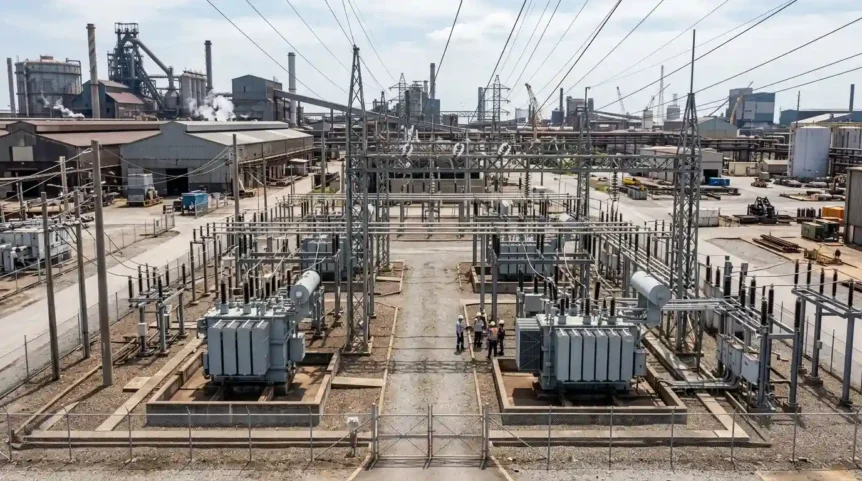
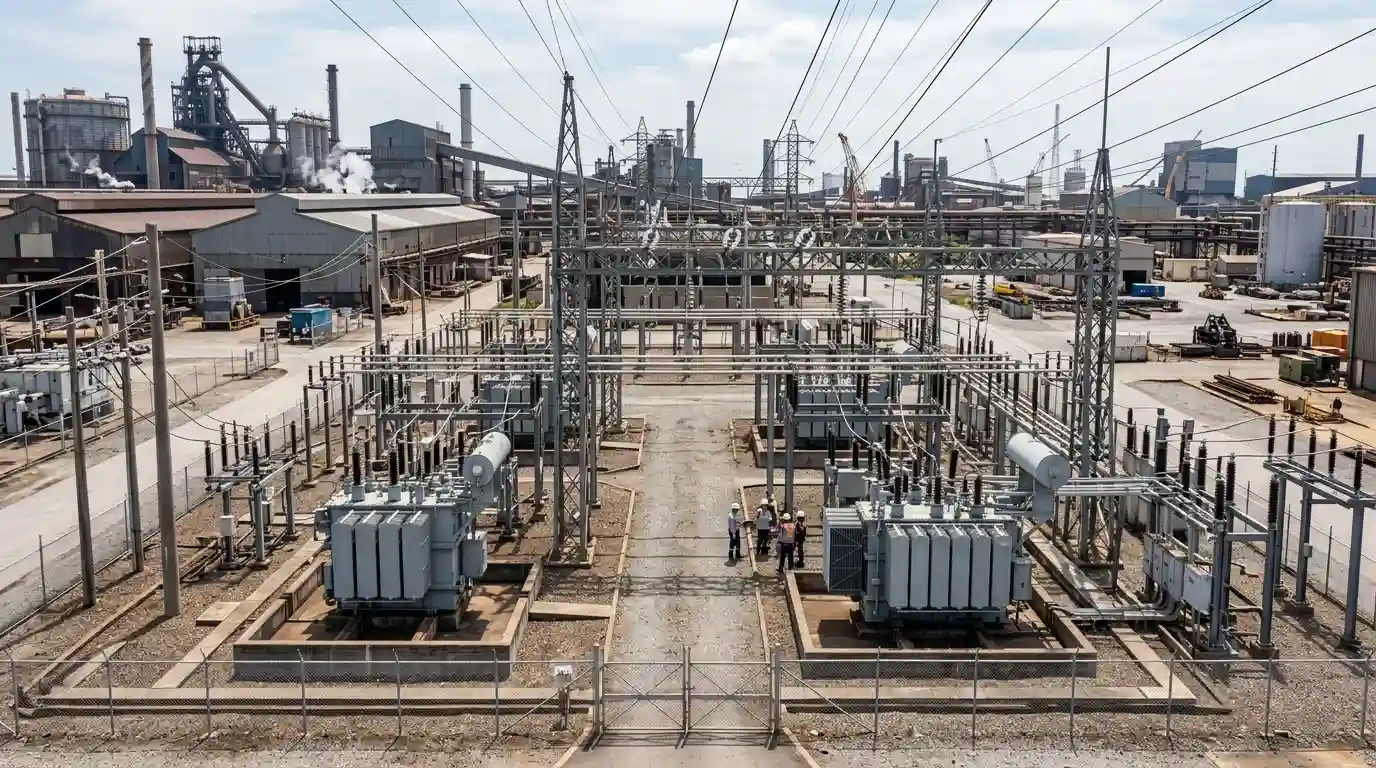
Imagine electricity being generated reliably but unable to reach homes, businesses, or essential facilities. Electrical power distribution provides the critical network that delivers usable electricity from the transmission system to end-users.
Electrical power distribution represents the final stage of electricity delivery, using substations, transformers, feeders, and service lines. It begins after high-voltage transmission reaches distribution substations, where voltage is reduced for safe local delivery.
Key Takeaways:
- Electrical power distribution delivers electricity from transmission substations to homes, businesses, and other end-users.
- Substations, feeders, transformers, and service lines work together to safely route and reduce electricity voltage.
- Radial, loop, and network configurations provide different balances of cost, reliability, complexity, and fault tolerance.
- Utilities manage line losses and grid overloads through efficient design, capacity planning, voltage management, and demand management.
- Severe weather can damage distribution infrastructure, making resilience measures essential for reducing outages and accelerating power restoration.
The Core Components of an Electrical Distribution System
The Core Components of an Electrical Distribution System
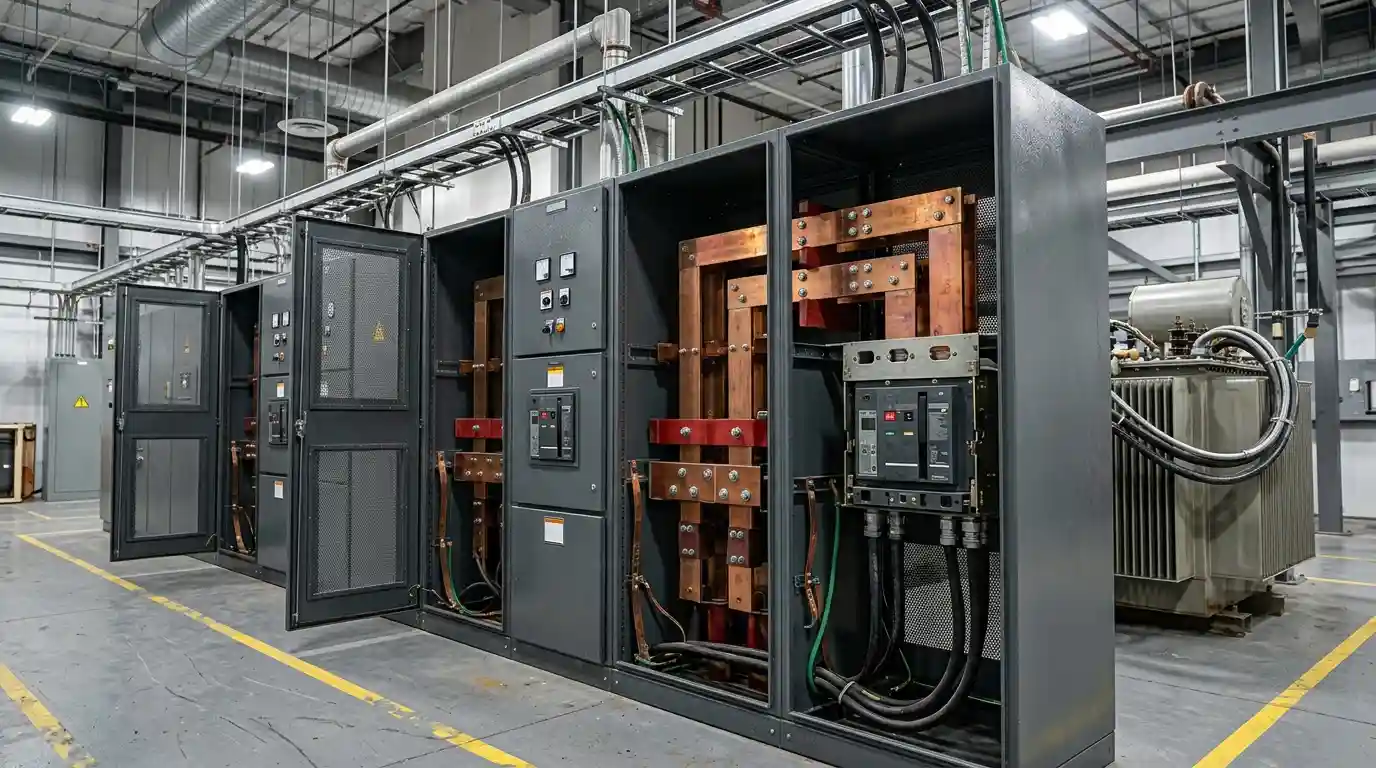
An electrical distribution system consists of interconnected equipment that moves electricity from transmission substations toward local customers. Its major components manage voltage transformation, power routing, protection, and final delivery.
1. Distribution Substation
A distribution substation marks the transition between the bulk transmission network and local distribution system. Its transformers reduce incoming high voltage to medium-voltage levels suitable for distribution feeders serving nearby load areas.
Substations also contain switchgear, protection equipment, and feeder connections that help control and isolate faults. These functions support reliable power distribution while allowing multiple circuits to serve different geographic areas.
Read Also: Backup Power Generator for Business, Get Zero Downtime!
2. Primary Distribution Lines
Primary distribution lines carry medium-voltage electricity from substations through towns, neighborhoods, and commercial areas. These circuits, commonly called distribution feeders, form the main electrical pathways supplying local branches and customer areas.
Feeders may use overhead conductors or underground cables and can include laterals, switches, fuses, and reclosers. Their design balances capacity, voltage regulation, reliability, protection, and efficient service across multiple customers.
3. Distribution Transformers
Distribution transformers reduce medium-voltage electricity from primary circuits to lower secondary voltages suitable for customer equipment. Common residential service levels include 120/240 volts, while commercial applications may require different configurations.
These transformers may appear as pole-mounted cylinders or pad-mounted units installed at ground level. Their voltage conversion is essential because primary distribution voltages would be unsafe for direct customer use.
4. Secondary Distribution Lines / Service Drops
Secondary distribution lines carry lower-voltage electricity from distribution transformers toward individual customers. These conductors may serve multiple properties before electricity reaches each building through dedicated service conductors or service drops.
A service drop connects overhead utility lines to a customer’s premises, while underground systems use service laterals. Together, these final connections deliver usable electricity directly to residential and commercial electrical systems.
Read Also: Uninterruptible Power Supply Application: Ultimate Guide
Types of Power Distribution Systems
Types of Power Distribution Systems
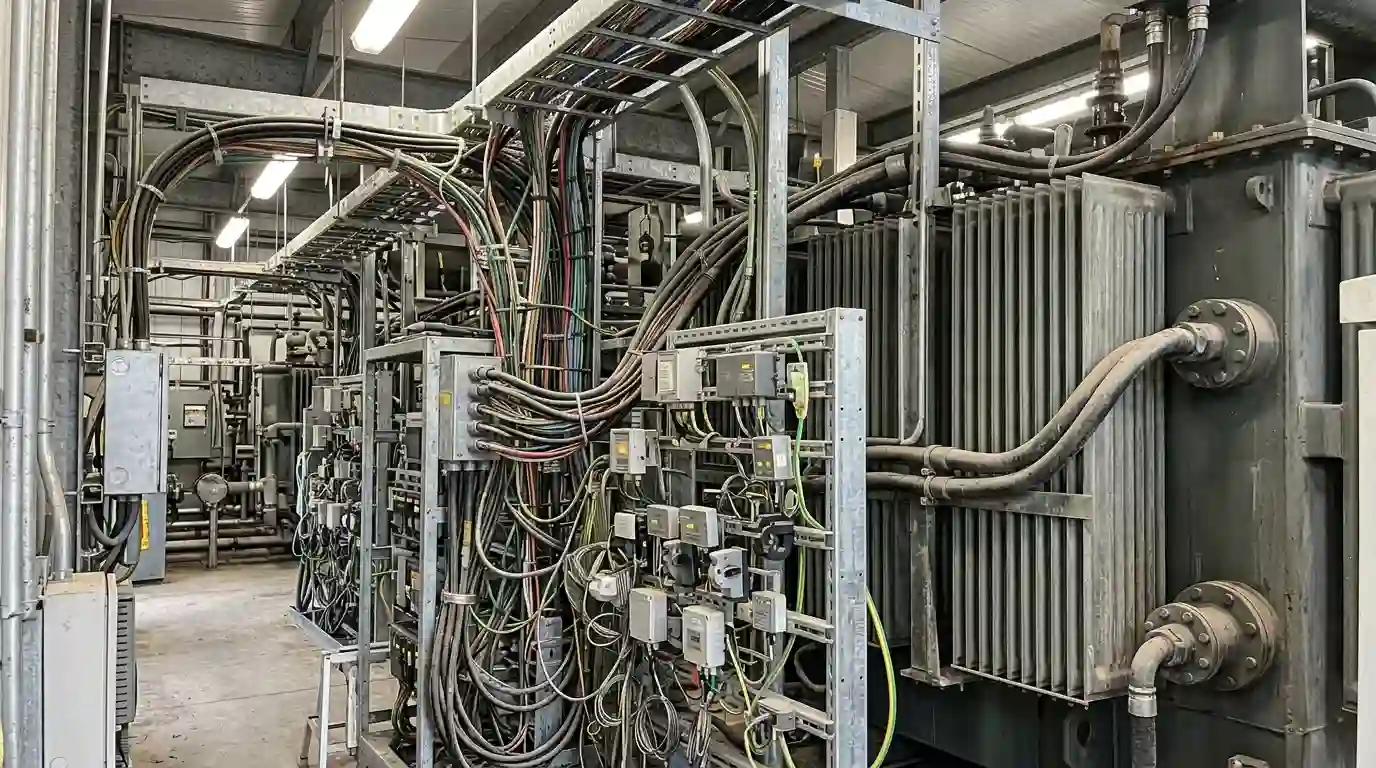
Different power distribution system configurations determine how electricity travels from substations to customers and how the network responds to faults. The main designs include radial, loop, network, overhead, and underground systems.
1. Radial Systems
A radial distribution system uses a single electrical path from the substation toward customers. This straightforward arrangement is generally economical and easier to design, operate, and maintain than interconnected alternatives.
Its main weakness is limited fault tolerance: an interruption along the feeder can disconnect downstream customers until the fault is isolated or the circuit is restored through another connection.
2. Loop / Ring Systems
A loop distribution system, sometimes called a ring system, connects distribution circuits so electricity can potentially reach customers from different directions. This configuration provides greater flexibility when managing faults and maintenance.
When properly sectionalized, operators can isolate a damaged segment and restore service through another path. This improves distribution reliability compared with a basic radial arrangement, although additional equipment increases system complexity.
3. Network Systems
A network distribution system uses interconnected feeders and multiple supply paths, making it particularly suitable for dense urban areas where reliable electricity service is especially important.
Because multiple feeders can support connected loads, network systems provide high service reliability and resilience. However, their greater complexity requires sophisticated protection, switching, coordination, and operational management compared with radial systems.
4. Overhead vs. Underground Distribution
Overhead distribution uses poles and exposed conductors, generally offering simpler installation, easier visual inspection, and lower construction costs. However, overhead infrastructure remains vulnerable to weather, vegetation, vehicle impacts, and other external hazards.
Underground distribution places cables below ground, reducing exposure to many weather-related hazards and improving visual aesthetics. However, installation can require substantially greater construction effort, while fault detection and repairs may be more challenging.
Read Also: Surge Protective Devices: Prevent Electrical Fires Now
Key Challenges in Modern Power Distribution
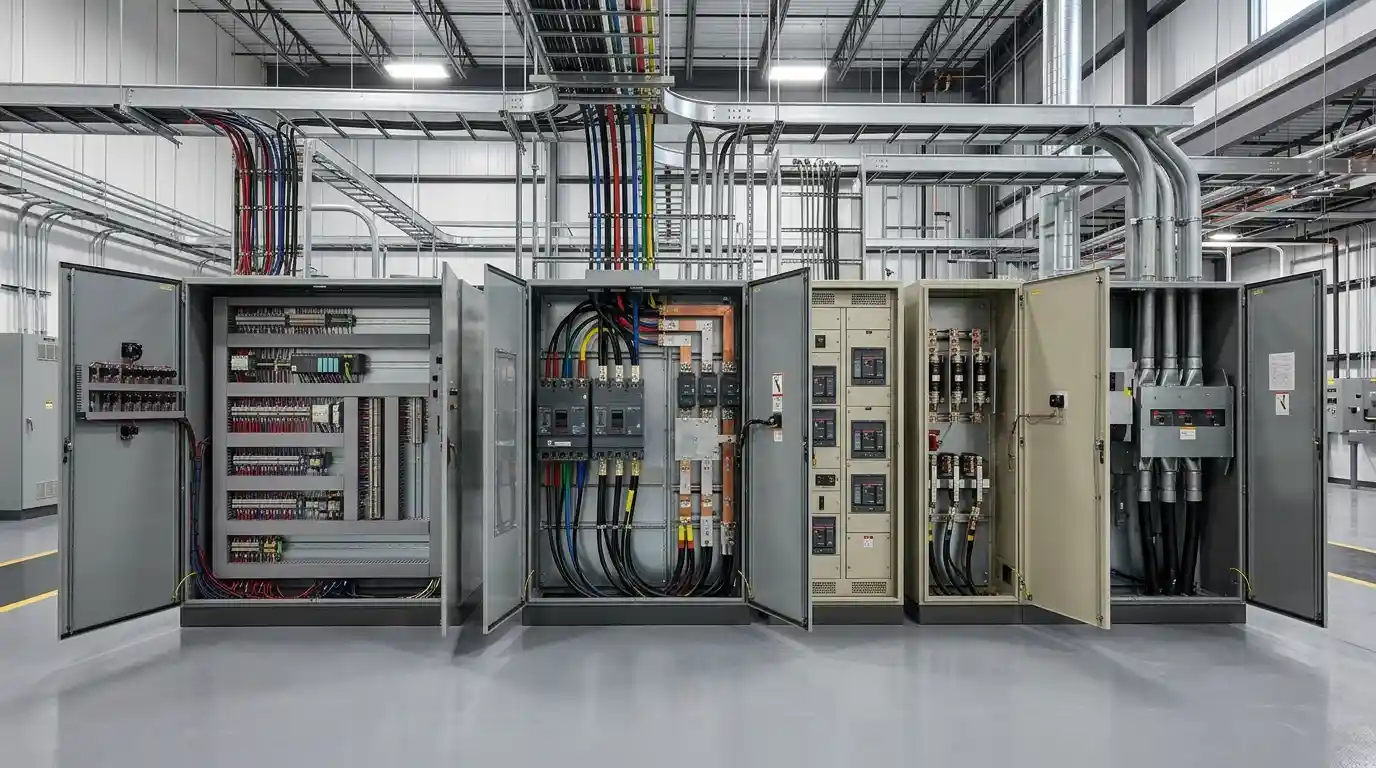
Key Challenges in Modern Power Distribution
Modern power distribution networks must deliver reliable electricity while accommodating rising demand, aging infrastructure, distributed energy resources, and increasingly severe weather risks. These pressures create technical and operational challenges for utilities.
1. Line Losses
Line losses occur when electrical energy is dissipated as heat while current travels through conductors and transformers. Higher current increases resistive losses, making efficient distribution system design important for reducing wasted energy.
Utilities can reduce distribution losses through appropriate conductor sizing, efficient transformers, voltage management, system reconfiguration, and improved load balancing. These measures help deliver electricity more efficiently while supporting reliable service across distribution networks.
2. Grid Overloading
Grid overloading occurs when electricity demand approaches or exceeds the capacity of distribution equipment, feeders, or transformers. Extreme temperatures can increase cooling or heating demand, creating significant peak load conditions.
The growth of electric vehicles (EVs), building electrification, and connected appliances can further increase distribution demand. Utilities therefore need better forecasting, capacity planning, demand management, and coordinated integration of distributed energy resources.
Read Also: Industrial Surge Protection: Stop Transient Voltage Spikes
3. Weather and Outages
Severe weather remains a major threat to distribution infrastructure, with storms, high winds, flooding, ice, and falling trees capable of damaging poles, conductors, transformers, and other grid equipment.
Utilities improve grid resilience through vegetation management, stronger infrastructure, undergrounding where appropriate, automated sectionalization, and fault-isolation technologies. These measures can limit outage impacts and accelerate restoration following major weather events.
References:
- Lawrence Berkeley National Laboratory. (2026). Distribution system. U.S. Department of Energy. Lawrence Berkeley National Laboratory – Distribution System.
- U.S. Department of Energy. (2017). Electricity distribution system baseline report. Office of Electricity. U.S. Department of Energy – Electricity Distribution System Baseline Report.
- U.S. Department of Energy. (2024). Distribution transformers: Preparing for growth demand. Office of Electricity. U.S. Department of Energy – Distribution Transformers.