
Understanding Power Conditioners and UPS Which Do You Need
Choosing between a power conditioner and ups can be challenging when protecting sensitive electronics. Both units maintain electrical stability, but they address entirely different power quality problems.
Understanding their core mechanics ensures your critical hardware remains safe from unexpected grid failures. This comprehensive guide breaks down their functions, internal technology, and ideal real-world applications.
Key Takeaways:
-
Power conditioners continuously filter noise and stabilize voltage but offer no battery backup during blackouts.
-
UPS units provide instant emergency battery power to prevent data corruption and hardware failure during blackouts.
-
Online double-conversion UPS systems deliver both continuous power conditioning and uninterrupted battery backup capabilities.
-
Power conditioners suit noise-sensitive audio and medical gear, while UPS units are critical for servers and data centers.
-
Combining both devices delivers complete electrical protection against both line distortion and complete power outages.
Key Differences Between a Power Conditioner and UPS
Evaluating a power conditioner and ups requires looking at their primary design goals. Below is a detailed breakdown of how each unit functions under normal and critical power conditions.
What is a Power Conditioner and How Does It Work?
What is a Power Conditioner and How Does It Work?
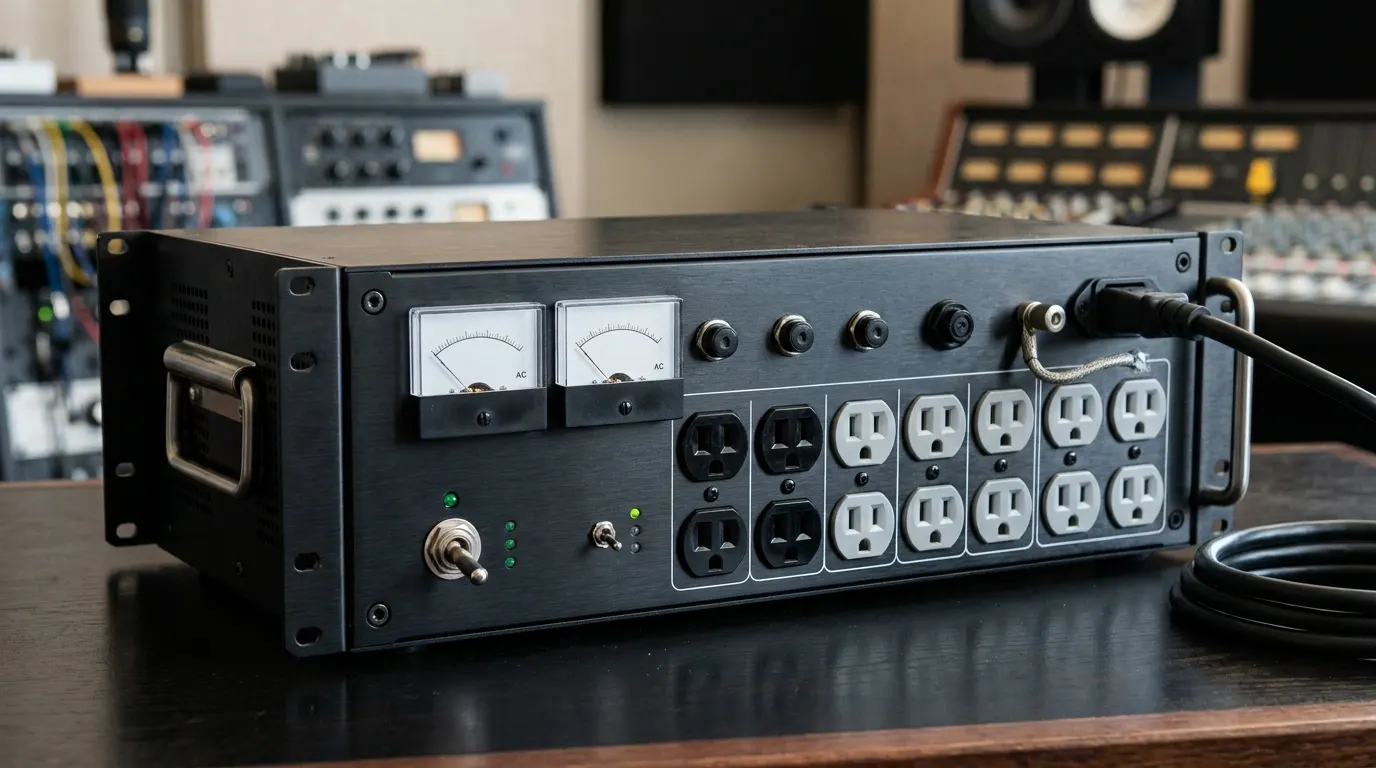
A power conditioner continuously optimizes raw electricity before it reaches your sensitive equipment. It acts as an advanced filter, smoothing out voltage fluctuations, absorbing high-voltage transient surges, and isolating destructive electromagnetic interference.
However, this device contains no internal energy storage medium like a chemical battery. Consequently, if a total grid outage occurs, all connected load devices will immediately lose power and turn off.
Read Also: Modern Power System Protection: Prevent Failures
What is an Uninterruptible Power Supply (UPS) and How Does It Work?
What is an Uninterruptible Power Supply (UPS) and How Does It Work?
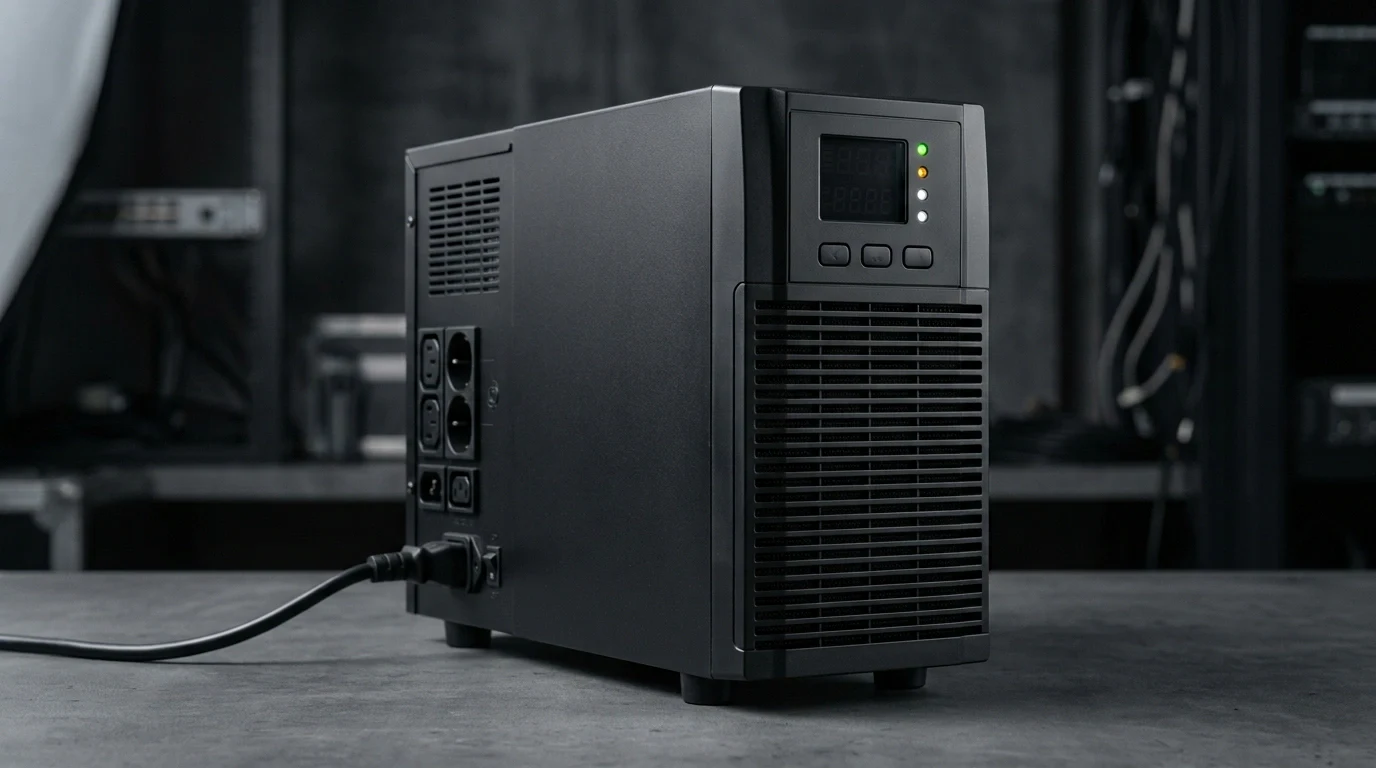
An uninterruptible power supply acts primarily as an emergency backup system during main utility failure. Internal batteries instantaneously feed power to connected electronics, enabling users to execute a proper graceful shutdown.
Top-tier units, such as an online double-conversion UPS, continuously clean raw incoming power alongside backup duties. This dual capability offers both continuous voltage regulation and instant emergency battery takeover.
Read Also: Power Line Conditioner: Is One Really Necessary for Gear?
Internal Components and Operating Principles
Examining the internal architecture reveals why these two systems perform such distinct electrical roles. Here is how each unit operates on a component level.
1. Inside a Power Conditioner
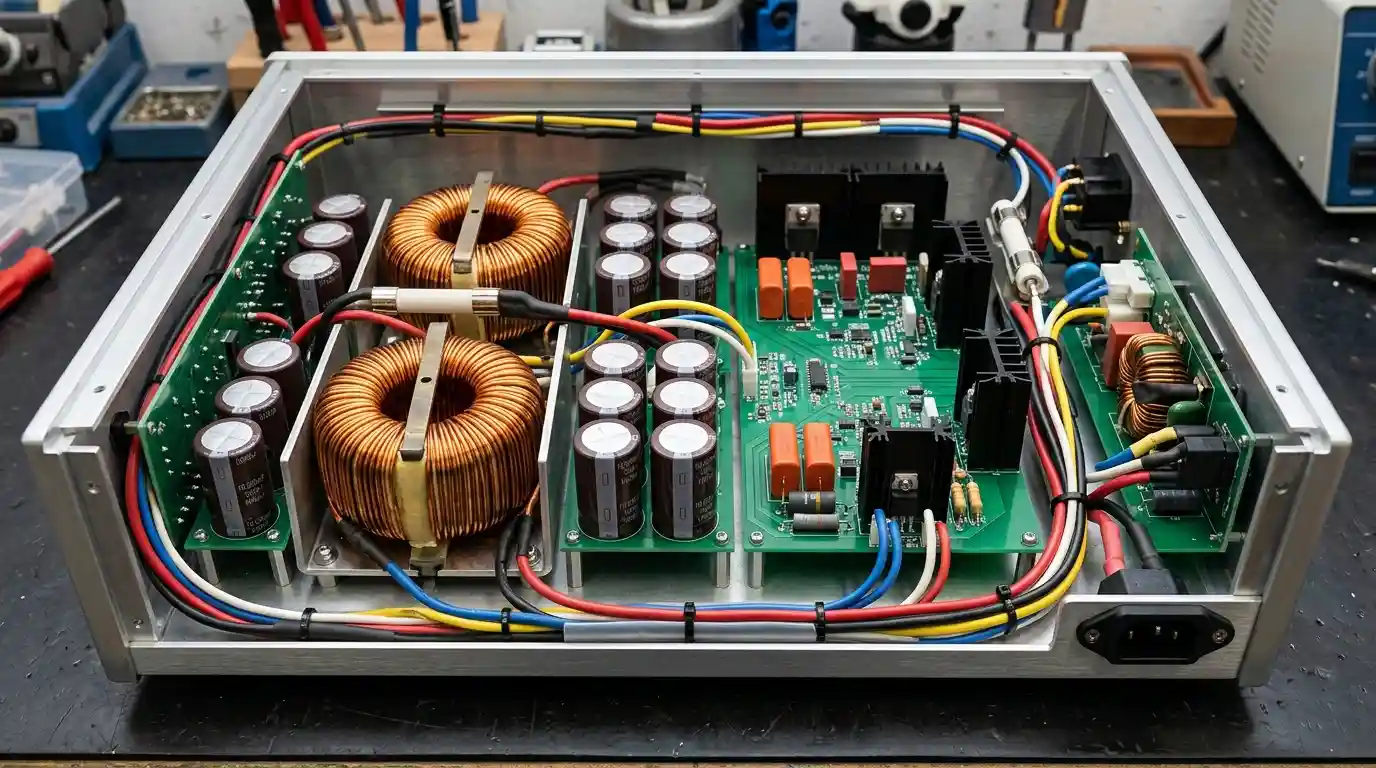
Inside a Power Conditioner
Power conditioners rely heavily on specialized isolation transformers and passive electronic LC filter banks. These heavy magnetic cores continuously damp non-linear distortion without converting electrical energy into chemical form.
Because there is no intermediate AC-to-DC energy storage step, energy throughput remains extremely efficient. The continuous conditioning mechanism operates with zero switching delay or transfer delay period.
Read Also: What is a 3 Phase UPS? Working Principles & Benefits
2. Inside a UPS System
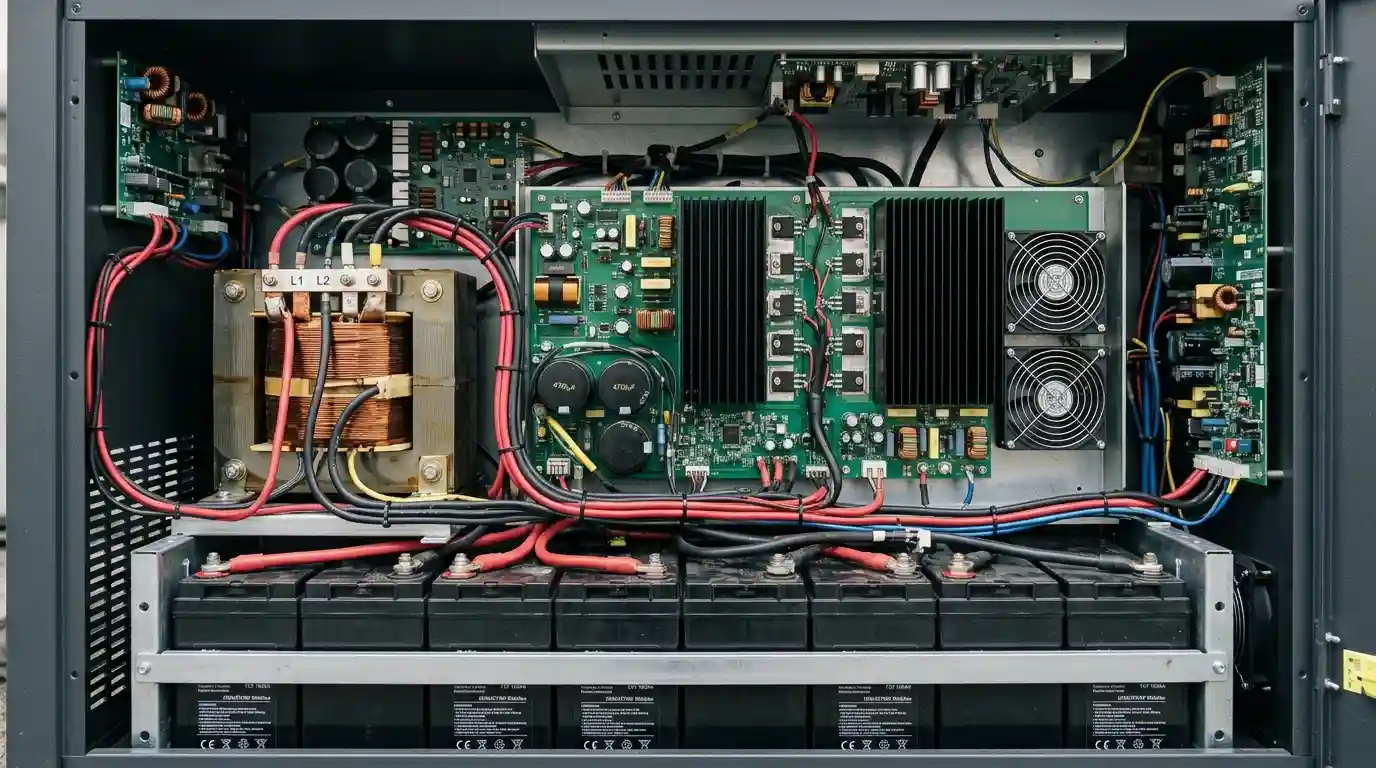
Inside a UPS System
A standard enterprise UPS utilizes a silicon-controlled rectifier to turn raw AC utility into DC power. That direct current charges internal lead-acid battery arrays while simultaneously feeding an active power inverter.
When main power drops, a high-speed solid-state transfer switch routes energy instantly to connected devices. This entire battery takeover process occurs within mere milliseconds, preventing hardware reboots.
Read Also: Data Center UPS Systems: Functions and How They Work
UPS Topologies: Do All UPS Units Condition Power?
Not all uninterruptible power supply topologies provide the same degree of voltage regulation and noise filtering. Below is how standby, line-interactive, and double-conversion topologies compare.
1. Standby vs. Line-Interactive UPS Topologies
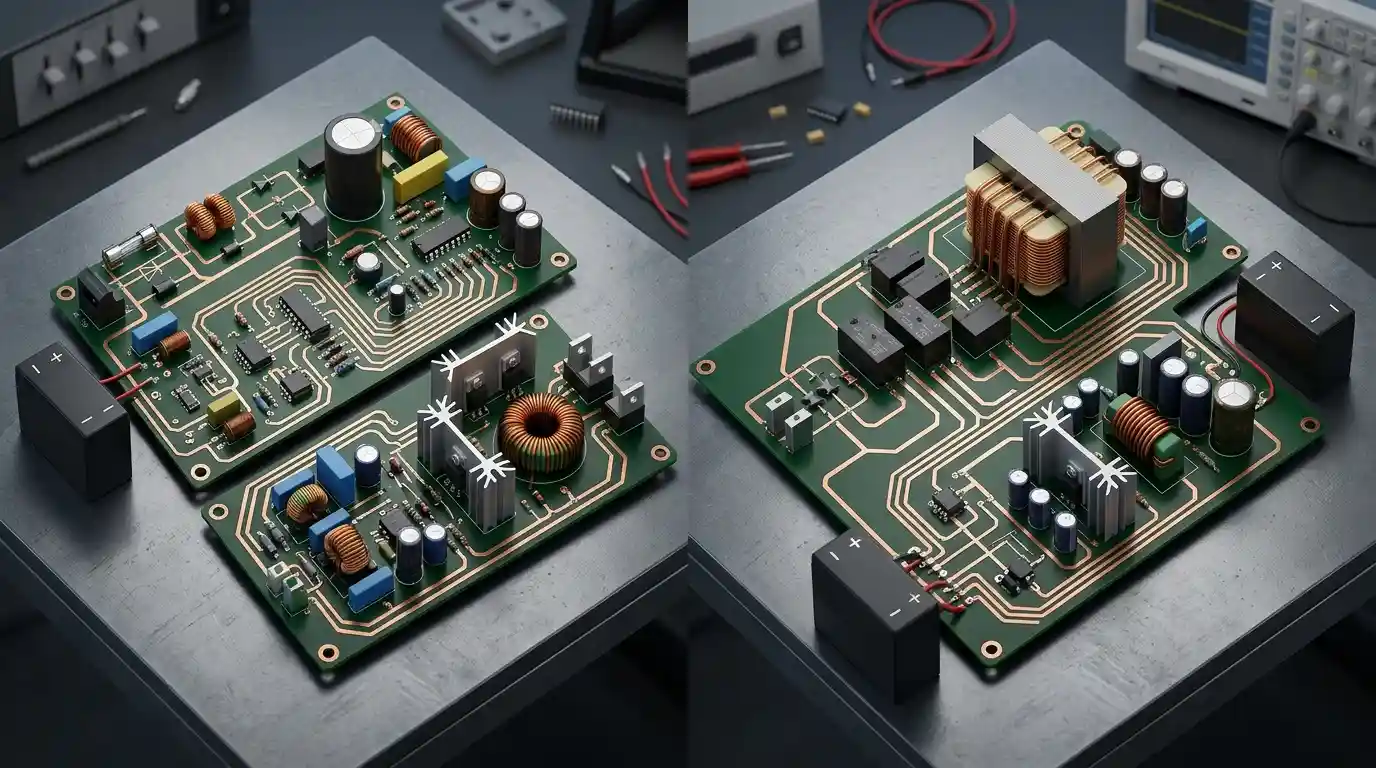
Standby vs. Line-Interactive UPS Topologies
Entry-level standby UPS units remain idle until grid voltage drops below a safe threshold, offering minimal line conditioning. In contrast, a line-interactive UPS features an automatic voltage regulator to adjust low or high voltages dynamically.
While line-interactive units handle minor voltage sags and swells efficiently, they still pass through subtle harmonic distortion. Consequently, ultra-sensitive laboratory equipment may still require dedicated external filtration.
Read Also: Critical Facilities: A Guide to Essential Infrastructure
2. Online Double-Conversion UPS Topologies
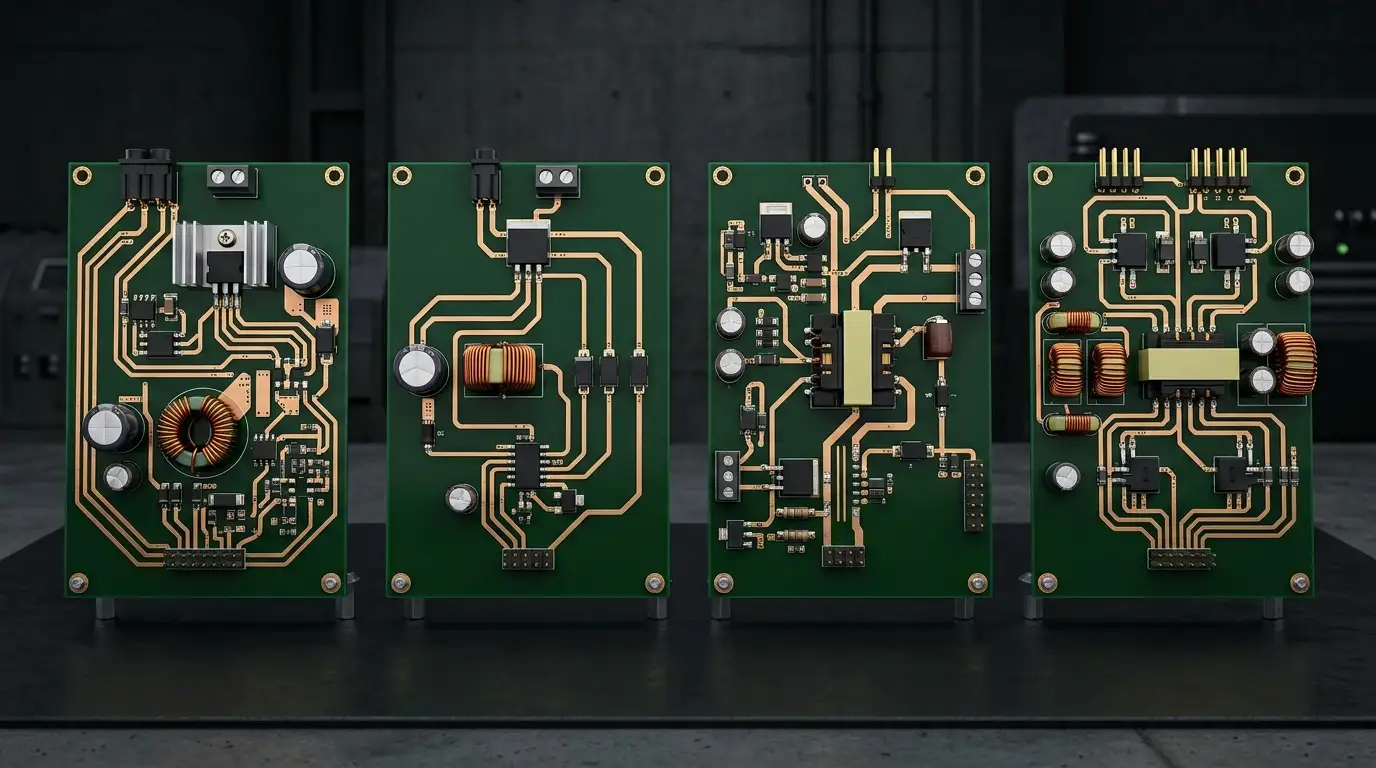
Online Double-Conversion UPS Topologies
An online double-conversion UPS continuously converts incoming AC utility into DC power, then back into a pristine AC waveform. This isolation mechanism delivers completely purified power free of grid frequency variations and high-voltage spikes.
Because it acts as both a continuous power conditioner and an emergency backup source, it offers ultimate protection. However, these units demand higher initial capital expenditure and generate more operating heat.
Read Also: The Best Power Distribution Solution for Your Needs
Power Conditioner vs. UPS: Ideal Use Cases
Selecting the correct hardware depends heavily on your specific operation environment and operational risk factors. Below are the most common scenarios where each protection system delivers the highest return on investment.
1. When to Choose a Power Conditioner
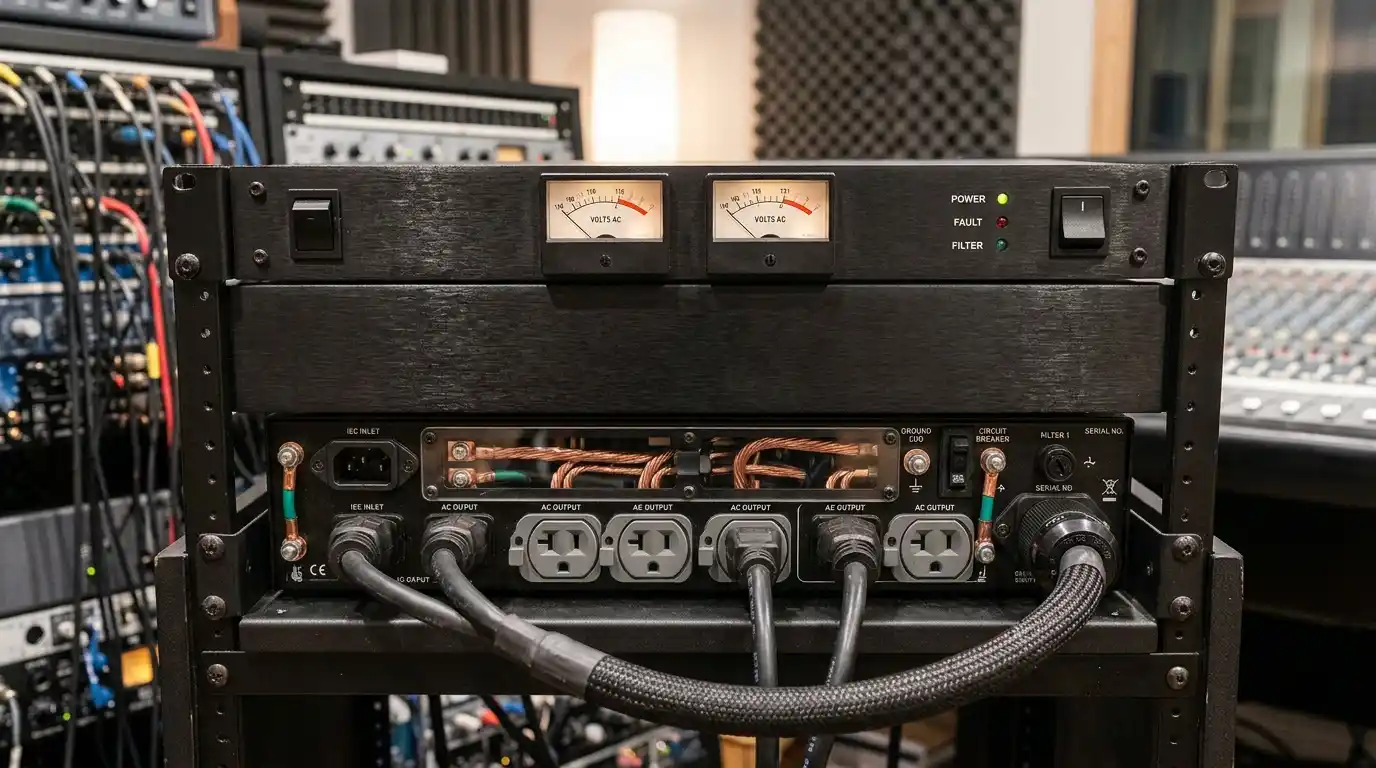
When to Choose a Power Conditioner
A power conditioner is the superior choice for high-fidelity environments sensitive to minute harmonic distortion. Professional recording control rooms, advanced diagnostic medical imagers, and precision scientific laboratory analyzers require quiet power line signals.
Eliminating high-frequency radio frequency interference prevents signal artifacts, audio hums, and inaccurate calibration readings. In these setups, clean signal reproduction matters far more than battery runtime backup.
Read Also: Double Conversion UPS: Guide to Online Power Backup
2. When to Choose a UPS
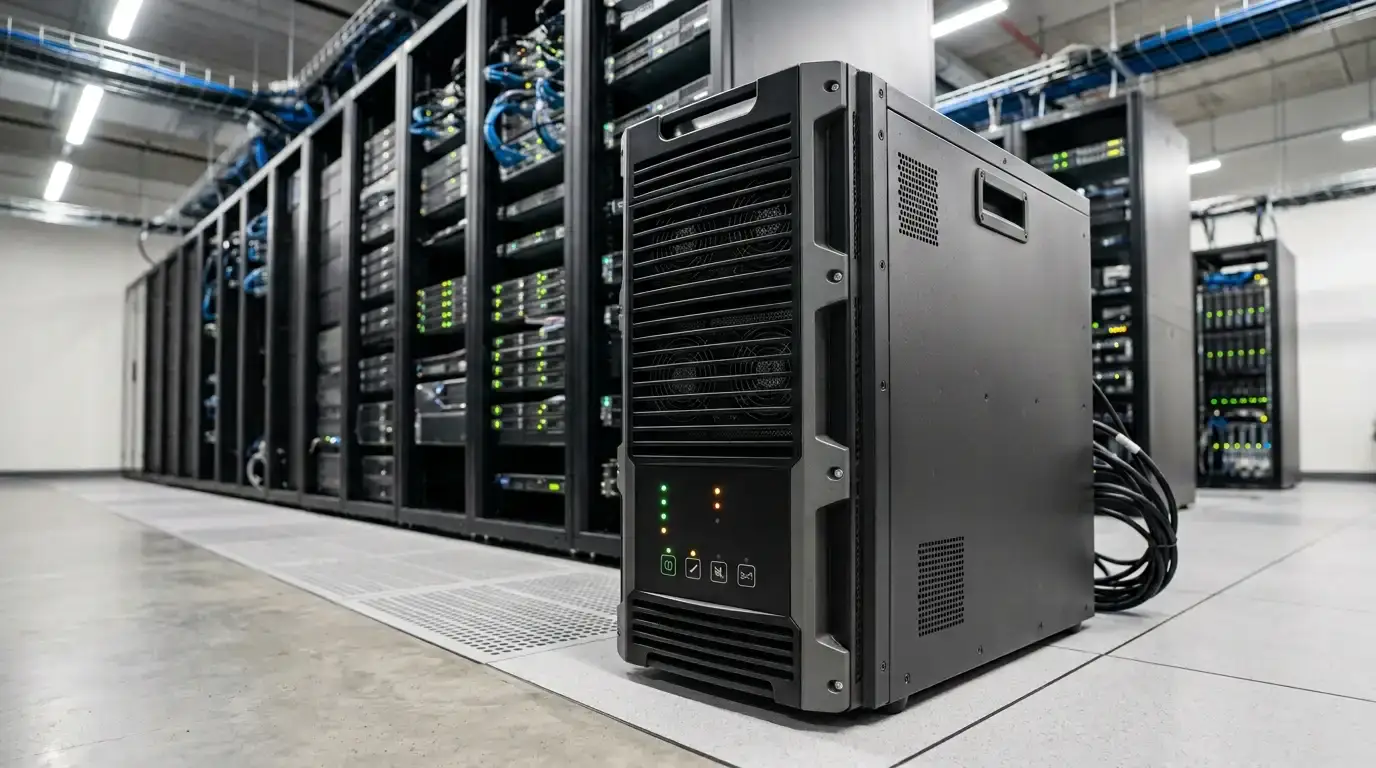
When to Choose a UPS
Deploy a UPS wherever sudden loss of operation results in data loss or hardware corruption. Modern enterprise data centers, mission-critical network server racks, desktop workstations, and critical telecommunications gateways demand continuous utility feed.
The primary goal here is uptime preservation and safe storage volume unmounting during power blackouts. Having several minutes of continuous battery operational window prevents massive database corruption.
Read Also: Industrial Power Solutions: Powering Your Business Future
Can You Use Both Together?
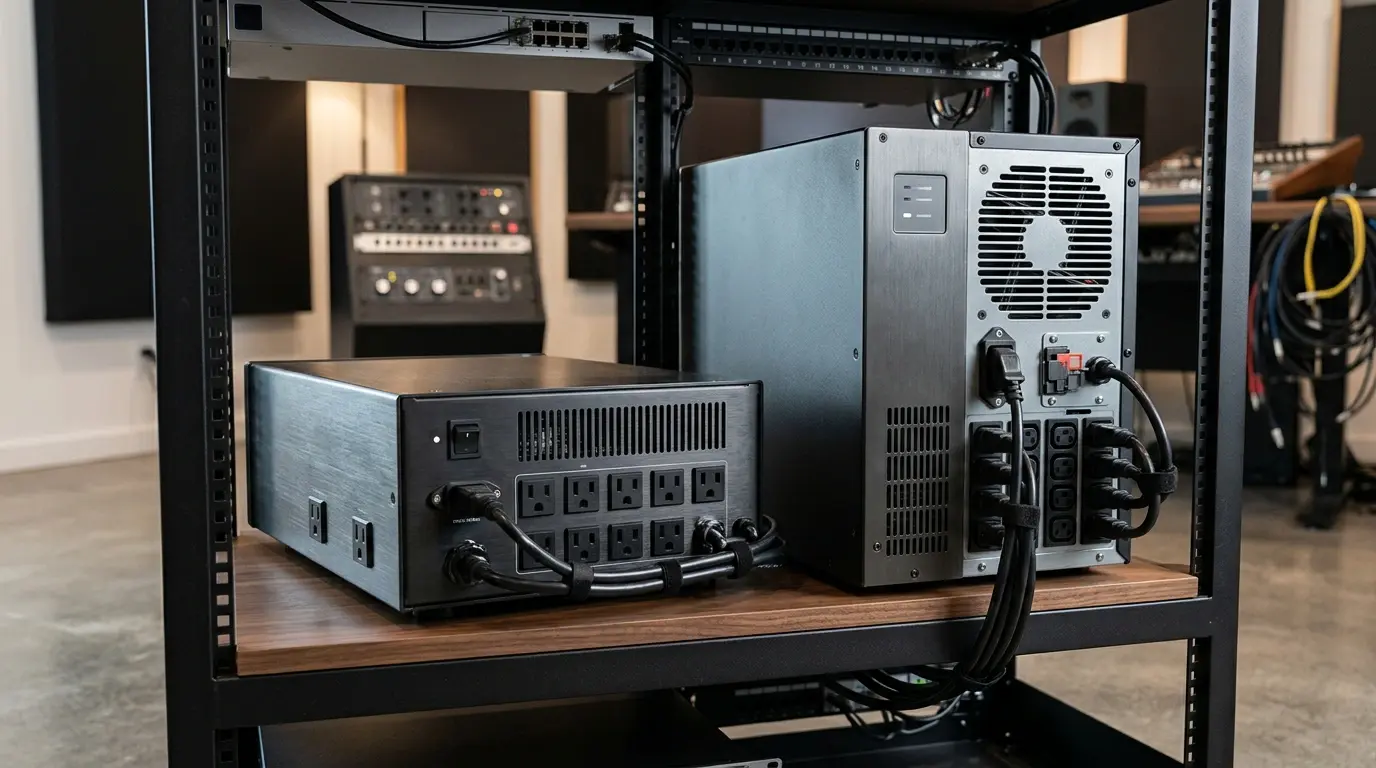
Can You Use Both Together? Power Condition and UPS
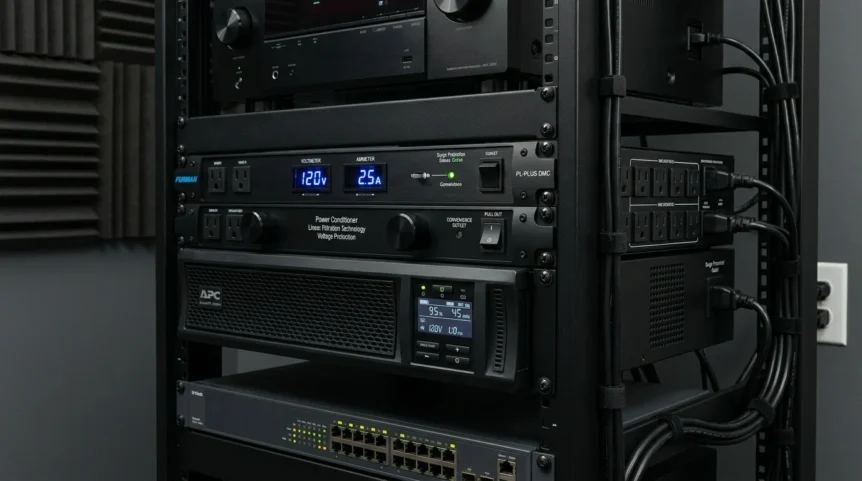
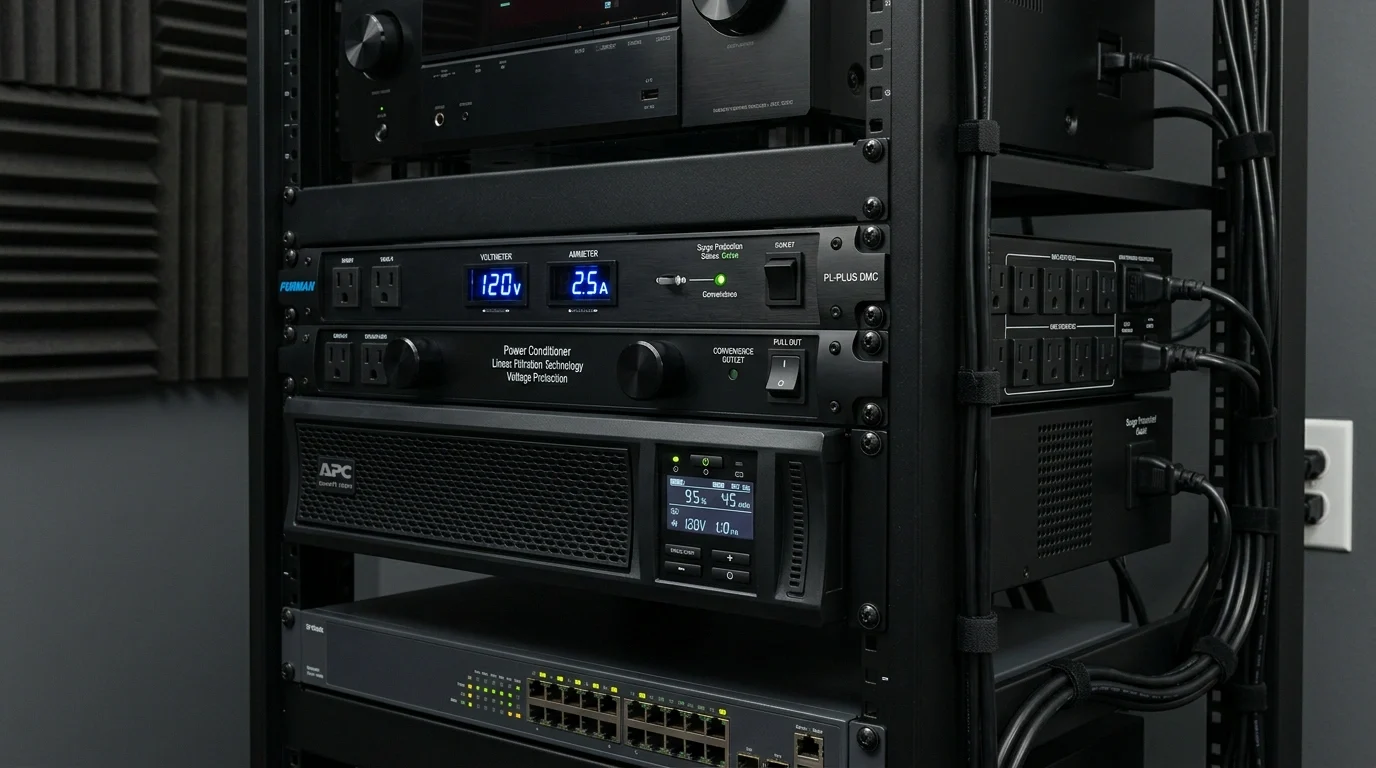
Integrating both devices into a single topology delivers complete multi-layered electrical protection. Connecting a dedicated power conditioner upstream or downstream of an entry-level standby UPS bridges functional performance gaps.
The power conditioner removes subtle line noise and continuous severe line surges that basic battery units pass through. Meanwhile, the backup battery unit guarantees continuous operational uptime during severe utility grid blackouts.
Using both systems together ensures ultimate power hygiene and uninterrupted operational continuity for high-value equipment.