
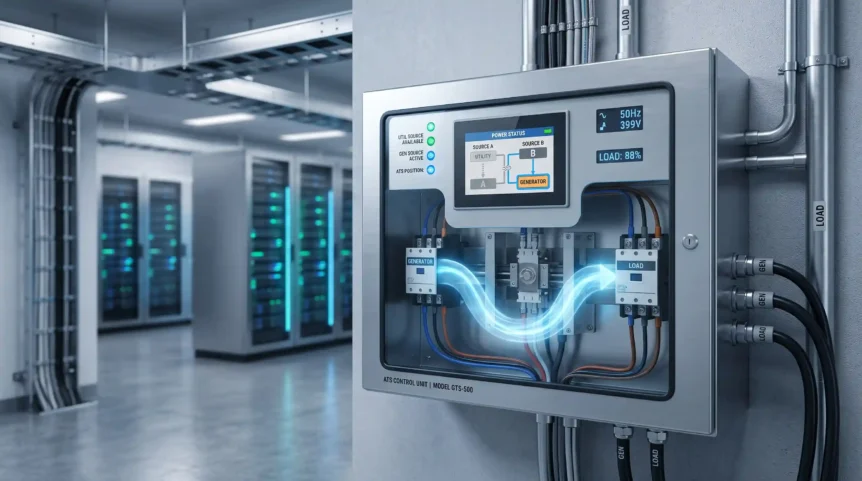
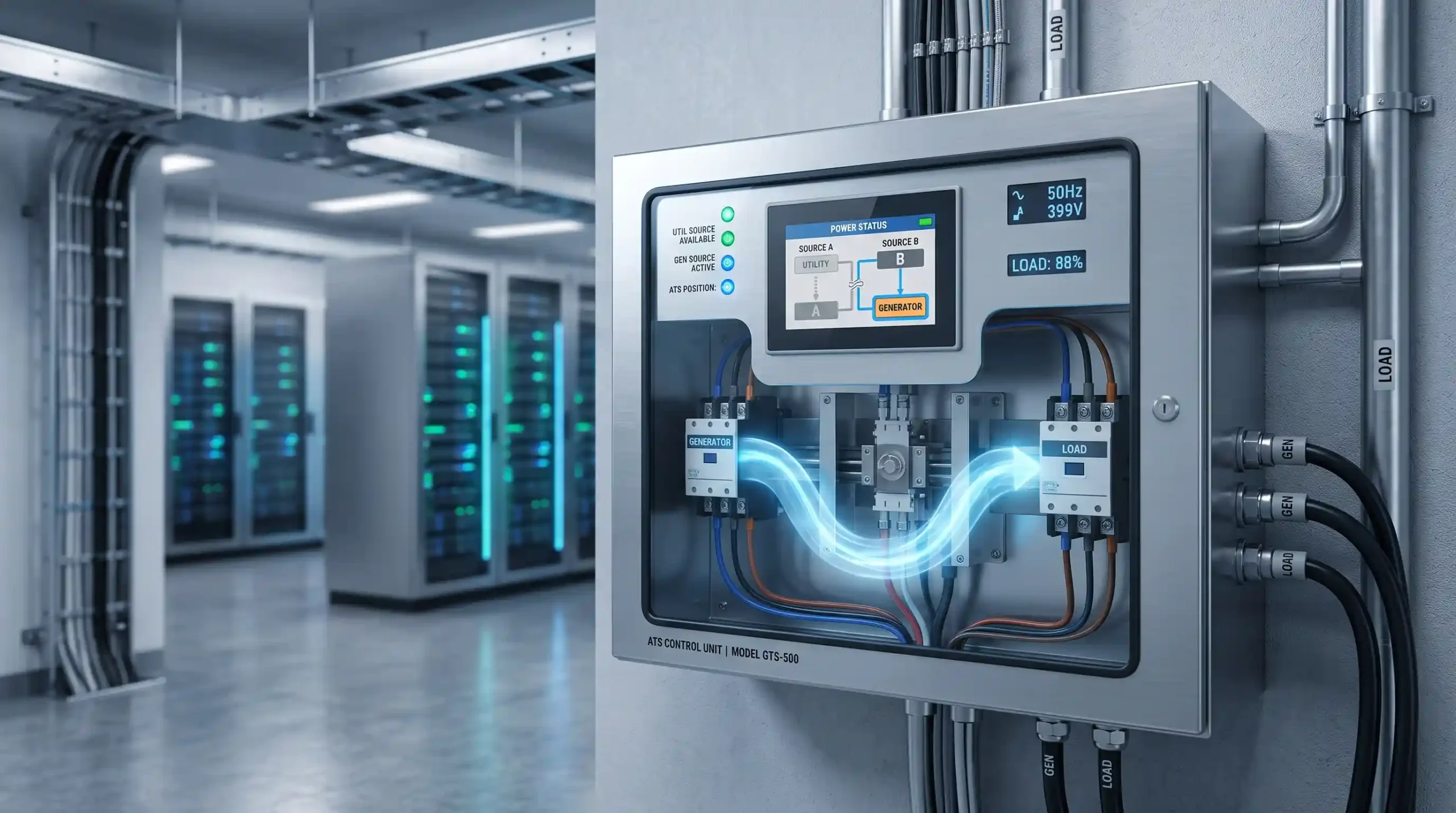
Power outages can disrupt businesses and damage sensitive electronic devices instantly. An Automatic Transfer Switch acts as a smart safeguard to ensure continuous electricity supply.
This technology seamlessly bridges the gap between your primary grid and backup power. Understanding its mechanism helps optimize your property’s overall electrical infrastructure safety.
What is an Automatic Transfer Switch (ATS)?
What is an Automatic Transfer Switch (ATS)
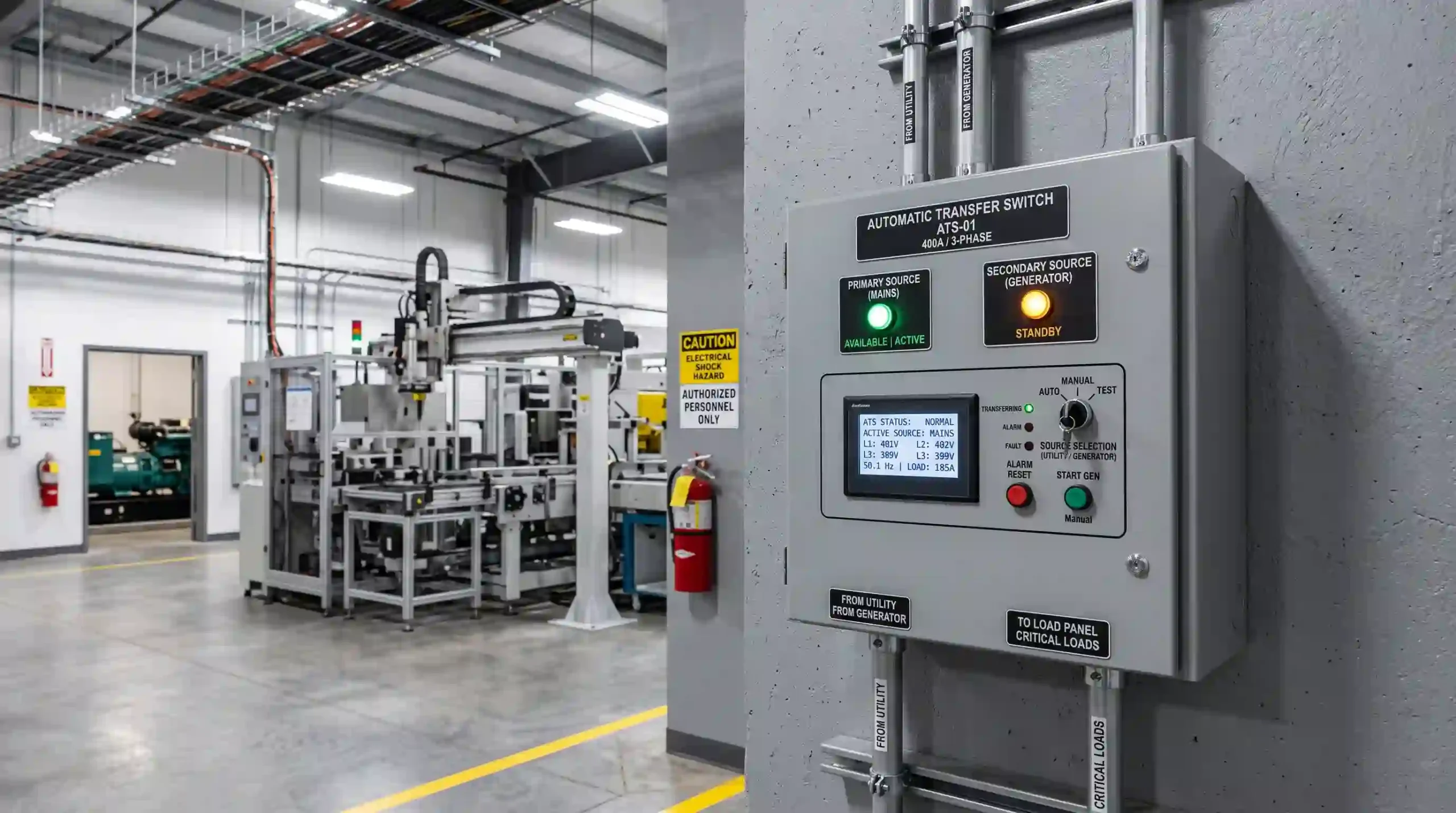
An Automatic Transfer Switch is an intelligent electrical device designed to manage power distribution. It constantly oversees the connection between your main utility grid and alternative power sources.
When the primary supply fails, this switch safely shifts your electrical load to backup equipment. Once grid power returns, it seamlessly reverses the process to restore the standard connection.
Read Also: UPS Maintenance Solutions: Prevent Costly Downtime
Primary Functions and Benefits of ATS for Electrical Systems
Implementing this technology brings immense value, safety, and efficiency to any modern building setup. It eliminates electrical hazards while maximizing the operational uptime of your connected machinery.
1. Maintaining Uninterrupted Power Continuity
Primary Functions and Benefits of ATS for Electrical Systems Maintaining Uninterrupted Power Continuity
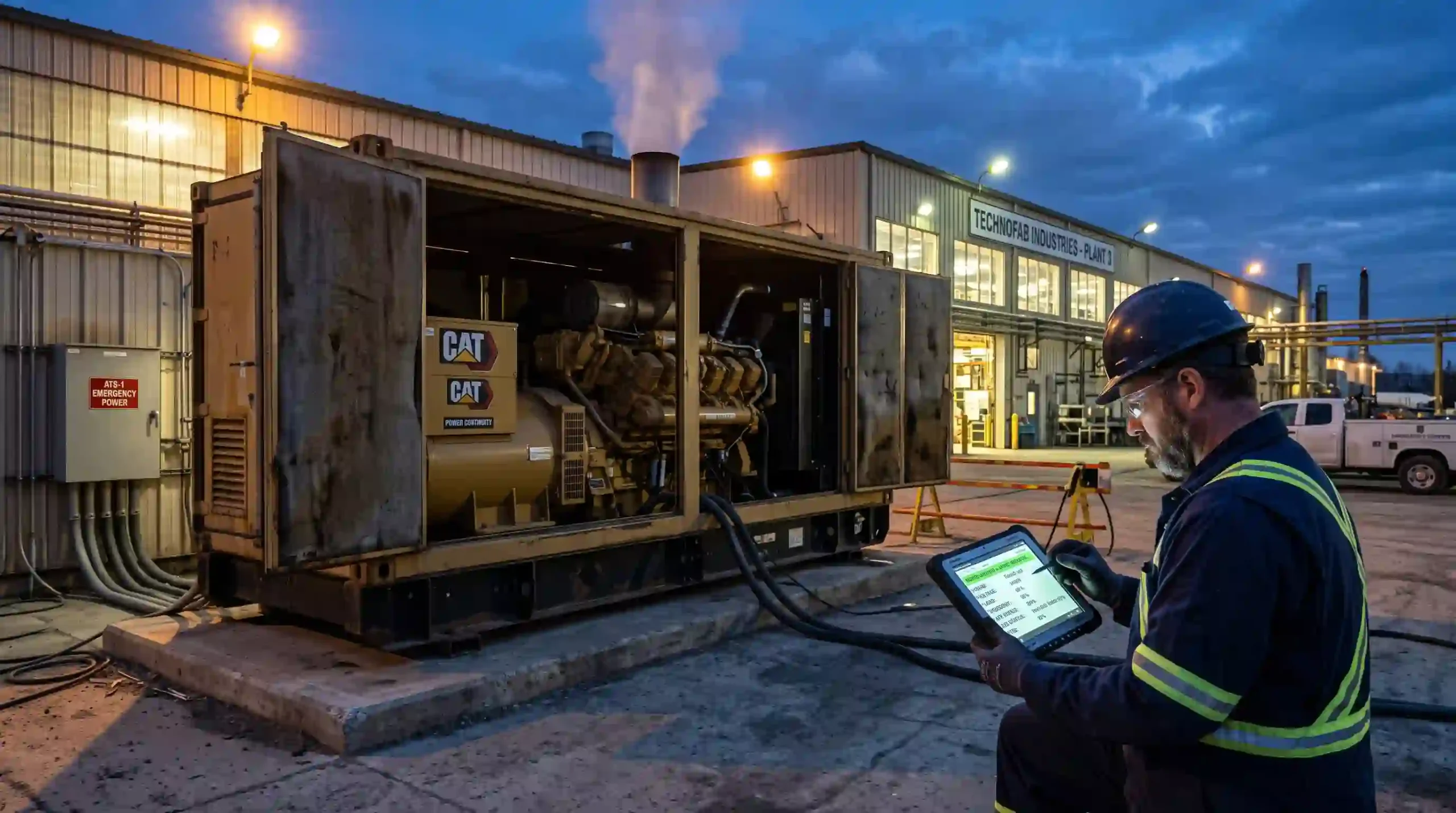
A sudden power blackout can halt critical manufacturing operations and cause heavy financial losses. The switch provides seamless power transition to keep essential machinery running without interruptions.
This immediate response safeguards expensive digital equipment from abrupt shutdowns. It ensures your operations remain fully functional during unexpected utility grid failures.
Read Also: Data Center Solutions: Guide to Scalable Infrastructure
2. Ensuring Safety Against Backfeeding Risks
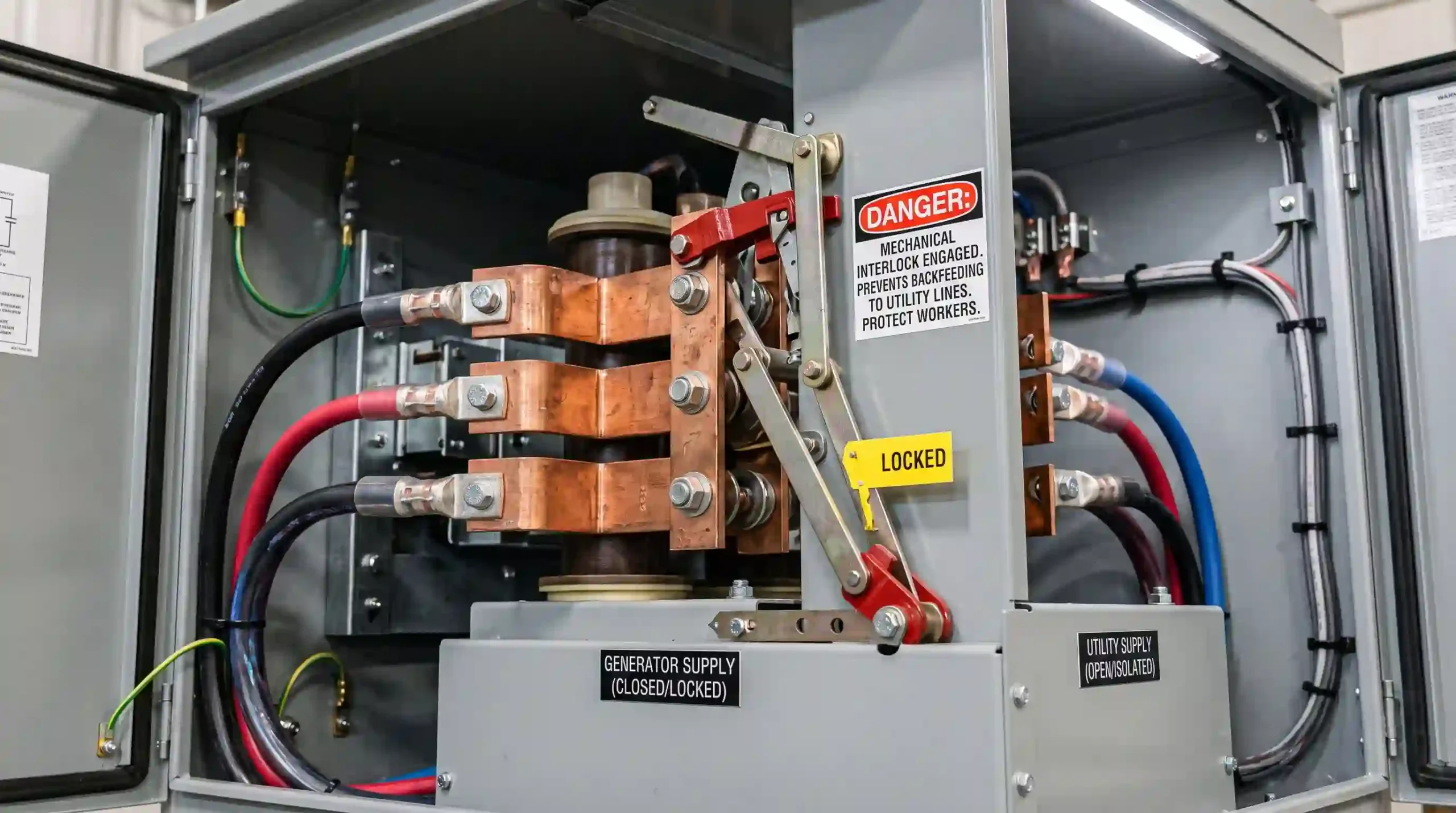
Primary Functions and Benefits of ATS for Electrical Systems Ensuring Safety Against Backfeeding Risks
Connecting two live power sources simultaneously creates an extremely dangerous electrical short circuit. The switch acts as a mechanical barrier to prevent dangerous generator backfeeding into the grid.
This strict isolation protects utility workers repairing external lines from accidental electrocution. It also shields your internal building components from devastating electrical fires.
Read Also: Double Conversion UPS: Guide to Online Power Backup
3. Full Automation Without Manual Intervention
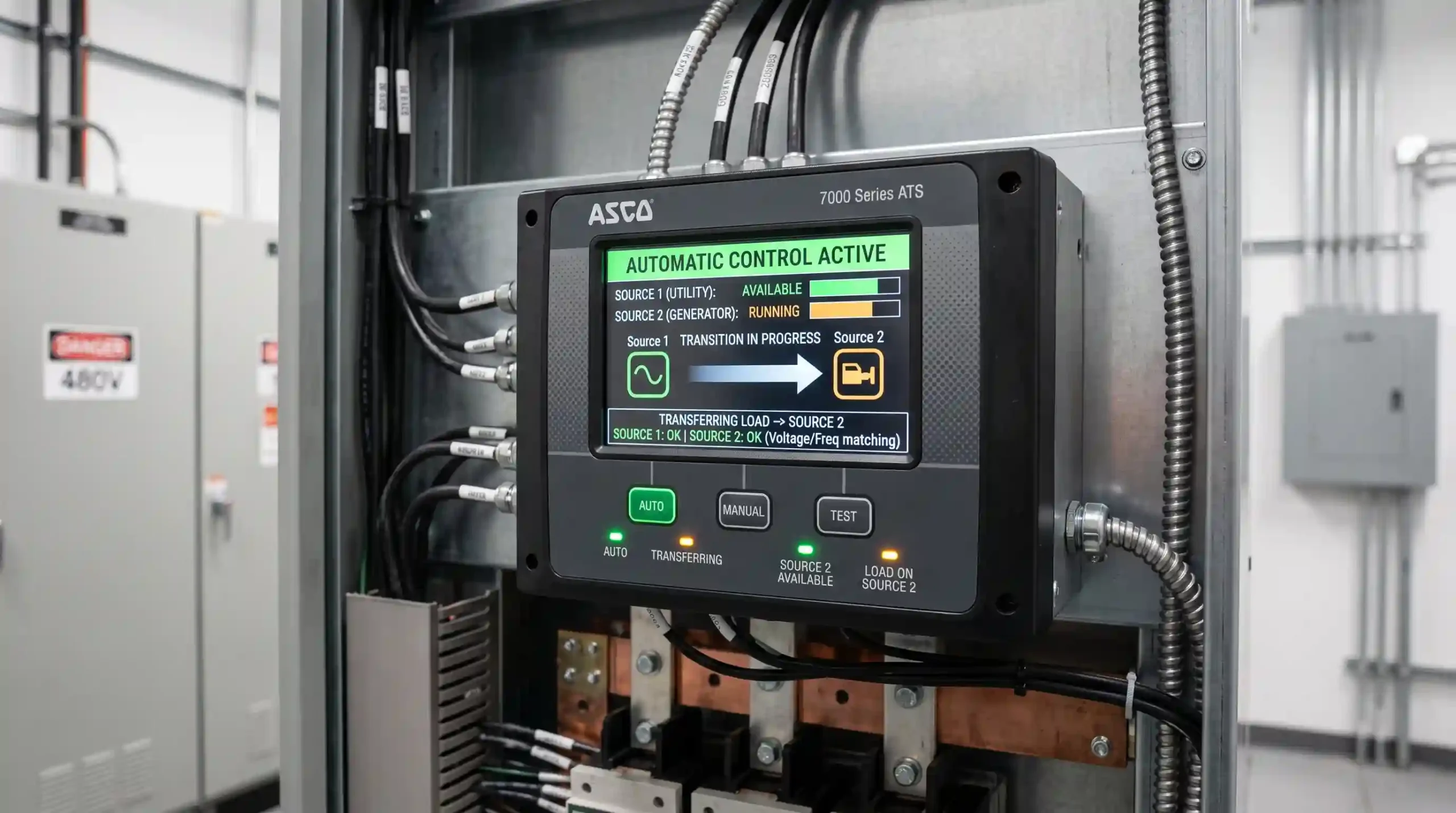
Primary Functions and Benefits of ATS for Electrical Systems Full Automation Without Manual Intervention
Manual power switching is slow, inefficient, and highly prone to human error. This intelligent system eliminates human intervention by automating the entire emergency power supply sequence.
It responds within milliseconds to keep critical infrastructure alive without human presence. This hands-free operation makes emergency management incredibly safe and reliable.
How an Automatic Transfer Switch (ATS) Works
The system operates through a continuous, highly coordinated four-stage automated lifecycle. This ensures smooth transitions whenever the main utility grid experiences sudden instability.
1. Voltage Monitoring
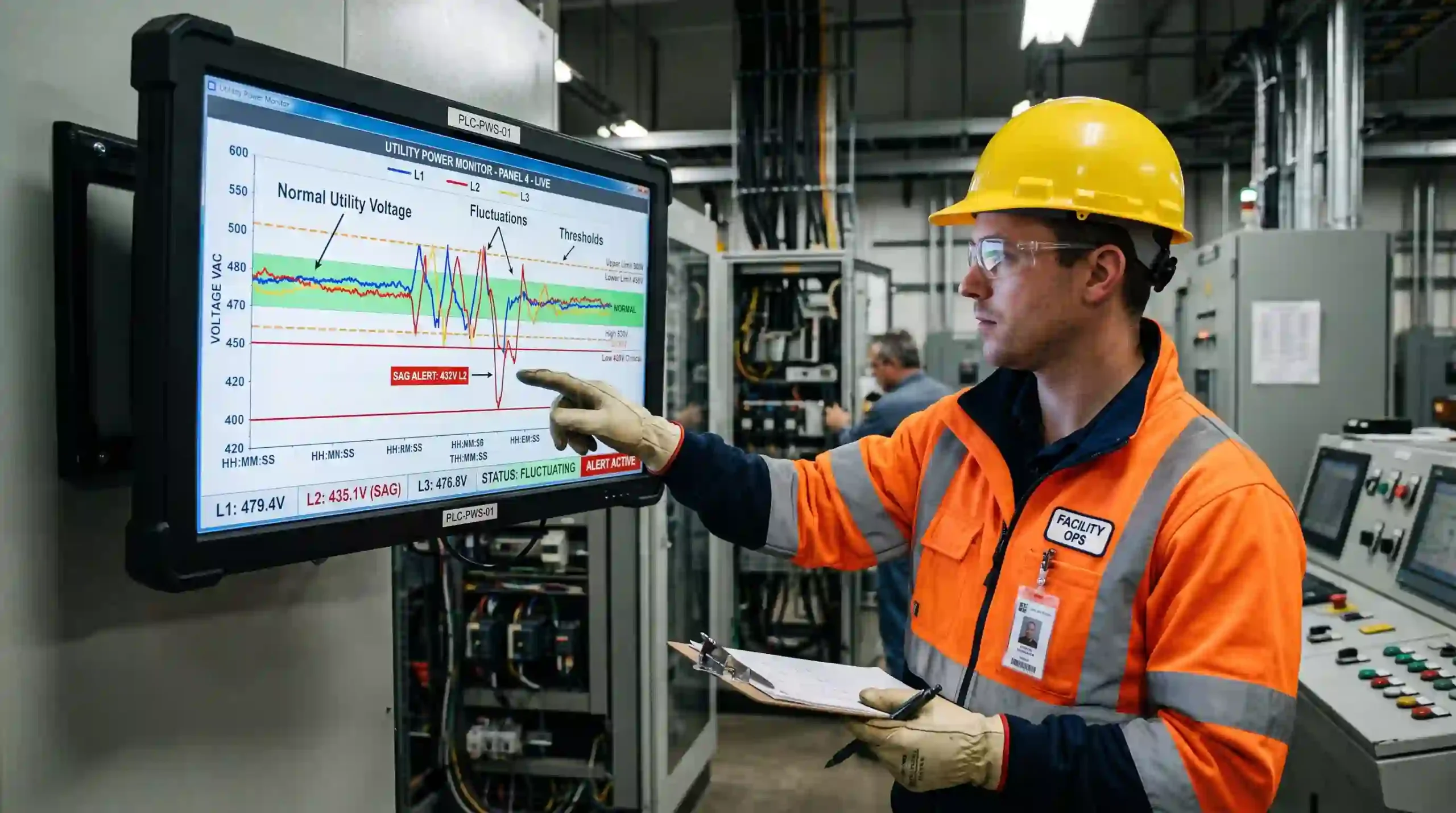
How an Automatic Transfer Switch (ATS) Works Voltage Monitoring
The internal logic controller continuously tracks the incoming voltage levels from the utility grid. It measures key parameters like frequency and phase alignment to detect subtle anomalies.
If the incoming grid quality drops below safe thresholds, the system flags a brownout. This constant vigilance forms the foundation of smart power automation.
Read Also: Power Distribution Networks: Key Components & Architecture
2. Outage Detection and Backup Signaling
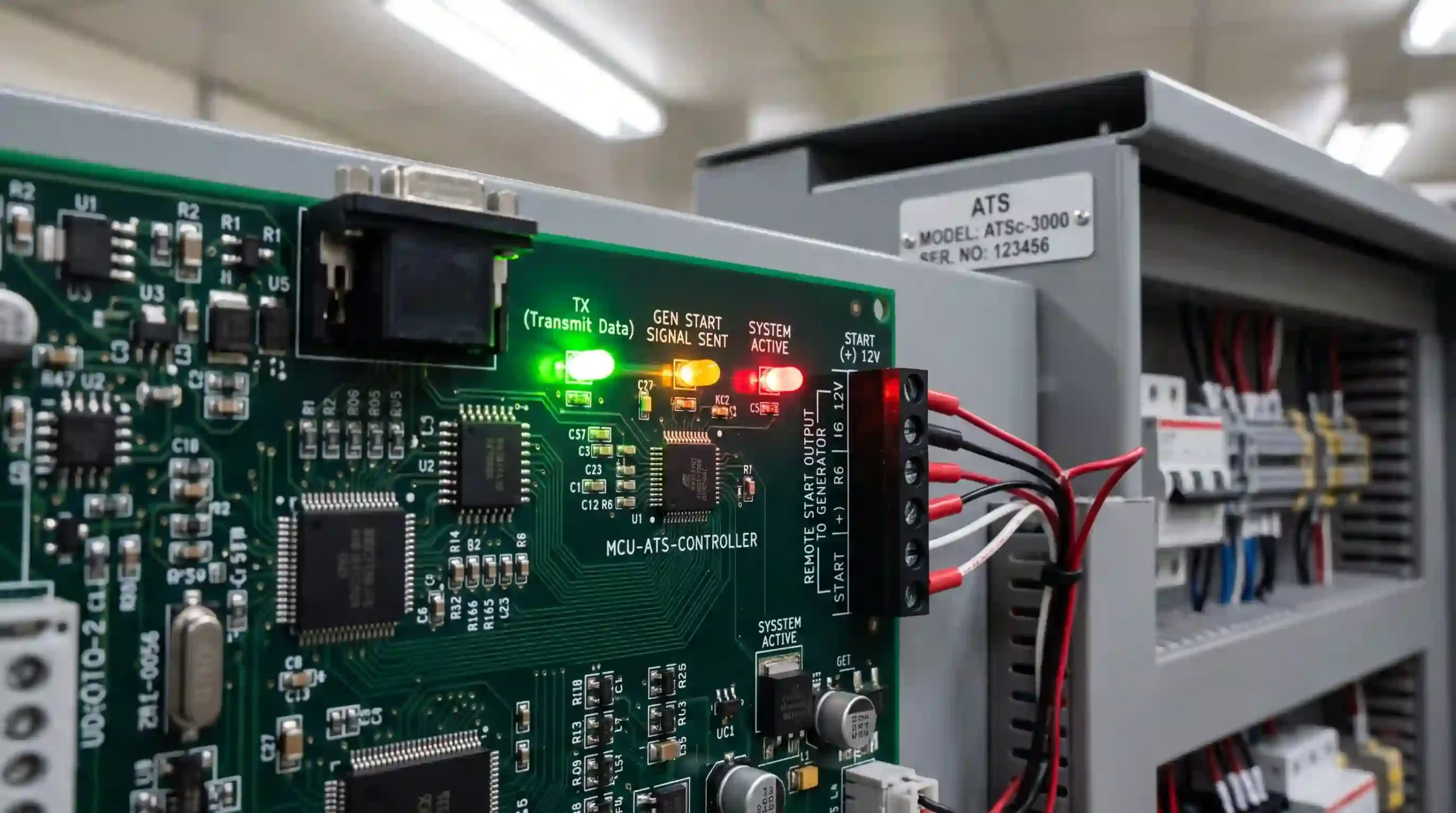
How an Automatic Transfer Switch (ATS) Works Outage Detection and Backup Signaling
Upon detecting a total outage, the controller instantly triggers a remote start signal. This command prompts the standby diesel generator or battery bank to crank up.
The switch then waits briefly until the alternative source reaches optimal operational speed. This ensures the backup power is perfectly stable before taking the load.
Read Also: Line-Interactive UPS Guide: Complete Power Protection
3. Load Power Transfer
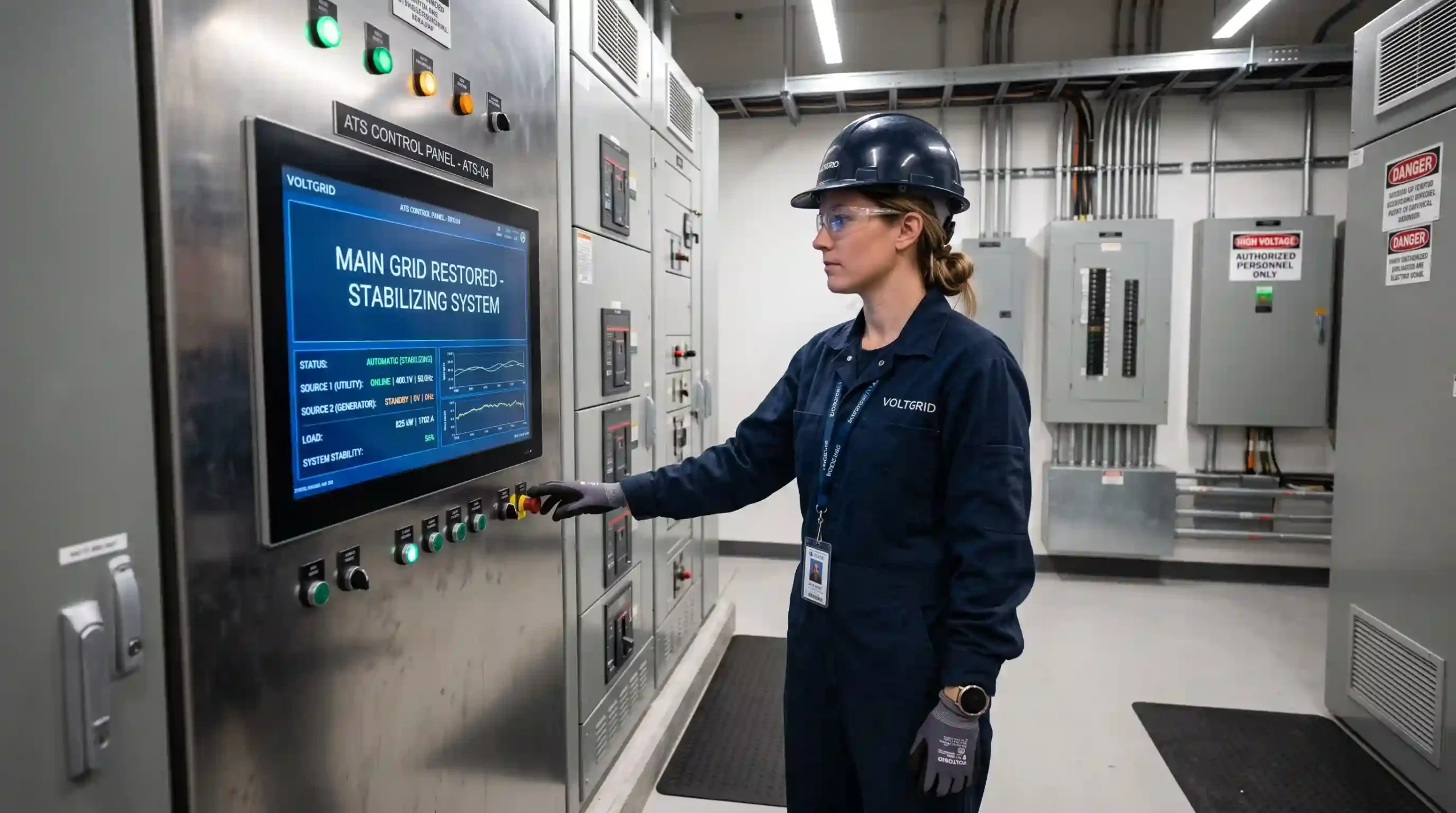
How an Automatic Transfer Switch (ATS) Works Load Power Transfer
Once alternative power stabilizes, the mechanism safely disconnects the building from the grid. It immediately closes the secondary circuit to route backup generation to your breaker panel.
This mechanical shift happens rapidly to minimize downstream equipment downtime. Your facility successfully transitions to a temporary island mode configuration.
Read Also: UPS Generator Systems: Complete Power Protection Guide
4. Power Restoration to the Main Source
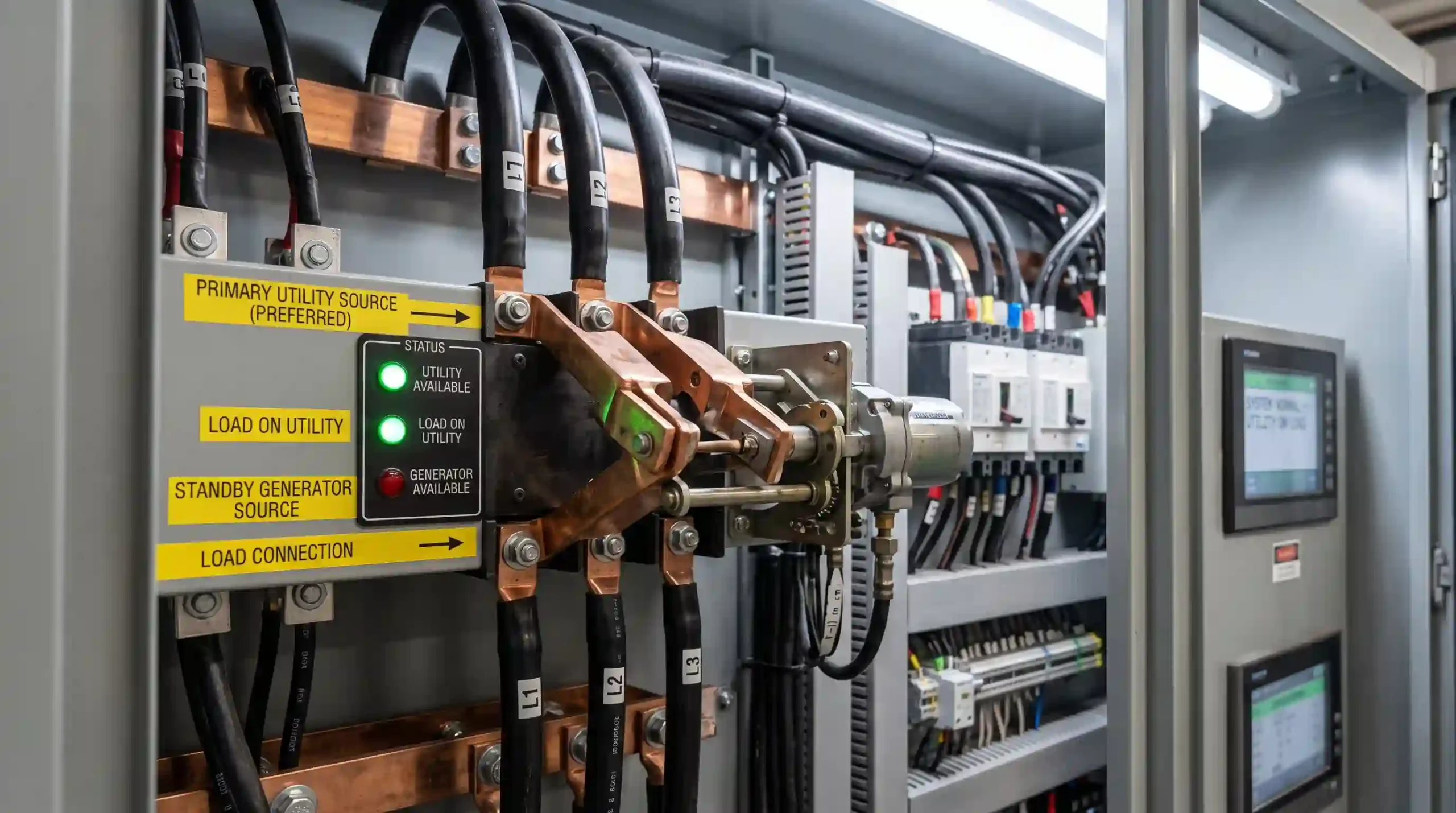
How an Automatic Transfer Switch (ATS) Works Power Restoration to the Main Source
When the main utility line recovers, the switch monitors its stability for a set period. It then safely transfers the building load back to the primary grid line.
After the transfer, the controller allows the standby generator to complete a cool-down cycle. This protective step extends the operational lifespan of your backup machinery.
Core Components Inside an ATS Panel
An automated panel houses specialized electrical hardware working together to control high-amperage currents safely.
1. Electrical Contactor
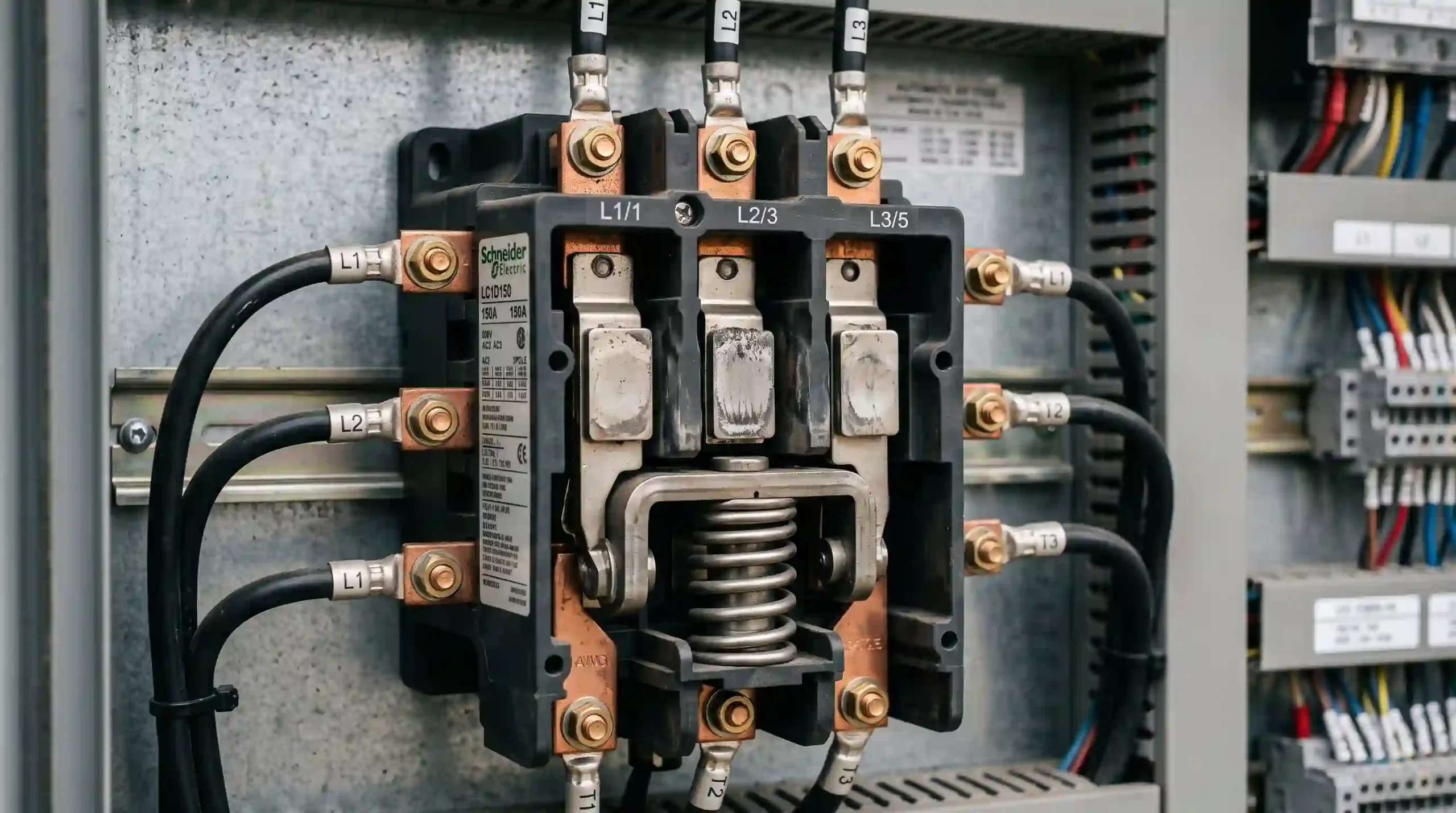
Core Components Inside an ATS Panel Electrical Contactor
An electrical contactor is a heavy-duty switching component operated by internal electromagnetic forces. It physically opens and closes the massive conductive paths carrying electricity to your building.
This heavy mechanism prevents dangerous electrical arcing during high-load power transfers. It serves as the primary muscle behind every automated power transition.
Read Also: Data Center Infrastructure: Architecture & Key Components
2. Time-Delay Relay (Timer)
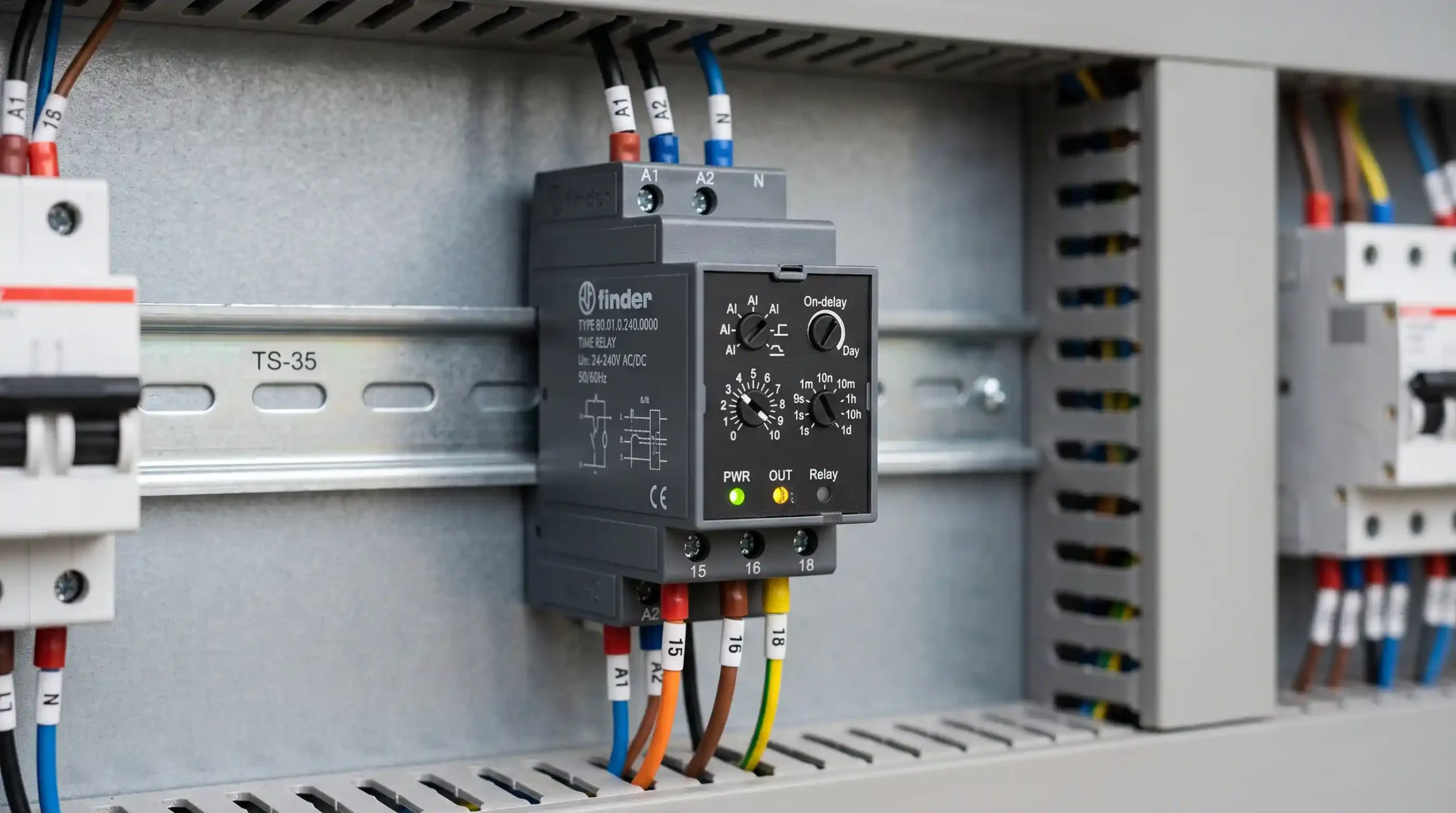
Core Components Inside an ATS Panel Time-Delay Relay (Timer)
The time-delay relay governs the exact waiting periods between different switching phases. It prevents the system from reacting to brief, harmless grid voltage blinks.
It also ensures the backup generator runs long enough to stabilize its engine. This precise timing protects sensitive equipment from rapid, repetitive power cycling.
Read Also: Backup UPS Systems: Ultimate Protection for Electronics
3. Control Relay
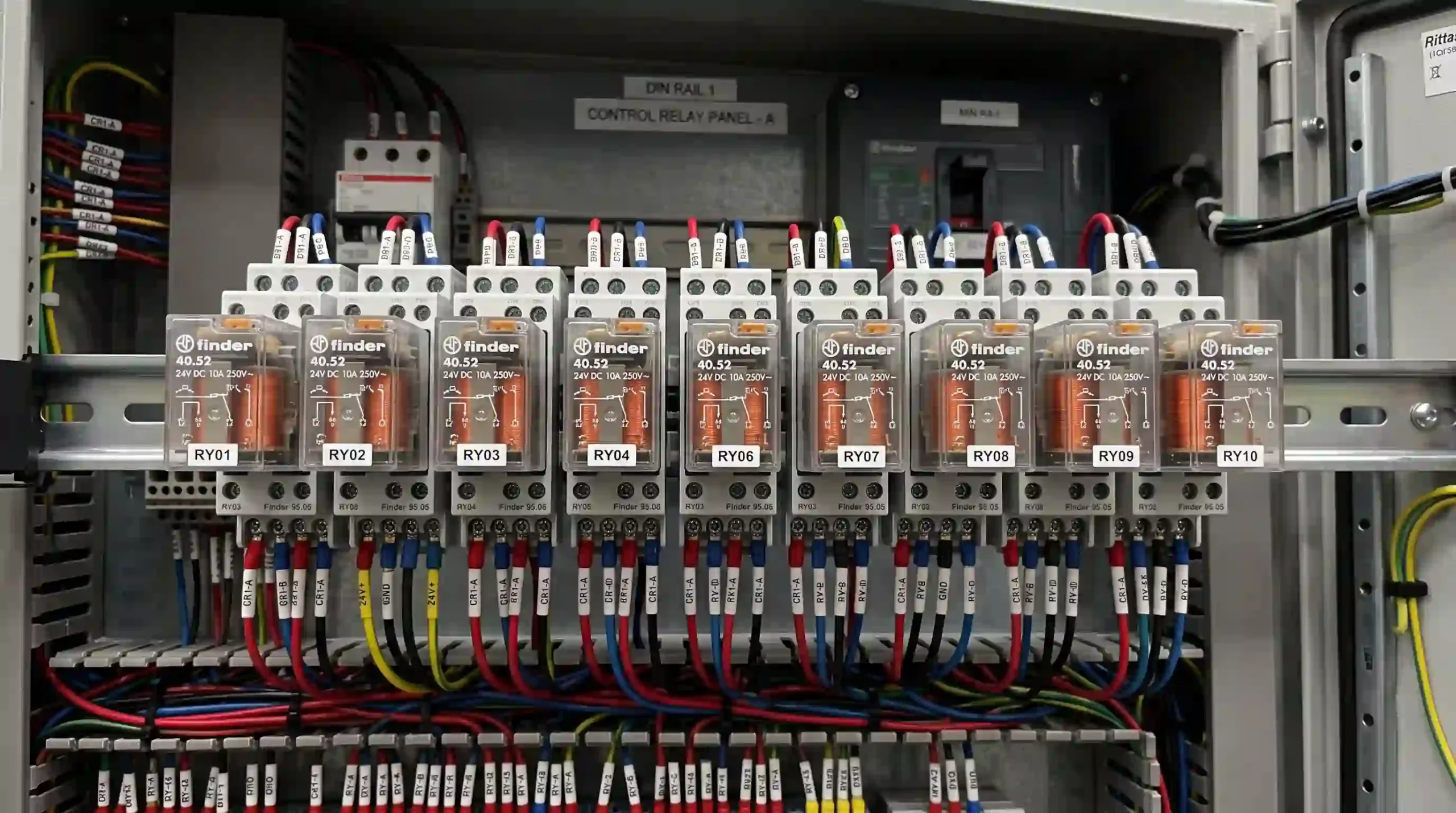
Core Components Inside an ATS Panel Control Relay
An auxiliary relay acts as a low-power electronic bridge within the control panel. It transmits low-voltage sensor signals to trigger high-voltage mechanical operations safely.
This component allows the delicate controller brain to dictate heavy-duty contactor movements. It ensures reliable command transmission across different voltage sections.
Read Also: Modern Data Center Design: Architecture & Power Guide
4. Microprocessor Modul Controller
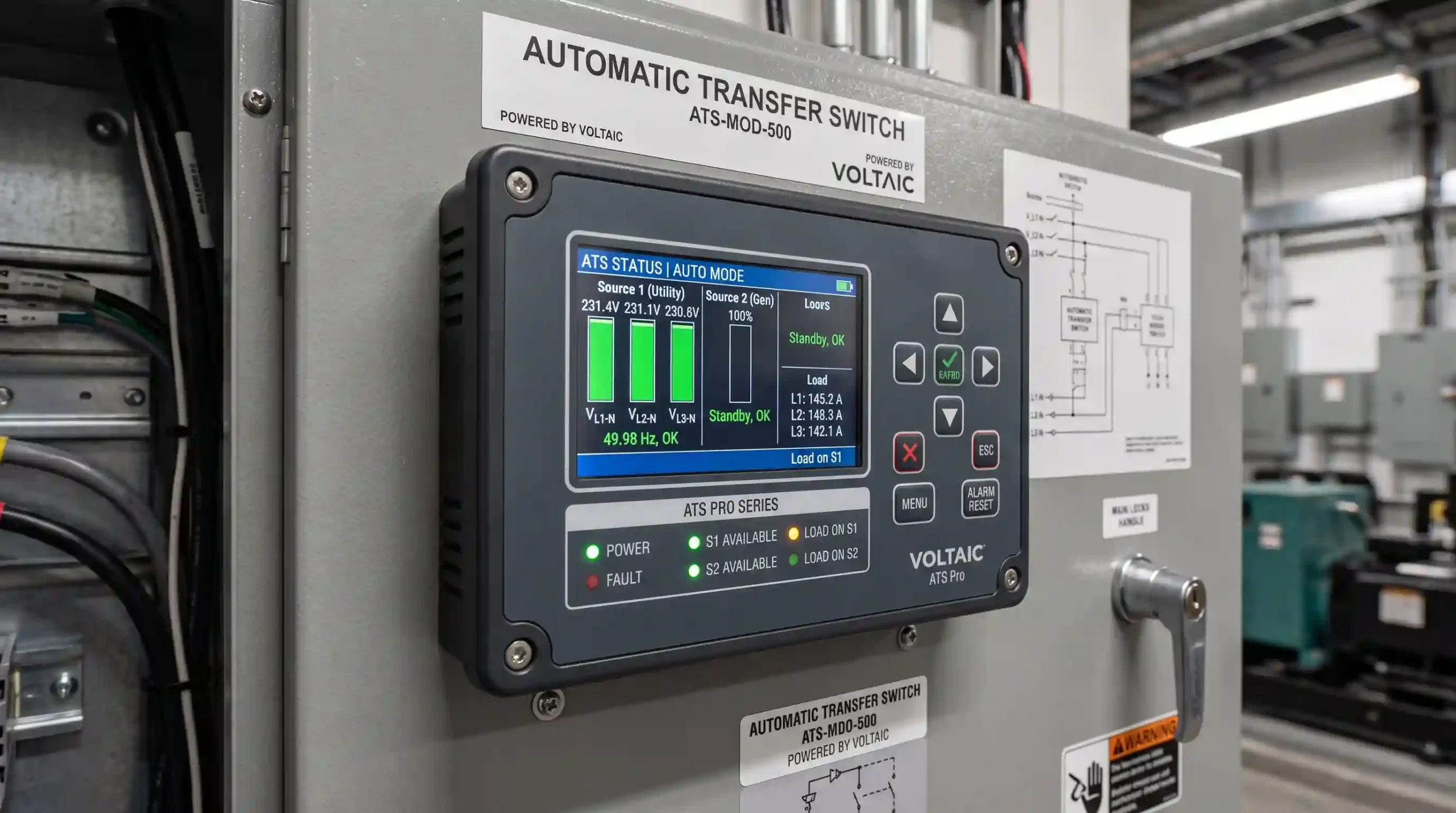
Core Components Inside an ATS Panel Microprocessor Modul Controller
The microprocessor controller serves as the core intelligence directing the entire panel operation. It calculates voltage mathematics, monitors safety thresholds, and stores user-programmed operational settings.
This smart unit often integrates seamlessly with advanced Automatic Mains Failure systems. It supervises the complete health and performance of the electrical setup.
Key Differences Between ATS and AMF (Automatic Main Failure)
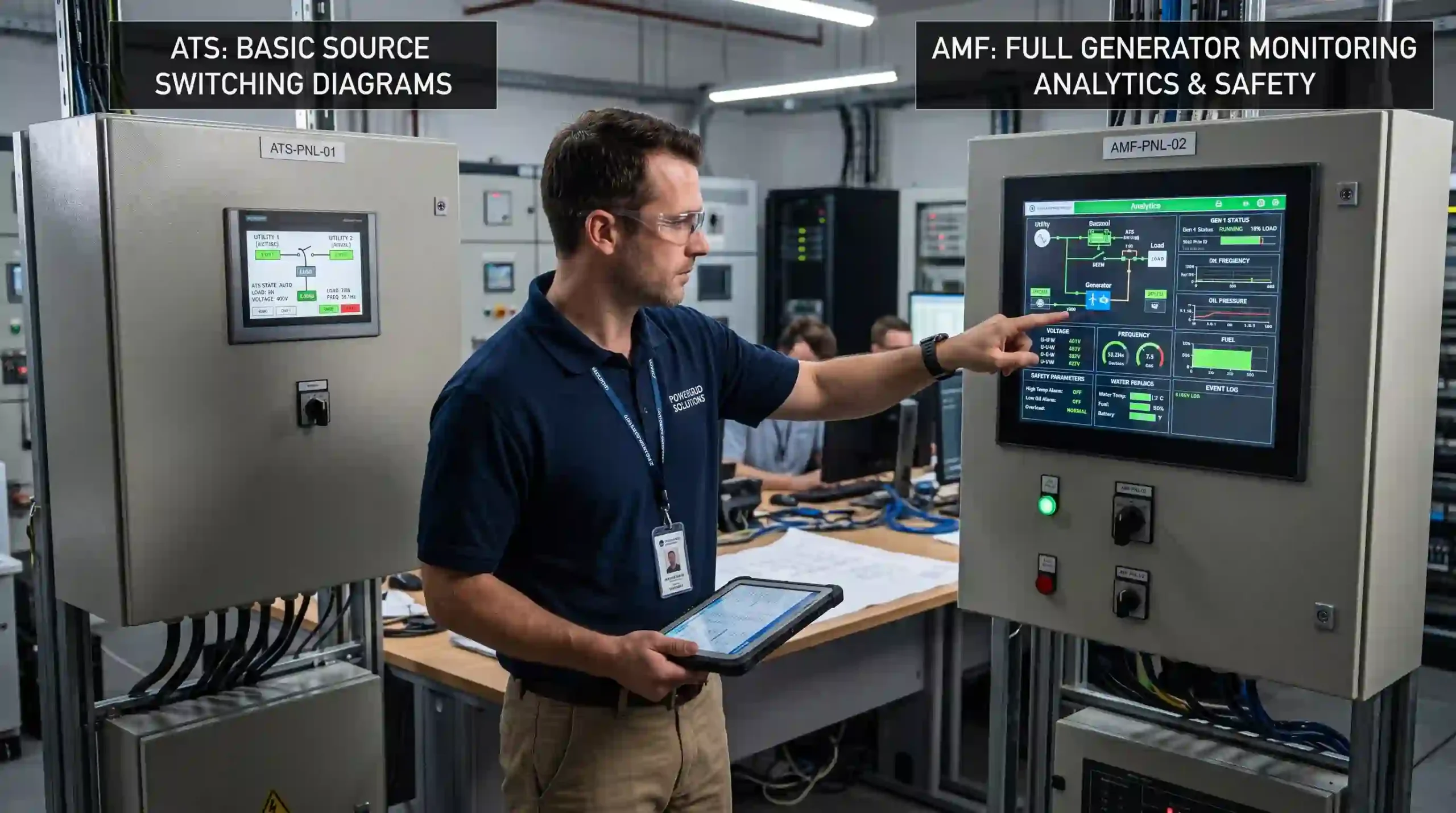
Key Differences Between ATS and AMF (Automatic Main Failure)
Many people confuse these two terms, but they actually perform distinct, complementary roles. The ATS acts as the mechanical switch that alters the actual physical path of the electricity.
Meanwhile, the AMF module serves as the engine control brain that turns the backup generator on and off. You need both systems working in harmony to create a fully autonomous emergency power solution.
Types of ATS Based on Transition Methods
Choosing the right transition type determines how smoothly your equipment survives a power source changeover.
1. Open Transition (Break-Before-Make)
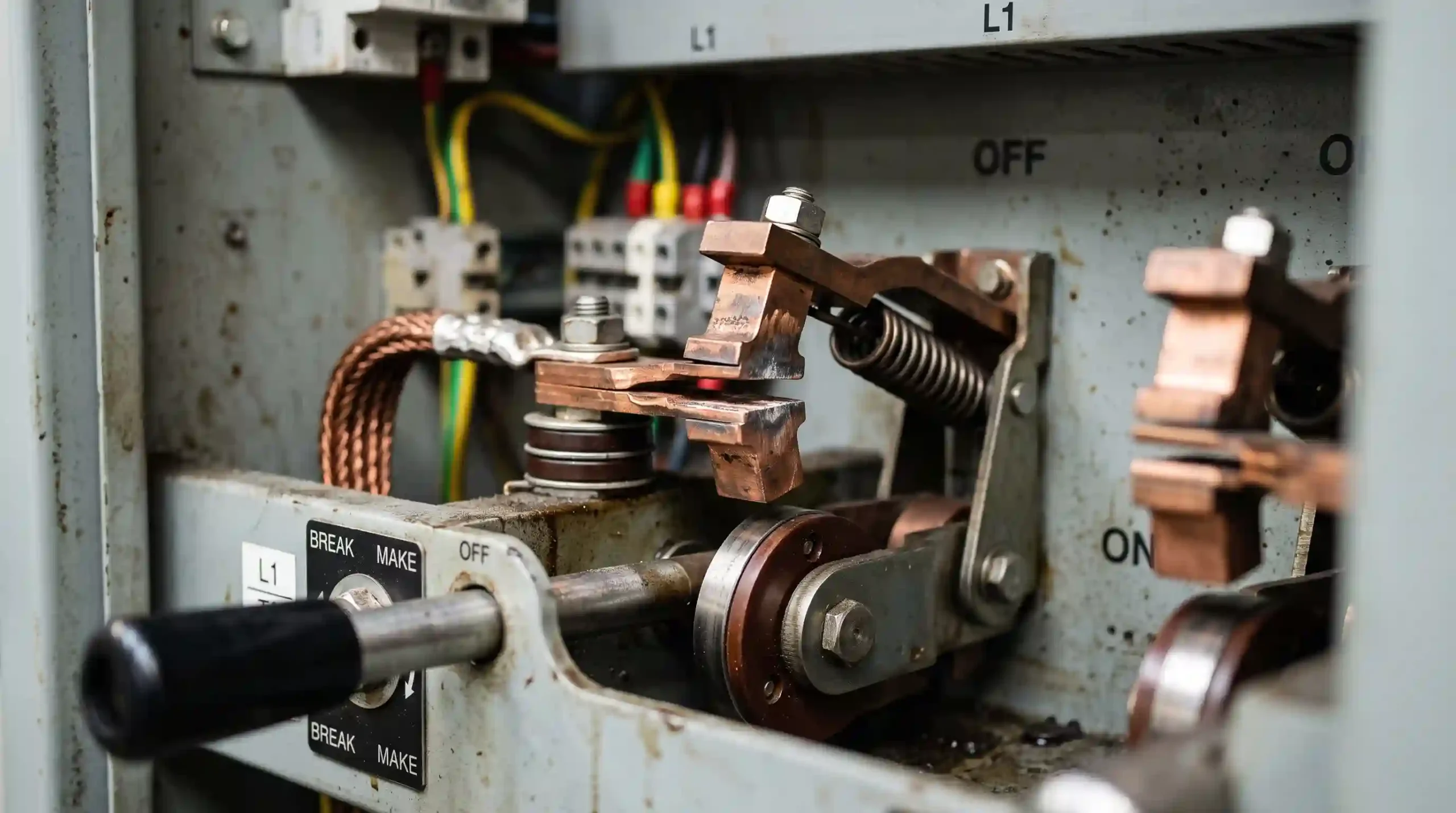
Types of ATS Based on Transition Methods Open Transition (Break-Before-Make)
An open transition switch breaks its connection with the first power source before touching the second. This creates a tiny, fraction-of-a-second power interruption during the mechanical swap.
It is highly cost-effective and perfectly suitable for systems that tolerate brief pauses. This method prevents any possibility of parallel source overlapping.
Read Also: Power Line Conditioner: Is One Really Necessary for Gear?
2. Closed Transition (Make-Before-Break)
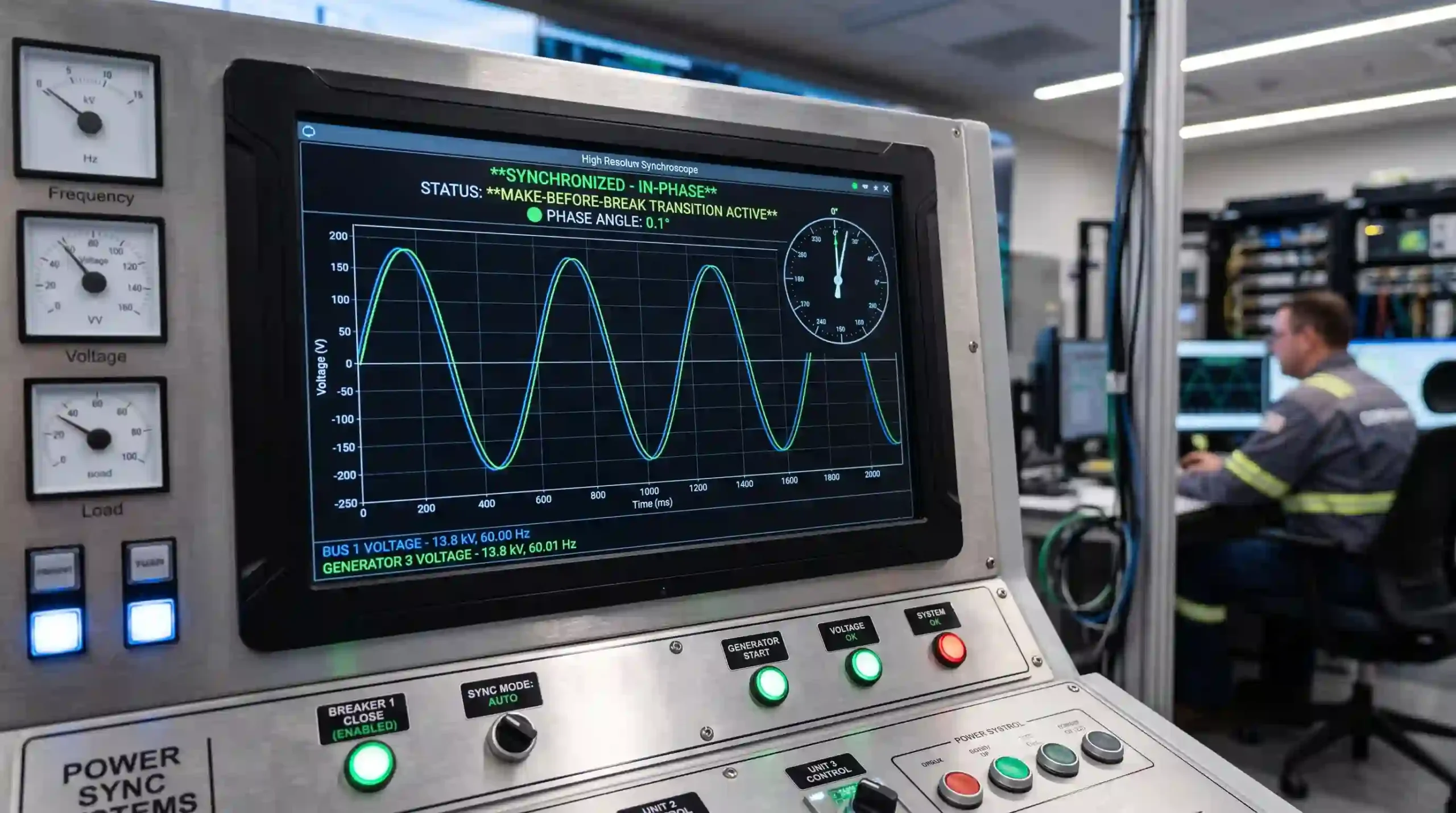
Types of ATS Based on Transition Methods Closed Transition (Make-Before-Break)
A closed transition switch momentarily connects to both power sources before dropping the original line. This advanced method achieves a bumpless transfer with zero millisecond power interruption.
It is ideal for facilities that cannot afford even a tiny blink in energy supply. This specialized setup requires precise phase synchronization between both active lines.
ATS Applications Across Different Sectors
Different industries utilize automated switches to protect their financial assets, data integrity, and human lives.
1. Office and Industrial Sectors
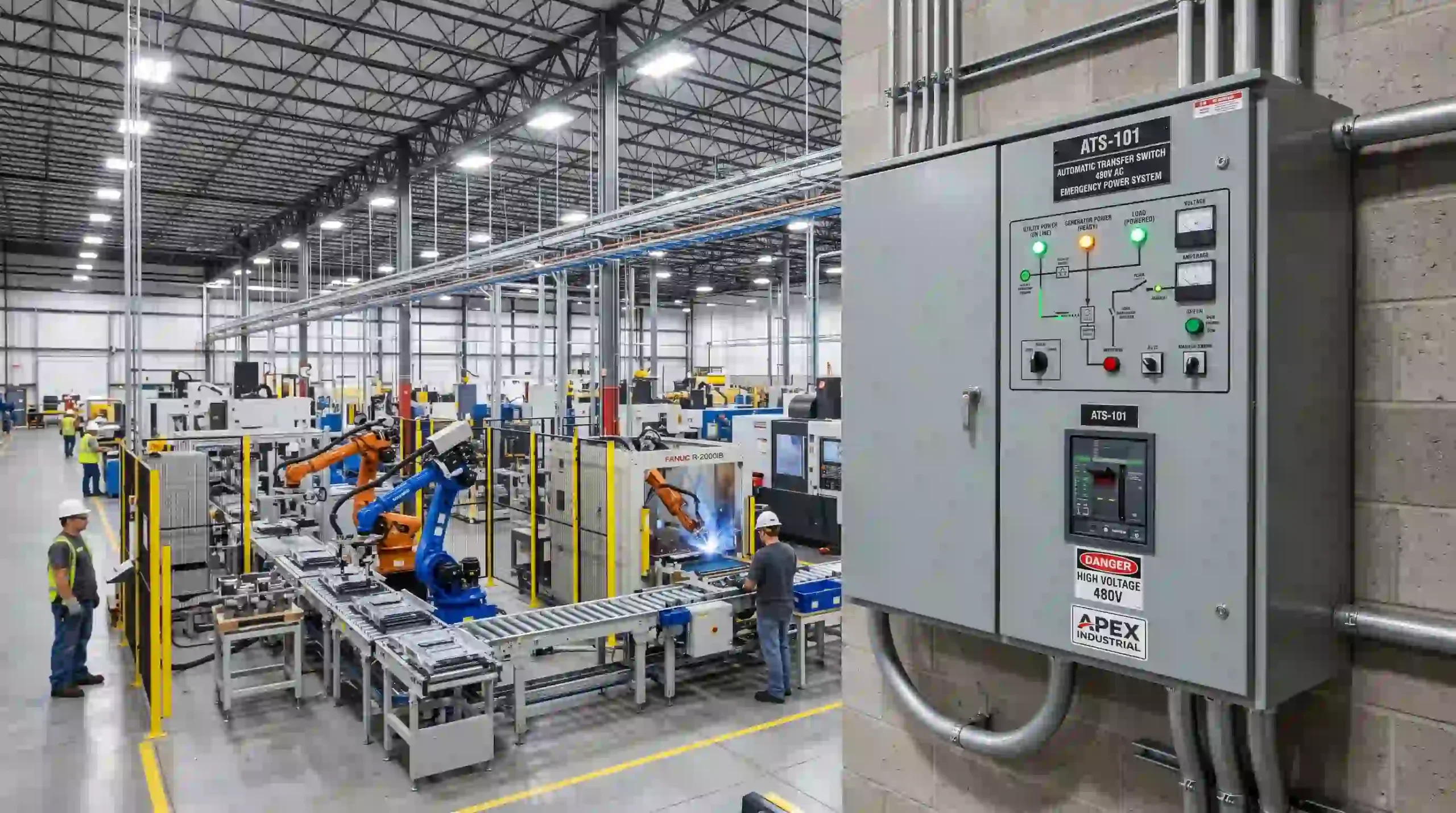
ATS Applications Across Different Sectors Office and Industrial Sectors
Modern assembly lines rely heavily on continuous automated machinery to maintain production targets. A brief blackout can ruin manufacturing batches and stall vital corporate operations.
Installing an automated switch keeps commercial assembly lines moving forward efficiently. It protects industrial motors from expensive operational restarts and unexpected delays.
Read Also: Understanding Power Conditioners and UPS: Which Do You Need?
2. Data Center Infrastructure
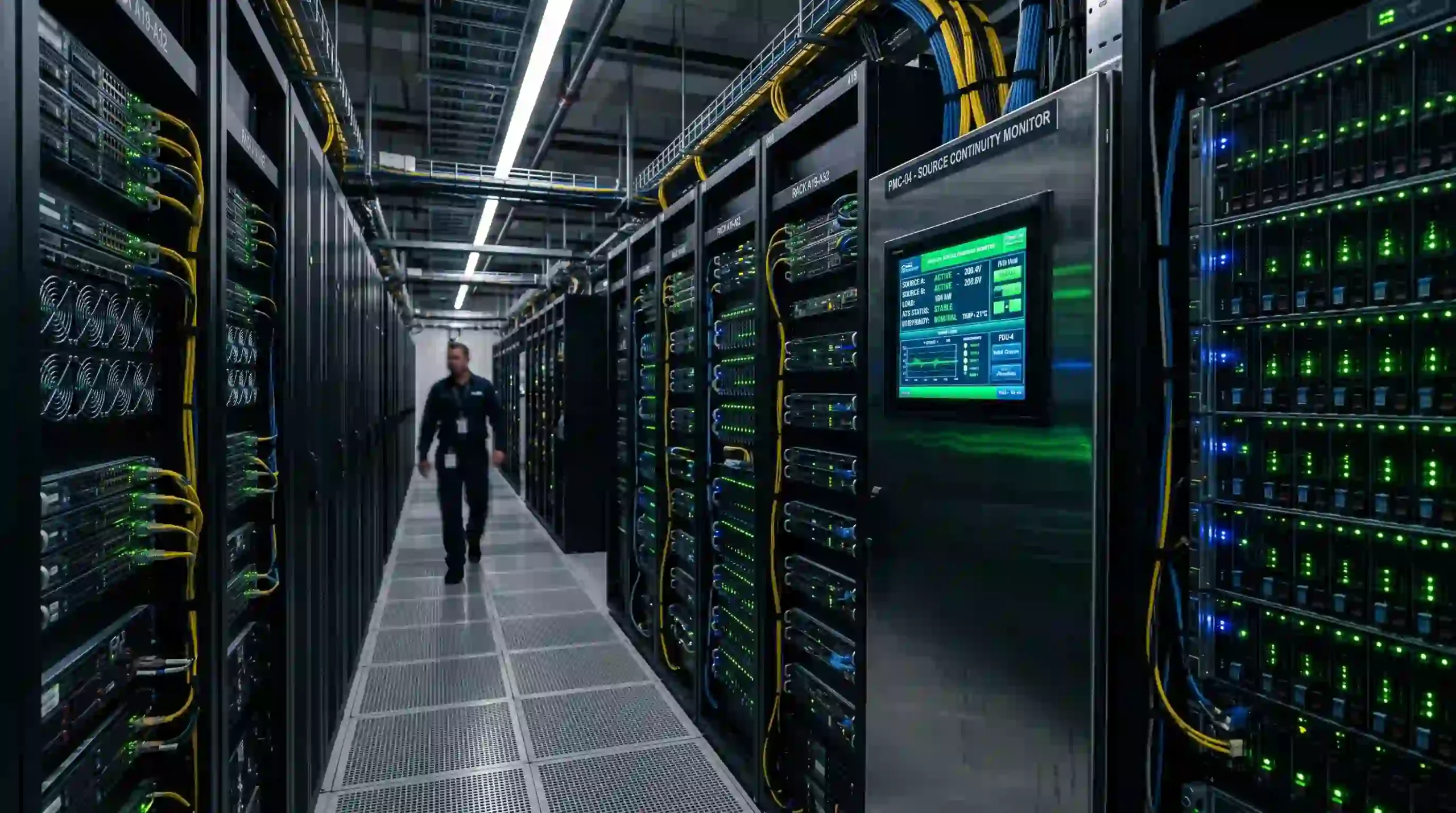
ATS Applications Across Different Sectors Data Center Infrastructure
Modern server farms require absolute uninterruptible power supply performance to prevent catastrophic data corruption. Even a microsecond power drop can take down global cloud networking services.
The switch works alongside battery systems to guarantee continuous server cooling and operation. This robust architecture prevents severe financial penalties and massive service outages.
Read Also: Modern Power System Protection: Prevent Failures
3. Medical and Hospital Facilities
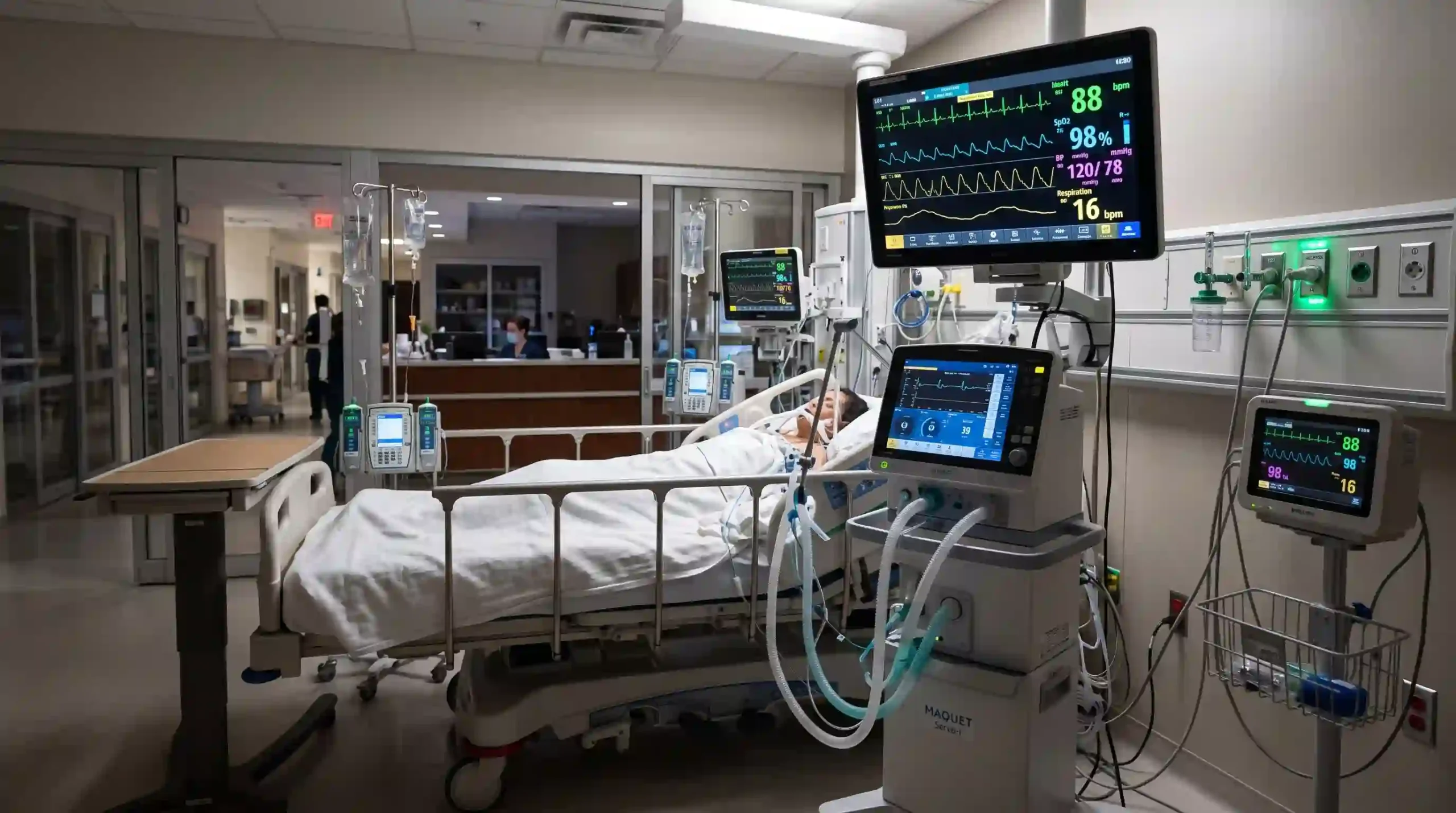
ATS Applications Across Different Sectors Medical and Hospital Facilities
Healthcare facilities rely on specialized life-support machinery to keep patients alive inside critical zones. Emergency rooms and intensive care units demand flawless, instantaneous power backup systems.
The switch ensures medical monitors and ventilators never lose vital electrical energy. This technology plays an indispensable role in safeguarding human lives daily.
Read Also: Industrial Uninterruptible Power Supply: Reliable Power
4. Residential Properties
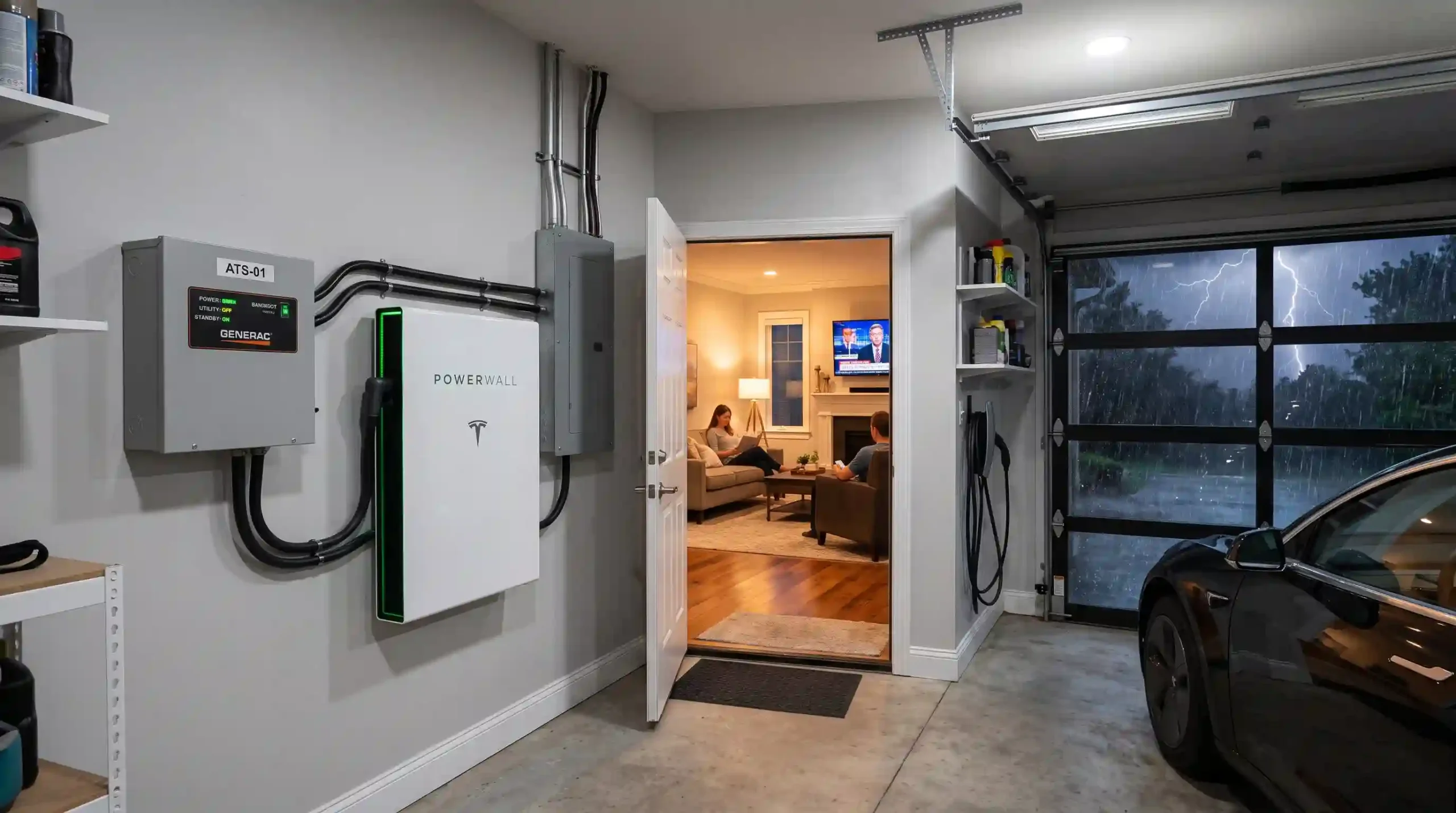
ATS Applications Across Different Sectors Residential Properties
Home automation systems and medical equipment require stable domestic electricity to function correctly. Frequent power outages can disrupt remote working conditions and compromise smart home security.
A residential switch activates alternative power smoothly during severe weather events. It provides modern families with constant peace of mind and comfort.