
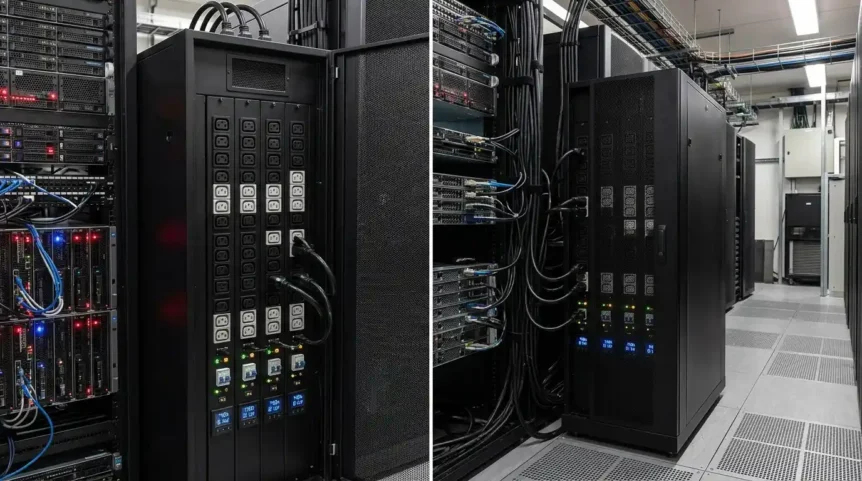
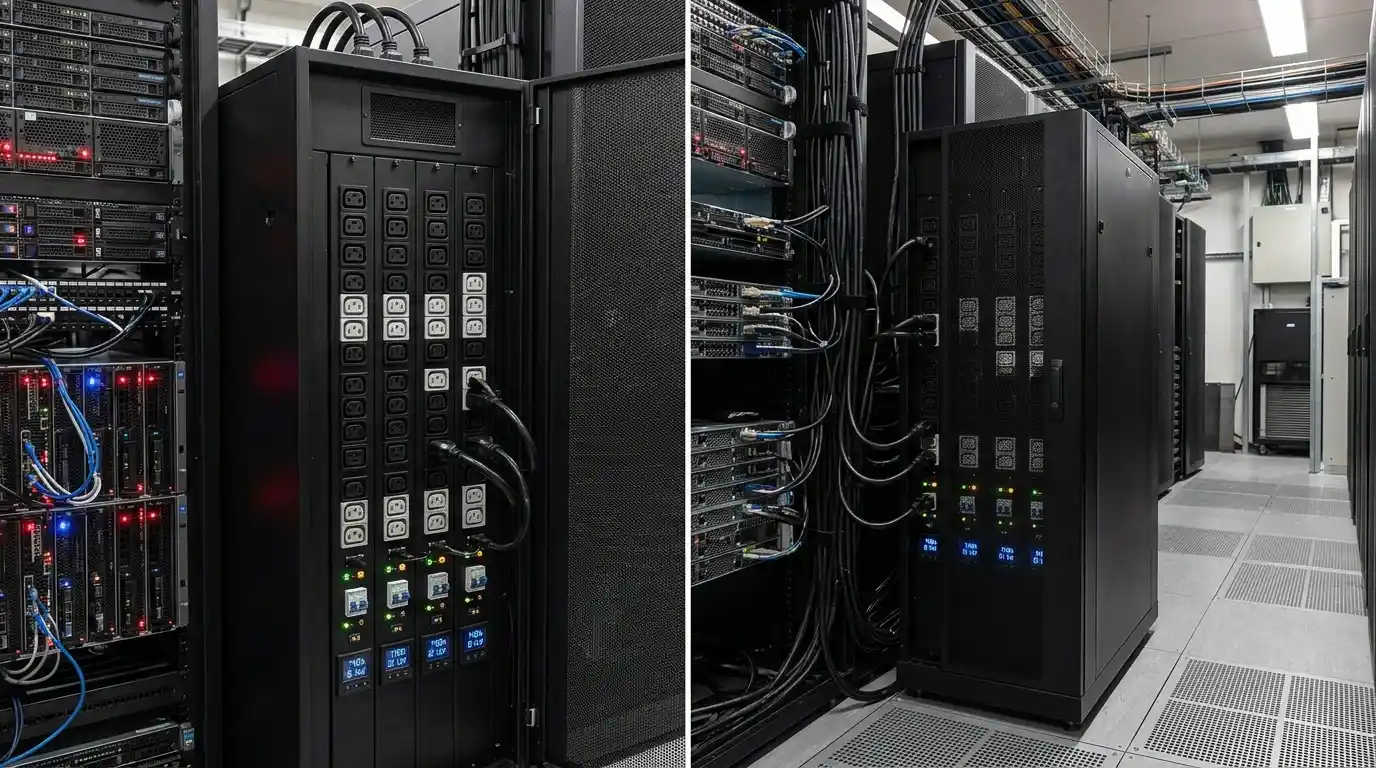
Modern mission-critical facilities rely heavily on an uninterrupted, highly efficient electrical infrastructure to maintain continuous digital operations. Deploying an advanced power distribution unit for data center environments ensures that electricity flows safely from main utility sources directly to high-density rack hardware.
Choosing the correct rack power distribution strategy minimizes operational risks, prevents unexpected outages, and optimizes overall energy consumption. This complete technical guide explores the essential architectures, intelligent features, and strategic selection steps required for robust data center power management.
Key Takeaways:
- Data center PDUs safely distribute electricity from main power feeds to rack servers without altering voltage.
- PDUs protect critical IT hardware against power overloads, transient surges, and airflow-blocking cable clutter.
- PDU types range from basic pass-through strips to switched units offering remote outlet management and monitoring.
- Vertical 0U PDUs maximize rack space and airflow, whereas horizontal units occupy standard equipment rails.
- Selecting the right PDU requires calculating power capacity, choosing input phases, and establishing dual-path N+1 redundancy.
What is a Power Distribution Unit (PDU) for a Data Center?
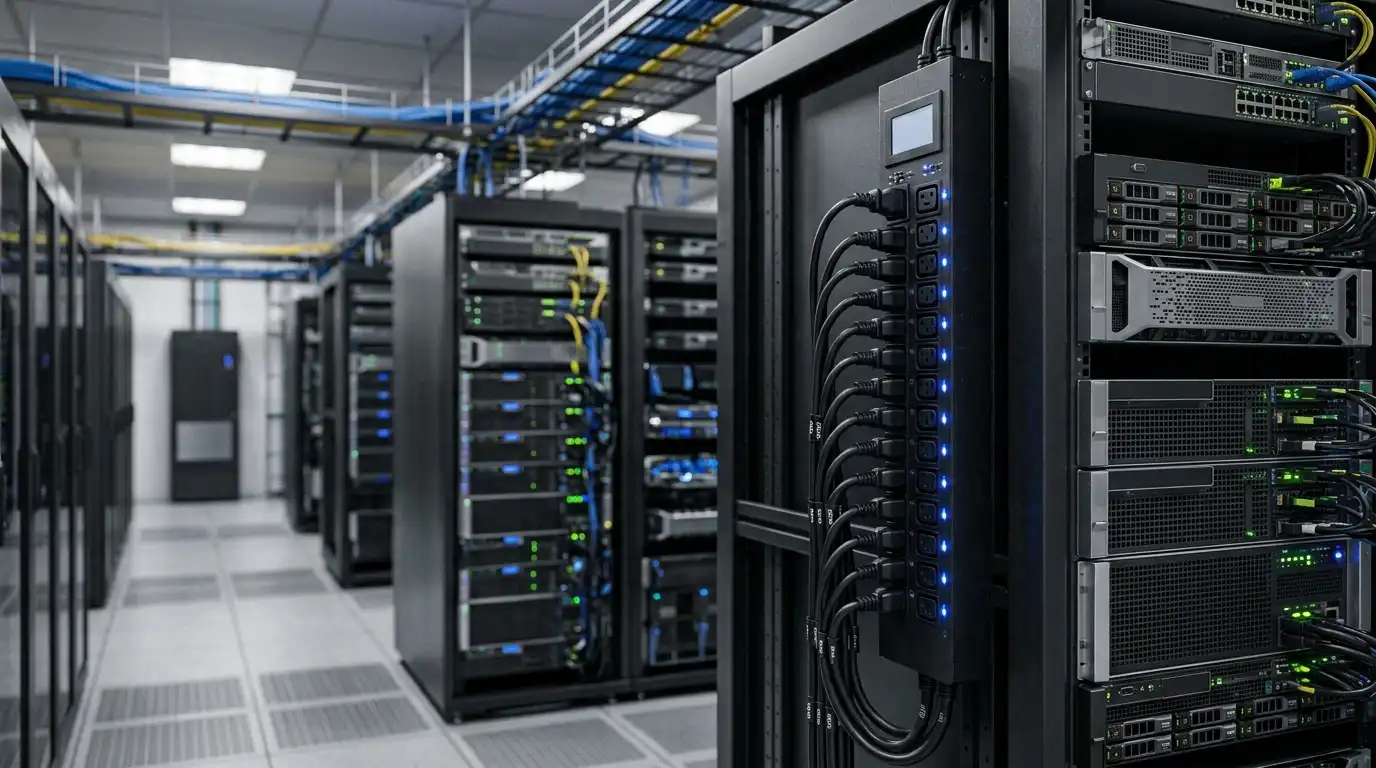
Power Distribution Unit for Data Center
A power distribution unit for data center infrastructure acts as a specialized industrial power strip that receives high-capacity electrical supply from an uninterruptible power supply or utility line. It safely distributes this electricity across multiple individual outlets supplying servers, storage arrays, and network switches within an IT enclosure.
Rather than generating electricity or altering primary voltage, this hardware serves as a safe electrical conduit. It organizes complex internal wiring and ensures balanced current allocation across all connected server equipment.
Read Also: Commercial UPS Systems: Reliable Power Protection
Why PDUs are Essential for Mission-Critical Infrastructure

Why PDUs are Essential for Mission-Critical Infrastructure
Implementing dedicated rack distribution units prevents electrical overload risks that could trigger unmanaged facility downtime. They safeguard sensitive IT microprocessors against damaging transient voltage surges while maintaining peak operational stability.
Furthermore, proper units eliminate hazardous cable clutter inside cabinets to optimize internal thermal airflow patterns. System administrators can perform routine hardware upgrades or maintenance safely without disturbing adjacent active server circuits.
Read Also: Power Distribution Centers: Types, Components & Uses
Key Types of Power Distribution Units for Data Centers
Modern data centers utilize diverse PDU architecture tailored to specific operational demands and budget constraints. Choosing the correct functional tier depends on the required visibility and remote access capabilities.
1. Basic PDUs
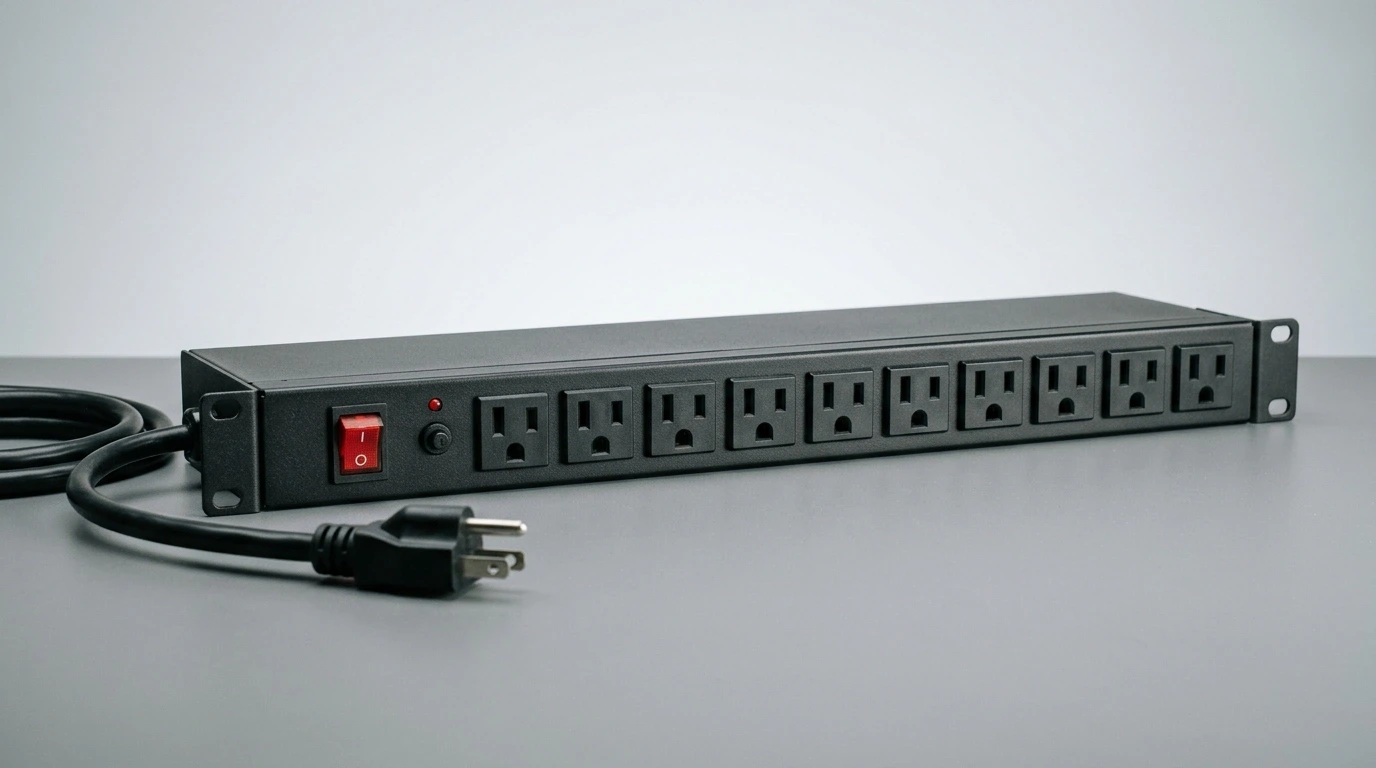
Key Types of Power Distribution Units for Data Centers is Basic PDUs
A basic power distribution unit for data center setups delivers straight electrical pass-through without built-in network connectivity. It offers a cost-effective solution for environments with static power demands and minimal monitoring needs.
These units provide reliable power delivery to critical components without consuming network bandwidth or requiring software configuration. They represent the foundational standard for low-density enterprise rack environments.
Read Also: Trusted UPS System Supplier for Your Business Needs
2. Metered PDUs
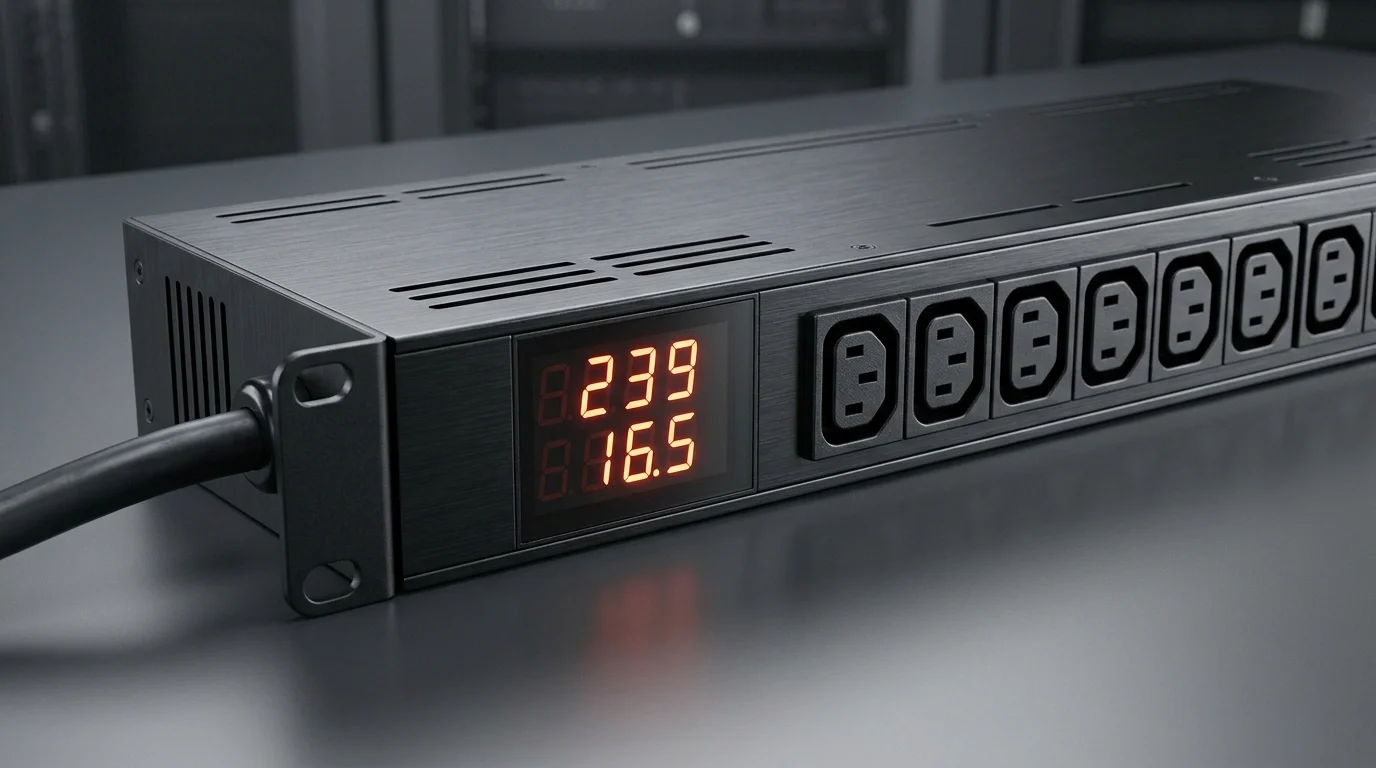
Key Types of Power Distribution Units for Data Centers is Metered PDUs
Metered units feature an integrated LED display that shows real-time amperage draw and voltage levels directly at the rack. This local display enables technicians to monitor total power consumption during equipment installation.
By providing instant visual feedback, metered units prevent accidental circuit overload when adding new hardware. They serve as a practical bridge between basic power strips and fully networked distribution systems.
Read Also: Trusted Critical Power Infrastructure for Zero Downtime
3. Monitored PDUs
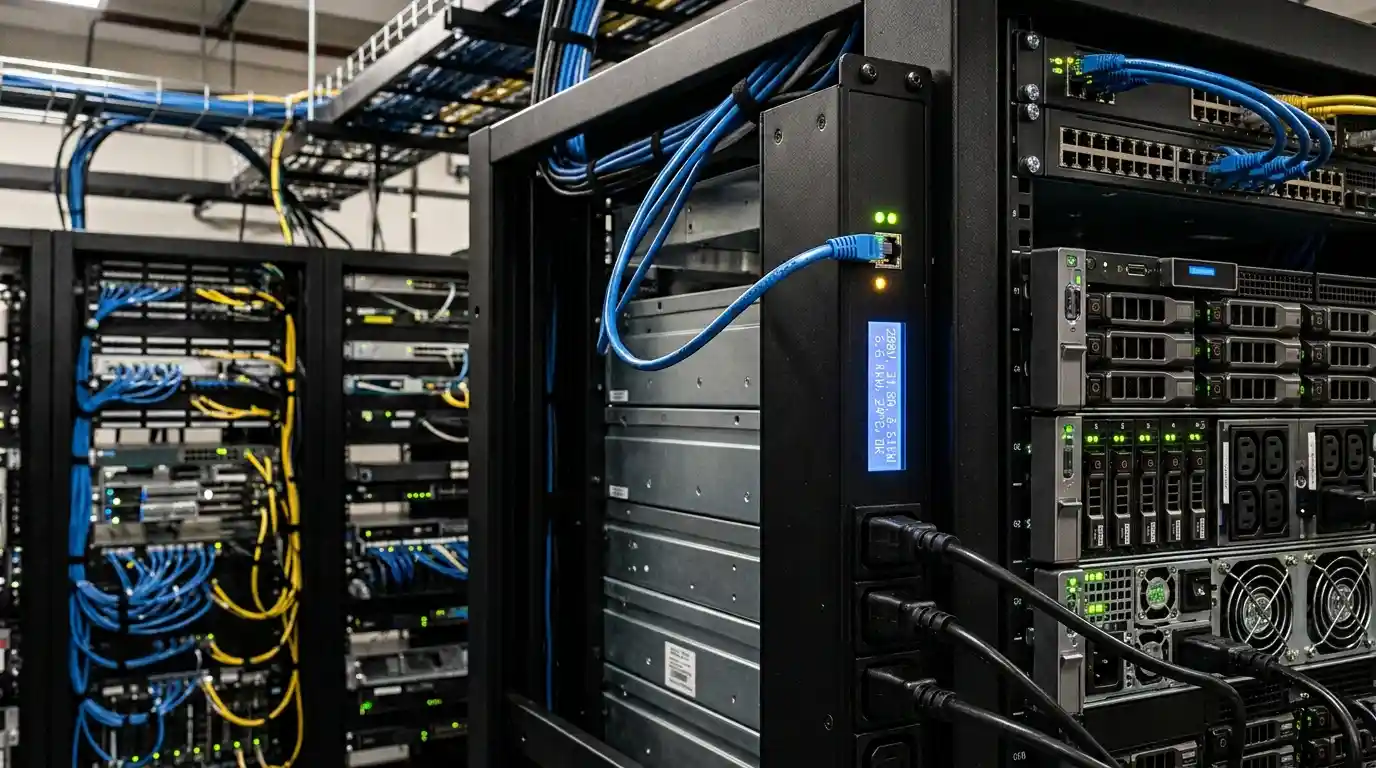
Key Types of Power Distribution Units for Data Centers is Monitored PDUs
A monitored power distribution unit for data center management offers comprehensive remote tracking via an integrated network interface module. Administrators can securely assess voltage, current, and total power consumption across multiple facilities simultaneously.
This continuous data stream assists in accurate data center infrastructure management and proactive capacity planning. Automated alerts notify engineers immediately if current levels cross predetermined safety thresholds.
Read Also: Electrical Power Distribution for Smart & Secure Solution
4. Switched PDUs

Key Types of Power Distribution Units for Data Centers is Switched PDUs
Switched PDUs combine advanced network monitoring with granular, individual outlet-level control capabilities. System administrators can power-cycle frozen servers remotely, avoiding costly physical site visits during critical system outages.
Furthermore, unused outlets can be locked remotely to prevent unauthorized personnel from plugging in unapproved hardware. This level of management enhances both operational security and overall energy efficiency.
Read Also: UPS Backup Power: Protect Equipment & Prevent Downtime
Data Center PDU Mounting Form Factors: Vertical vs. Horizontal
Physical space within standard equipment enclosures dictates how electrical distribution units must be installed. Selecting the appropriate mounting form factor ensures optimal space utilization and streamlined cable routing.
1. Vertical Rack PDUs (0U Form Factor)
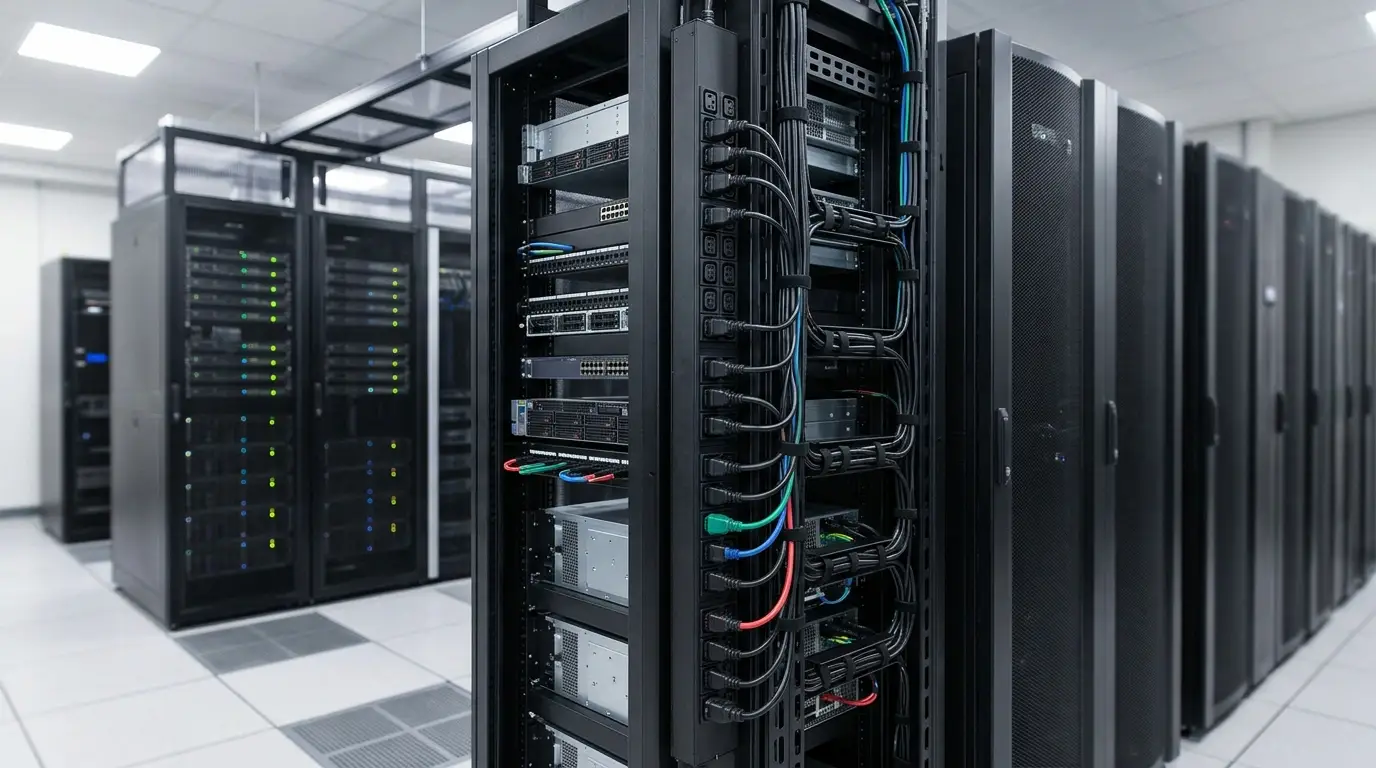
Vertical Rack PDUs (0U Form Factor)
Vertical PDUs mount directly along the rear frame uprights of a standard server rack using a 0U mounting design. This orientation consumes zero usable horizontal rack space, reserving precious rack units for computing hardware.
Because they span the full vertical length of the enclosure, 0U units offer higher outlet density near server power inputs. This design minimizes patch cord length and improves rear cabinet air circulation.
Read Also: Data Center Solutions: Guide to Scalable Infrastructure
2. Horizontal Rack PDUs (1U/2U Form Factor)
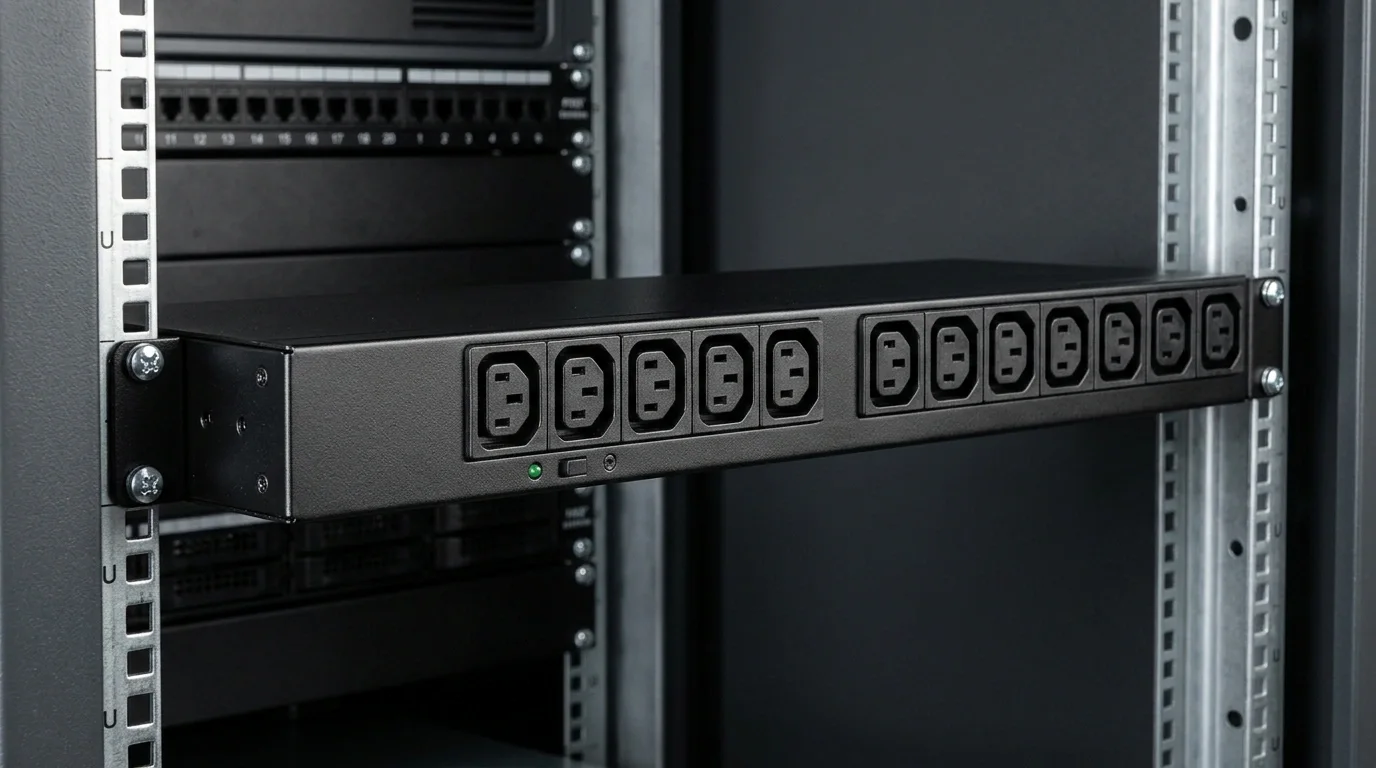
Horizontal Rack PDUs (1U2U Form Factor)
Horizontal PDUs are installed directly onto standard 19-inch equipment rails, occupying either one or two vertical rack units. They are ideally suited for smaller network closets or low-density server configurations.
These units offer easy front or rear access to power outlets in shallow enclosures. However, utilizing a horizontal power distribution unit for data center racks reduces the total space available for IT hardware.
Read Also: Double Conversion UPS: Guide to Online Power Backup
Step-by-Step Decision Framework: Selecting the Right PDU
Selecting the optimal power distribution unit for data center architectures requires evaluating current load demands and future scalability requirements. Infrastructure architects must align electrical specifications with server hardware density.
Step 1: Calculate Total Power Capacity and Voltage Requirements

Calculate Total Power Capacity and Voltage Requirements
Calculating total power capacity involves adding the maximum wattage draw of all planned rack-mounted IT hardware. Engineers convert total power requirements into kilovolt-amperes while factoring in standard safety headroom margins.
Matching input voltages—such as 120V, 208V, or 400V—ensures compatibility with facility backup systems. Correct capacity calculations prevent nuisance breaker trips during peak compute processing loads.
Read Also: Power Distribution Networks: Key Components & Architecture
Step 2: Choose Between Single-Phase and Three-Phase Power

Choose Between Single-Phase and Three-Phase Power
Single-phase power setups suit lower-density environments with modest overall power consumption demands. However, modern high-density compute cabinets require robust three-phase power distribution to maximize electrical efficiency.
Three-phase systems deliver higher total wattage through smaller, lighter input cables. This reduces conductor copper weight while supporting dense cloud and AI server configurations.
Read Also: Line-Interactive UPS Guide: Complete Power Protection
Step 3: Determine Outlet Types and Quantity
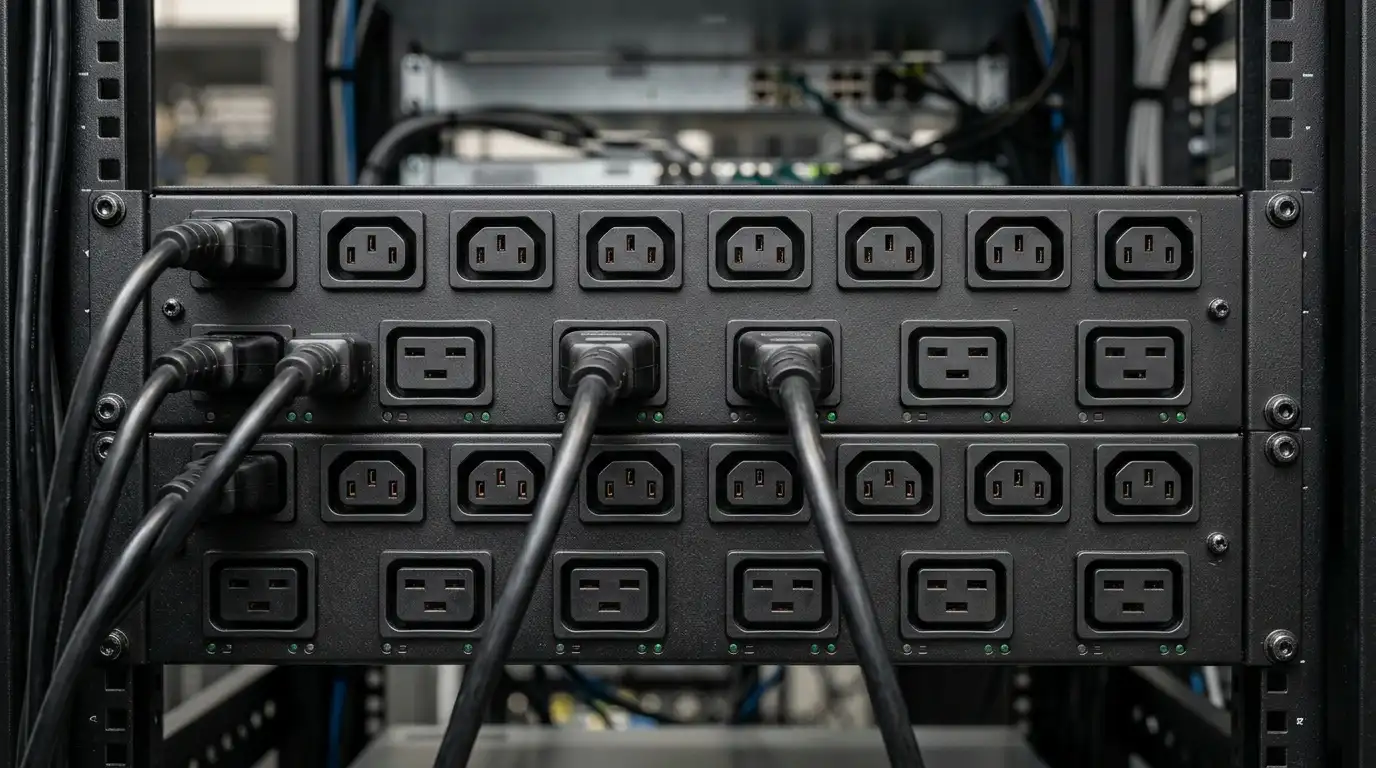
Determine Outlet Types and Quantity
Matching PDU outlet configurations to IT hardware power cords ensures seamless physical setup during deployment. Server racks typically require a mix of standard IEC receptacles to accommodate diverse hardware power supplies.
Matching Receptacle Types (C13/C14 vs C19/C20)
Standard 10-amp IEC C13 outlets power typical enterprise 1U servers, network switches, and peripheral equipment. High-draw blade servers, uninterruptible power supplies, and enterprise storage arrays require heavy-duty 16-amp IEC C19 outlets.
Preventing Accidental Disconnections with Locking Outlets
Integrated locking outlet mechanisms physically secure power cords into their receptacles without requiring special external clips. This prevents accidental cord disconnections during routine maintenance, protecting servers against sudden power loss.
Read Also: UPS Generator Systems: Complete Power Protection Guide
Step 4: Plan for N+1 Redundancy and Dual-Corded Servers
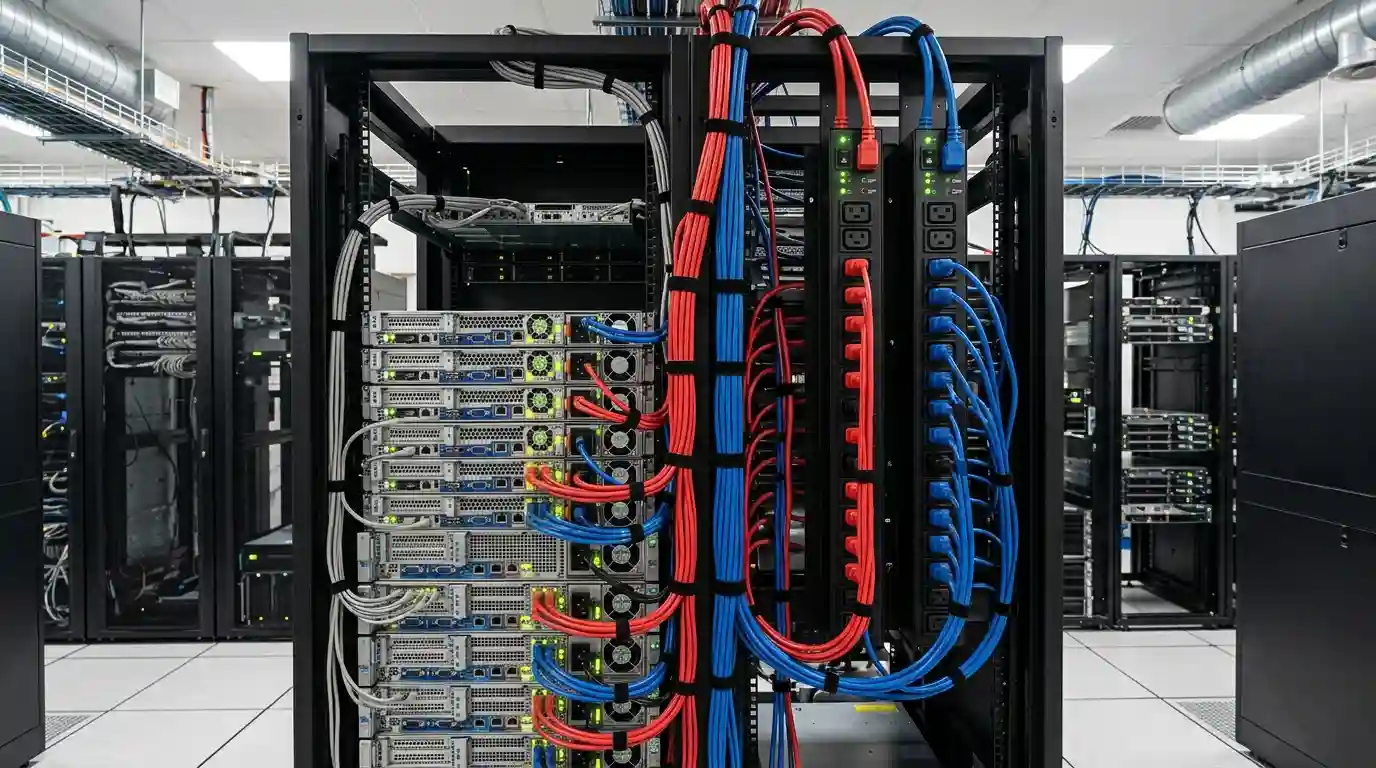
Plan for N+1 Redundancy and Dual-Corded Servers
Enterprise IT infrastructure relies on dual-feed A-side and B-side PDU designs to support redundant server power supplies. Each dual-corded server connects to two separate, independently sourced power units within the same rack cabinet.
If one power path experiences maintenance or upstream grid interruption, the secondary unit seamlessly maintains full load operation. This redundant design guarantees high availability across mission-critical enterprise workloads.
Read Also: Power Line Conditioner: Is One Really Necessary for Gear?
Best Practices for PDU Installation, Cable Management, and Maintenance
Deploying a high-quality power distribution unit for data center racks requires disciplined installation standards to maintain operational health. Proper physical organization maximizes energy efficiency and simplifies long-term maintenance.
1. Cable Routing and Airflow Preservation
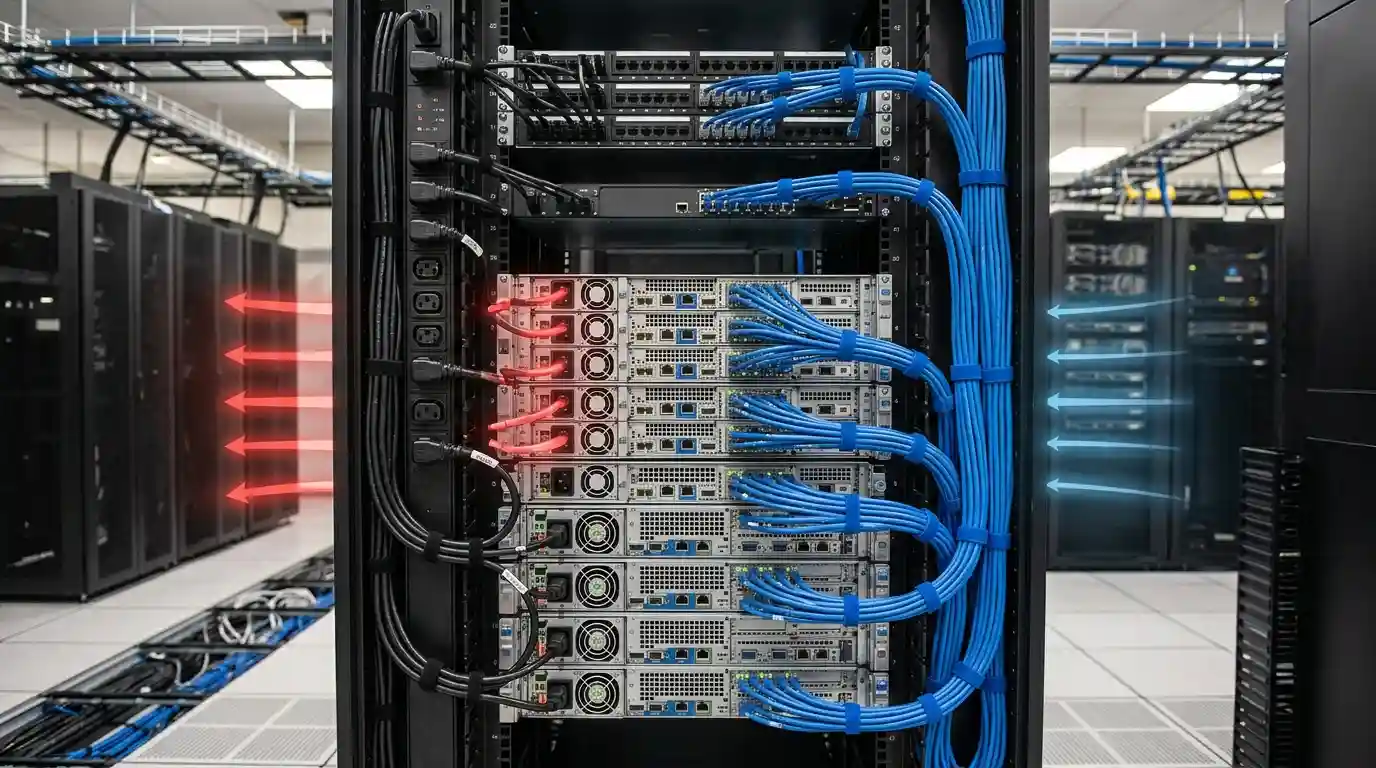
Cable Routing and Airflow Preservation
Organizing power cables along rear cabinet channels prevents obstruction of hot air exhaust streams. Clean cable management ensures unimpeded airflow through server chassis, maintaining optimal cooling system efficiency.
Using color-coded power cords for redundant feed paths allows technicians to distinguish between primary and secondary circuits quickly. This visual organization reduces human error during fast-paced hardware servicing.
Read Also: Backup UPS Systems: Ultimate Protection for Electronics
2. Integrating PDUs with Data Center Infrastructure Management (DCIM) Software

Integrating PDUs with Data Center Infrastructure Management (DCIM) Software
Connecting intelligent power units to centralized DCIM software aggregates facility-wide energy analytics into unified management dashboards. System operators monitor total power consumption, calculate energy usage efficiency, and automate billing reports.
Centralized software platforms trigger automated alerts whenever current draw exceeds pre-set threshold limits. This predictive monitoring helps teams rebalance rack loads before capacity bottlenecks occur.
Read Also: Data Center Infrastructure: Architecture & Key Components
3. Routine Maintenance and Thermal Imaging Audits
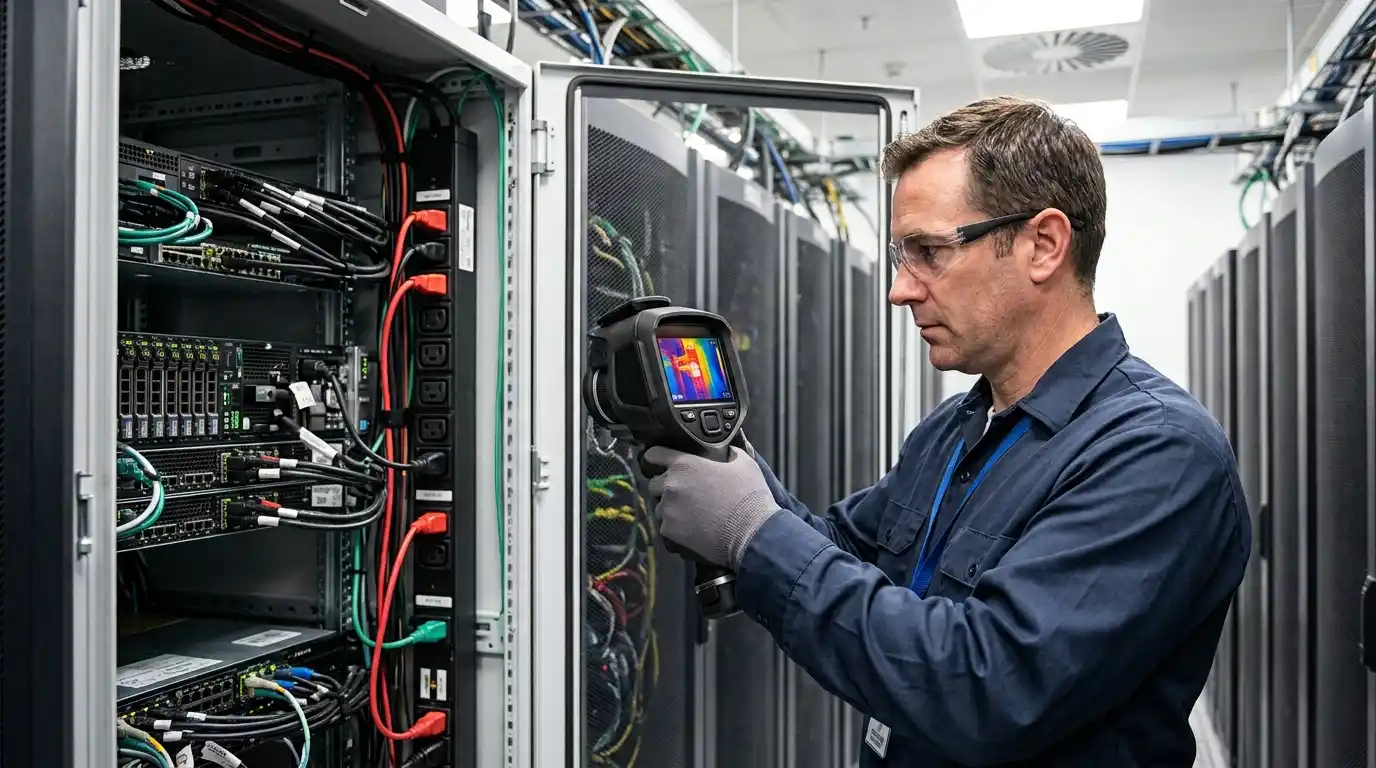
Routine Maintenance and Thermal Imaging Audits
Scheduled maintenance routines should include regular thermographic infrared inspections of all active power units. Infrared scans identify loose wire terminations, worn circuit breakers, or imbalanced phase loads before hardware failure occurs.
Technicians also verify network firmware versions and confirm that ground bonding connections remain securely fastened. Proactive audits preserve hardware longevity and protect data center operational continuity.
Referensi:
- International Electrotechnical Commission. (2020). Audio/video, information and communication technology equipment – Part 1: Safety requirements (IEC Standard No. 62368-1:2018). https://webstore.iec.ch/publication/26505.
- International Electrotechnical Commission. (2021). Appliance couplers for household and similar general purposes – Part 1: General requirements (IEC Standard No. 60320-1:2021). https://webstore.iec.ch/publication/67891.
- Institute of Electrical and Electronics Engineers. (2018). IEEE recommended practice for powering and grounding electronic equipment (IEEE Std 1100-2005 – Emerald Book). IEEE Xplore. https://doi.org/10.1109/IEEESTD.2006.216390.
- Rasmussen, N. (2019). Choosing between basic, metered, and switched rack power distribution units in data centers. IEEE Transactions on Industry Applications, 55(4), 3321–3328. https://doi.org/10.1109/TIA.2019.2908123.